
Let’s be brutally honest for a second. Is hosting a pet adoption fair just a nice, feel-good community service blip? A charity bake sale for the furry set?
Hardly. Think of it instead as a targeted, grassroots political campaign. The disenfranchised constituents just happen to have four legs.
The data doesn’t lie. These events create a high-visibility platform that statistically increases an animal’s chance of finding a home. It’s a direct pipeline out of overcrowded shelters.
But the savvy organizer sees the layered return on investment. For your business or group, it’s reputation laundering of the finest kind. You become a community pillar, not just a service provider.
You build serious social capital, forging alliances with local shelters—the NGOs of the animal world. It connects you with a demographic of passionate, committed pet owners. This is how you build a movement to support your local shelter in a meaningful, structural way.
In an era of performative activism, this is tangible, measurable change. You’re not just saving lives. You’re engineering a micro-economy of compassion. The branding benefits? Merely a happy byproduct.
Planning Basics
Let’s get tactical: the success of your animal rescue event depends on a detailed plan. It’s not about hoping for the best. It’s about making it happen. Forget spontaneity; we’re building a machine where goodwill meets granular logistics.
First, define what winning looks like. Not in vague, feel-good terms, but with precision. Is your goal 15 adoptions? Then you need at least 30 animals on-site. Running out of “inventory” is a catastrophic look, even if the reason—everyone found a home—is heartwarming. This buffer accounts for mismatches, nerves, and the simple fact that choice drives action. Set a numeric target, then double the candidate pool. It’s the first rule of animal rescue event supply chain management.
Next, build the budget. Here is where idealism meets Excel. Every line item is a choice. Allocate heavily for marketing; an unpublicized event is a tree falling in an empty forest. No one hears it. Factor in costs for tents, tables, signage, volunteer snacks, waste disposal, and a contingency fund for the inevitable “oh, we didn’t think of that.” A robust plan like the one in this successful adoption events action kit can save you from financial surprises that feel like a punch to the gut.
Now, choose your battlefield. The venue sets the entire tone. A sunny parking lot offers convenience and visibility but can morph into a petri dish of hot asphalt and shorter tempers. A park is bucolic and spacious but may involve navigating permit hell with your local municipality. A community center lawn splits the difference. Your date isn’t just a day on the calendar; it’s a strategic play against weather, holidays, and competing local events.
| Venue Type | Pros | Cons |
|---|---|---|
| Municipal Park | Natural ambiance, space for play areas, family-friendly vibe. | Permits required, restroom access may be distant, less control over foot traffic. |
| Store Parking Lot | High visibility, built-in foot traffic from shoppers, often free for nonprofits. | Hard surfaces, heat radiation, noise, and possible restrictions from the business. |
| Community Center Lawn | Often includes indoor backup space, parking, and easier permit process. | May have rental fees, can feel less “open” and inviting than a public park. |
See the trade-offs? Your choice here dictates half your logistical headaches.
Next, we architect the experience. The layout isn’t just where to plop the tents. It’s applied crowd psychology and stress management for your four-legged candidates. Poor flow doesn’t just cause human confusion—it spikes anxiety in animals, making them seem less adoptable. You’re designing a stage, and every actor has a role.
Separate species. Dogs and cats should have distinct, buffered zones. Create a dedicated “meet-and-greet” area away from the main thoroughfare—a quiet space where people can bond. Design a one-way traffic flow: entry → information → viewing → meet-and-greet → application area → exit. This prevents bottlenecking and gives each animal a fair shot at being seen.
Think about shade, water stations, and sound. The goal is to make the animals look like the best versions of themselves, not overwhelmed refugees. A calm, organized environment signals professionalism and care, which in turn builds trust with the public. It turns browsers into adopters.
So, before you order the first “Adopt Me” bandana, map it all out. On paper. In a spreadsheet. On a whiteboard. This pre-production phase is where your animal rescue drive is won or lost. The spectacle of happy tails starts with the unsexy grind of planning. Master that, and you’re not just hosting an event. You’re executing a mission.
Partnering with Shelters & Businesses
Your local adoption drive needs strong partners. Choose them carefully, like a Senate confirmation. It’s not just about cute pets. It’s about building a team of compassion and credibility.
Think of shelters as talent agencies. They have the best pets. Your role is to connect them, ensuring a smooth event. A good partnership means more animals, volunteers, and marketing reach.
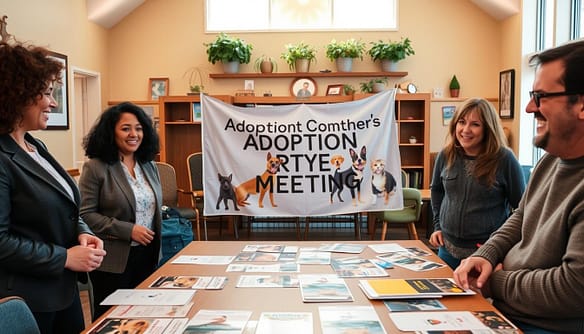
To build this alliance, start with a solid agreement. This document keeps your event organized. What should it include?
- Standardized Fees & Applications: Keep fees and applications the same. This avoids confusion. It helps more people adopt.
- Non-Negotiable Health Documentation: Make sure all pets have the right papers. You should check these documents. This shows who’s serious about rescue.
- Clear Chains of Command: Know who does what in case of a problem. This prevents chaos.
When picking partners, look beyond their social media. Check their policies and prepare together. This ensures everyone is on the same page.
Good partnerships make your event look professional. It shows that every pet has been checked twice. This credibility is key to attracting adopters.
Don’t skip this step. It’s not just about hosting an event. It’s about creating a lasting success. Choose your partners wisely.
Promotion Tips
Don’t use old, sad pet photos for your promotion. Instead, make it exciting like a top TV show. You’re not just asking for donations. You’re sharing a story of community action and experience.
Your featured animals are the stars. Write their adoption profiles like a movie trailer. Is Fluffy a “former street performer with a love for sunbeams and chicken”? Does Rex have “a mysterious past and a heart of gold”? This makes people connect with them.
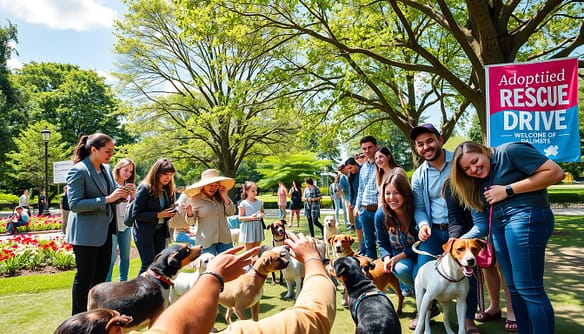
Social media is your stage, not a bulletin board. Use it to build excitement. Start a countdown and share behind-the-scenes shots. Partner with local influencers to add credibility.
A good press release can make a big difference. It needs a local angle that grabs attention. “Local Brewery Hosts Drive for Overcrowded Shelter” is better than “Please Help Animals”.
Your promotion should reach everyone. Use every channel you can.
- Physical Territory: Eye-catching flyers in vet offices, coffee shops, and community centers. A good poster is a silent salesman.
- Digital Real Estate: Nextdoor posts, community Facebook groups, and email newsletters. Leverage every internal platform your partners have.
- Earned Media: That sharp press release sent to local news desks and community radio.
- The Story: Share photos and testimonials from past drives. You’re not promoting a day; you’re proving a pattern of impact.
The goal is to make people feel they’re missing out. When you promote an animal rescue drive well, it feels like a big event. That’s how you turn a task into a community event.
Event Day Checklist
Event day is like opening night on Broadway, but with more tail-wagging and fewer stage frights. All your plans, emails, and pep talks come together in a single, chaotic day. You become the conductor, firefighter, and head cheerleader. Your goal is to make everything run smoothly so the public sees only the magic.
Your first task is the pre-show checklist. Make sure every tent is secure and water bowls are full. Clear signage is also key. This work is essential for a successful local adoption drive. A missing stake is funny, but a missing leash is serious.
Next, gather your team. Briefing volunteers is not optional; it’s essential. Give each person a specific role. Clarity is key to a smooth operation.
| Volunteer Position | Key Duty | Personality Fit |
|---|---|---|
| Animal Handler | Manage pet stress levels; facilitate safe meet-and-greets. | The calm, dog-whisperer type. |
| Adoption Counselor | Guide through paperwork and questions. | Empathetic, detail-oriented, a good listener. |
| Greeter & Flow Manager | Direct traffic, answer questions, spot bottlenecks. | Outgoing, spatial-aware, a people person. |
| Floater/Troubleshooter | Hydrate volunteers, fetch supplies, handle lost children or pets. | Improvisational genius, unflappable. |
Review your layout carefully. The map must work under stress. Are meet-and-greet zones quiet? Is the cat tent cool and safe? Manage both human and animal traffic, anticipating problems.
The adoption process should be easy. Use digital forms if possible. Make sure payment processing is simple and secure. Aim for a smooth path from “yes” to “done.” For more on logistics, check this comprehensive event planning checklist.
Supplies are your tools. Know where they are.
- Animal Essentials: Extra leashes, collars, waste bags, calming sprays, and a quiet room crate.
- Human Comfort: Water stations, sunscreen, first-aid kit, clear signage for restrooms.
- Operational Gear: Clipboards, pens, backup batteries, walkie-talkies, cash box for donations.
Throughout the day, you’re the heart of the event. Keep volunteers hydrated and informed. Have plans for overwhelmed adopters, stressed dogs, and lost children. Your calmness is contagious.
A successful local adoption drive is about managing chaos. When everything runs smoothly, the heart of the event shines. That’s the ultimate silent sales pitch. Curtain up.
Success Stories
The tents come down. The last volunteer goes home. Your local animal rescue event is over, but the real work is just starting. This is the legacy phase. Think of it like the credits after a great film. Your first job is the thank-you note.
Thank every volunteer, partner, and sponsor with the sincerity of a late-night talk show host. A personal email beats a mass text. This isn’t just politeness. It’s an investment in your network for the next round.
Now, weaponize your wins. That shy senior cat who found a home? That’s not just an adoption. It’s a three-act story for your social media. Share it everywhere with photos and quotes. These narratives prove your animal rescue mission works.
Quantify your impact. “27 lives changed. $5,000 in supplies raised.” This data is your political capital. It’s the evidence you show city hall or a corporate sponsor to get that bigger venue next year.
Lastly, conduct a brutally honest post-mortem. Send surveys. Ask what went wrong. Was parking a nightmare? Were there not enough adoption counselors? This feedback isn’t criticism. It’s research and development. True success isn’t measured in one day’s adoptions. It’s the sustainable model you build, where every story inspires the next great animal rescue.