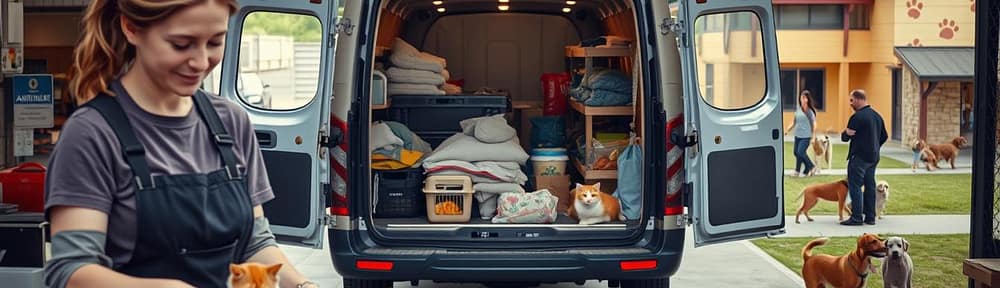
Think of your local animal shelter as an emergency room for animals. It’s a place where they figure out which animals need help right away, which can be fostered, and which are ready for homes. It’s not just about finding homes for animals; it’s a complex system of care and transport that keeps everything running.
It’s not just about empty cages. The important numbers are the live release rate and capacity flow. It’s like a game of Tetris, with animals as the pieces. The system is either clearing rows (adoptions) or stacking up (intakes), all influenced by funding and public opinion.
We’re not just talking about numbers. We’re talking about real data—like live release rates and how long animals stay in shelters. The transport networks also play a big role, moving animals to places where they’re more likely to be adopted. Small changes in these numbers can make a big difference. It’s a tough job, but the reward is worth it.
Volunteer Pathways: The Symphony of Shelter Support
Forget the solo act of a heroic adopter. The real magic, the life-saving symphony of any shelter, is composed by the chorus of volunteers in the background. Each volunteer role is like a different instrument, playing a critical part in a life-saving composition. Without the percussion of kennel care, the melody of adoption counseling, the bassline of transport, and the brass of marketing, the entire performance falls apart.
Studies show that shelters with robust, volunteer-driven programs can see adoption rates soar by up to 30%. Your application, whether you’re filling out a form online or making that first phone call, is the first note you play.
Kennel Care: The Percussion Section
Kennel care is like the percussion section of our shelter symphony. It’s the foundational beat that keeps the whole operation moving. This isn’t just cleaning; it’s the critical, rhythmic work of sanitation, feeding, and providing basic care that establishes the tempo for everything else.
A clean, healthy environment is the baseline rhythm that makes all the other parts—like adoption counseling and medical care—possible. Without this steady, reliable beat, the entire operation would descend into chaos.
Adoption Counseling: The Melody
If kennel care is the beat, then adoption counseling is the melody—the part you hum on your way home. This role is about harmonizing people with pets. It’s part matchmaker, part educator, and part therapist.
A great adoption counselor doesn’t just process paperwork; they listen to a family’s rhythm of life and find the pet that creates a perfect chord, ensuring a forever match that reduces the heartbreaking notes of returns.
Animal Transport: The Bassline
Transport is the often-unseen bassline of the operation. It doesn’t always get the solo, but you’d feel its absence immediately. These volunteers are the logistical backbone, moving animals from overcrowded shelters to areas with higher adoption demand, or shuttling them to vet appointments and foster homes.
It’s a role of quiet, constant motion—the deep, steady rhythm that moves lives, quite literally, from point A to a hopeful point B.
Marketing & Outreach: The Brass Section
If you want to make some noise, this is your role. The marketing and outreach volunteers are the brass section of our orchestra—loud, proud, and impossible to ignore. They’re the storytellers, the social media gurus, and the event planners who get the community’s attention.
They turn a local adoption event into a community happening and a social media post into a viral success story, filling the digital airwaves with the sounds of animals finding homes.
Each of these volunteer roles is a different instrument, and the shelter is the concert hall. You don’t need to be a virtuoso to join; you just need to be willing to play your part. The result is a powerful, moving symphony of second chances, one volunteer role at a time.
Fostering: The Specialized System of Animal Triage
Fostering is more than just pet-sitting. It’s a system of triage, rehabilitation, and transformation. While adoption gets the spotlight, it’s the temporary, loving homes that form the critical infrastructure of animal rescue. This isn’t a one-size-fits-all operation; it’s a sophisticated network of specialized care.
Think of the foster system as a pop-up, distributed animal welfare ecosystem. There are four primary foster specializations, each with its own challenges and rewards. Medical foster homes function as in-home ICUs, taking in animals recovering from surgery, illness, or injury. They’re the triage units, equipped to administer medication, change bandages, and provide the quiet, stable environment that a crowded shelter cannot.
I learned this first-hand with a litter of four neonate kittens. Their eyes were sealed shut, and they required bottle-feeding every three hours, day and night. It was exhausting, but the data shows neonatal kittens in a foster home have a survival rate over 50% higher than those in a shelter environment. My four became eight-week-old adoption rockstars, their fostering journey a perfect blend of heartwarming care and hard data on survival rates.
Other critical foster roles include behavior modification homes, which act as “finishing schools” for animals needing socialization or training, and hospice foster homes, which provide a loving, comfortable final chapter for animals with terminal illnesses. Each type of home is a specialized gear in a life-saving machine.
| Foster Type | Typical Cases | Time Commitment | Special Skills/Resources Needed | Typical Duration |
|---|---|---|---|---|
| Medical Foster | Post-op recovery, illness, injury, mange, ringworm | High (intensive) | Medication administration, wound care, quarantine space | 2 weeks – 3 months |
| Neonatal Foster | Orphaned kittens/puppies under 8 weeks | Very High (round-the-clock) | Bottle-feeding, temperature regulation, stimulation | 8-10 weeks |
| Behavior Foster | Fearful, undersocialized, or basic training needs | Medium-High | Patience, basic training knowledge, calm home | 1-6 months |
| Hospice Foster | Terminal illness, senior comfort care | Variable (palliative) | Compassion, end-of-life care knowledge, emotional resilience | Varies (palliative) |
Each foster type is a distinct, vital role. A medical foster home is an ICU. A neonatal home is a NICU. A behavior foster home is a finishing school. And a hospice foster provides a final, loving refuge. This system doesn’t just save lives; it transforms them, turning the most vulnerable animals into adoption-ready companions. It’s not just about opening your home; it’s about opening the right type of home for the animal in front of you.
Donating Smart: Your Philanthropic Playbook
Donating to animal shelters is more than just writing a check. It’s like investing in a startup with a big purpose. Your donation can be supplies, time, or strategic help. Let’s aim for more than just giving; let’s make a real difference.
In-Kind Donations: The Wish List Power Play
Every shelter has a wish list online. It’s not just a shopping list; it’s a strategic plan. Buying a big bag of kibble, for example, helps the shelter save money for important surgeries.
Think of it as a smart way to help. Shelters have very little money. Buying things they need, like beds or cleaners, helps them save money. It also makes the staff happy because they get what they need.

Pro tip: Many shelters have Amazon or Chewy wish lists. Buying something from these lists is a sure way to help. It’s easy, you can track it, and you know exactly what you’re giving.
Monthly Giving: The “Angel Investor” Model
One-time donations are like a quick boost. But monthly giving is like a steady flow of help. It gives shelters the money they need to plan ahead.
Setting up a monthly $20 gift makes you more than a donor. You become a key player in their success. You help them plan for the future, like hiring staff or starting new programs.
Corporate Matching: The Philanthropic Leverage Play
Corporate matching means your donation gets doubled, for free. Many companies match what their employees give. Sadly, many people miss out on this chance to double their impact.
If your company matches donations, your gift can be doubled. Here’s how:
- Step 1: Donate to your chosen shelter.
- Step 2: Fill out your company’s matching gift form.
- Step 3: Your $50 gift becomes $100 for the shelter, and your company looks good too.
This isn’t a trick; it’s a real way to double your impact without spending more money.
The Ultimate Legacy: Estate and Planned Gifts
Leaving a shelter in your will is like the ultimate investment. It’s not about how much you leave; it’s about your commitment to helping.
An estate gift can fund important programs forever. It’s a big vote of confidence and creates a lasting legacy. Talk to a financial advisor and your shelter to learn how to make this happen.
Donating smart means your gift is more than just a donation. It’s a strategic investment in a better world. It’s like venture capital for kindness, and the rewards are lives saved.
Fundraising 101: The Art of the Strategic Ask
Fundraising is more than just asking for money. It’s about telling a story that drives your mission forward. Imagine it as a clever heist, where you plan and execute to get the funds you need. It’s like a mix of a “Shark Tank” pitch and an “Ocean’s Eleven” plan, needing strategy, charm, and confidence.
The first tool you have is peer-to-peer (P2P) fundraising. It’s not just sharing a link. It’s about turning your supporters into fundraisers. Think of it as a digital “a-thon.”
For example, a “Paws for a Cause” walk can raise money for a shelter. Participants get sponsors for each mile walked with a shelter dog. Give your fundraisers the right tools: compelling stories, easy-to-share graphics, and a simple donation process. Peer-to-peer campaigns that go viral use personal networks to your advantage.
Next, think about strategic events. These aren’t just any events. They’re experiences you’d actually want to attend. Imagine a “Bark and Brews” beer tasting with adoptable puppies or a “Gala for the Gala-Phobic” with a local band and silent auction.
The event is the experience, but the real magic is in the sponsorship packages. Local businesses want to help out. Offer tiered sponsorship levels with benefits like logo placement and social media shoutouts. It’s a marketing partnership, not just a donation.
This is where the magic happens. You’re selling more than just tickets. You’re selling a marketing package to local businesses. A pet store might sponsor your “Adoption Lounge,” reaching hundreds of animal lovers. Use a philanthropy toolkit to guide these partnerships.
| Strategy | Best For | Key to Success | Potential ROI |
|---|---|---|---|
| Peer-to-Peer (P2P) | Broad reach, community building, social media friendly. | Clear, simple tools for fundraisers; compelling story. | High (Amplifies your message) |
| Signature Event | Major revenue, sponsor engagement, high visibility. | Impeccable planning and a unique, fun concept. | Very High (Revenue & Awareness) |
| Corporate Sponsorships | Building long-term, high-value partnerships. | Tailored proposals that offer real business value to sponsors. | High & Recurring |
| Monthly Giving | Sustained, predictable revenue. | Low-ask entry point and a compelling “why.” | Steady, Reliable |
Forget the old ways of fundraising. The new playbook is active, strategic, and data-driven. It’s about creating a movement, not just asking for money. Make every donor feel important, whether they give $5 or $5,000. You’re building a community, not just raising funds. The question is, do you have the strategy? The blueprint is ready; now it’s time to execute.
From Grassroots to Grassroots: Advocacy & Policy for Animal Welfare
The most impactful support often happens outside the shelter. It’s in city council chambers and at zoning board meetings. Here, a single policy can save more lives than a thousand adoption events.
This is where compassion meets strategy. It’s a long game of persuasion for lasting change.
The Cornerstone of Community Cat Management
Trap-Neuter-Return (TNR) is at the heart of modern animal welfare policy. It’s not just about managing cat populations. It’s a shift from “catch and kill” to a more humane approach.
TNR programs trap, spay/neuter, and vaccinate community cats. They then return them to their colonies. This reduces euthanasia rates and stabilizes cat populations.
Organizations like the ASPCA support TNR. They see it as the only humane way to manage community cats.
From Idea to Ordinance: How Policy Gets Made
Turning a good idea into law starts with data. Advocates present councils with cost comparisons. They show the savings of TNR programs.
The legislative process is slow and frustrating. It involves education, building coalitions, and giving personal testimony.
- Education: Meeting with council members to explain the issue, using clear data and local success stories.
- Coalition Building: Partnering with other animal welfare groups, veterinarians, and community leaders to show broad support.
- Testimony: The most powerful tool is often a personal story from a constituent. A compelling, first-hand account of TNR’s impact can sway a vote.
The table below shows the impact of progressive policies on shelter outcomes. It highlights the difference between reactive and proactive strategies.
| Policy Type | Key Features | Impact on Shelter Intake | Long-Term Community Impact |
|---|---|---|---|
| Traditional Impoundment | Reactive impoundment of community cats. | High intake, high euthanasia rates for unadoptable feral cats. | Creates a vacuum effect, is costly, and has little impact on long-term population. |
| TNR & Managed Return | Humane trapping, spay/neuter, vaccination, and return to managed colony. | Dramatic reduction in intake of feral adults and kittens over time. | Stabilizes and humanely reduces outdoor cat population; improves community relations. |
| Mandatory Spay/Neuter Laws | Local ordinances requiring pet sterilization. | Reduces intake of accidental litters from owned pets. | Decreases shelter intake at the source; requires strong public education component. |
| Low-Cost Spay/Neuter Vouchers | Publicly or privately funded vouchers for low-income pet owners. | Reduces intake by preventing litters before they enter the shelter system. | One of the most cost-effective methods for long-term intake reduction. |
Your Role in the Movement
You don’t need a law degree to advocate. Your voice is your power. Start local. Attend city council meetings and write emails to your representative.
The data and moral arguments are on your side. The only thing missing is the political will. This is generated by you and a persistent, passionate chorus of advocates.
Social Media Amplification: Your Share is the First Step to Their Forever Home
Your local shelter faces a big challenge: the endless scroll of social media. A post about a dog in a shelter is like an audition for a new life. Your like, share, or comment is like digital money that can change a pet’s life. Let’s explore how to make a post that will grab attention and help a pet find a home.

A perfect adoption photo is like a pet’s headshot for their new life. It should use natural light to make the pet’s eyes sparkle. The background should be clean and show the pet’s personality.
The photo should make you think, “I want to be in that moment.” Photos that show a pet’s personality are better than sad eyes in a cage. Action shots of a dog playing or a cat in a sunbeam tell a story of a pet in action.
The caption is your story. “Meet Barney, a 3-year-old cuddle expert who loves squeaky toys and long walks” is good. But which one grabs your attention: “Barney the Beagle, who knows 15 commands but hasn’t yet found a sofa to call his own,” or “Barney’s perfect adopter loves puzzles, long walks, and doesn’t mind a little drool on the remote”? The second option creates a character, not just a listing. It invites a story.
I once saw a shelter cat, “Sir Reginald Fluffington III,” go from long-term resident to adopted in 48 hours. The post that did it? A photo of him “hosting” a tea party with stuffed animals, captioned with a faux-formal invitation to “apply for an audience.” It was witty, it was shareable, and it gave Sir Reginald a persona. That’s the power of narrative.
Data doesn’t lie. Let’s compare post types. This table breaks down what works and what flops.
| Post Type | Avg. Engagement | Why It Works | Pro-Tip |
|---|---|---|---|
| Adoption Day Photo | High | Emotional payoff, feel-good content | Tag the shelter and use their hashtag. |
| Pet Bio with Quirks | High | Creates connection & personality | Focus on one unique, endearing trait. |
| Video: “Day in the Life” | Very High | Shows personality in action | Keep it short (under 30 sec) and sound on. |
| Plain “Adopt Me” Flyer | Low | Too generic, gets lost in the feed | Never post without a compelling photo. |
Consent and ethics are non-negotiable. Always get permission before posting a pet’s photo. Use a clear, prominent hashtag for the shelter (#SaveOurShelters) and geo-tag the location. Your share can be the bridge between a kennel and a couch. Your retweet, your share, your comment—it’s all a vote for a life. In the attention economy, your share is a superpower. Use it wisely.
Measuring Impact: The KPIs That Turn Rescues into Results
In sports, you can’t manage what you don’t measure. This is true in animal welfare too. Shelters and rescues that succeed don’t just have big hearts. They also know their numbers well.
They use Key Performance Indicators (KPIs) to track their progress. This way, they can see if they’re doing well or need to improve. It’s like using analytics to win more games.
Think of a shelter as a startup with limited resources. They have a clear mission but need to manage their resources well. KPIs are like a dashboard that shows if they’re on the right track.
Here are the essential KPIs for any rescue organization. These numbers tell the real story of their success.
Here are the core KPIs that separate the hopeful from the hyper-effective:
| KPI | What It Measures | Why It Matters | Industry “All-Star” Benchmark |
|---|---|---|---|
| Live Release Rate (LRR) | The percentage of animals that leave the shelter alive (through adoption, TNR, or return-to-owner). | The ultimate measure of success. It’s not about how many you take in, but how many you successfully place. A high LRR is the ultimate goal. | > 90% |
| Average Length of Stay (ALOS) | The average number of days an animal stays in the shelter before adoption, transfer, or other live outcome. | Longer stays increase costs, stress the animal, and take up space for new intakes. Lower is better. | |
| Cost Per Animal | Total operational costs divided by the number of animals served. | Reveals financial efficiency. It’s not just about spending less, but spending smart to maximize impact per dollar. | Varies by region, but the trend is key. Is it going down? |
“Second Chance Ranch” was a rural shelter drowning in animals. They started tracking their numbers. They found their cat LRR was 25% higher, and their ALOS for cats dropped by 18 days. The data showed them the way forward.
This is the data-driven pivot. It’s not about being cold and calculating. It’s about being compassionate and competent. Every animal that lingers in a kennel for a month is a kennel that can’t be used for the next animal in crisis. Every dollar spent inefficiently is a dollar not spent on vaccines, spay/neuter, or a new transport van.
Tracking these KPIs isn’t just for the director’s annual report. It’s the playbook for the foster coordinator, the fundraiser writing a grant, and the volunteer who needs to explain to a donor exactly how their $50 gift moved the needle. It turns well-meaning anecdotes into a bulletproof case for support. In the end, the goal isn’t just to feel good about helping. It’s to know, with data-driven certainty, that you’re helping in the smartest, fastest, and most effective way possible. That’s the real rescue.
Rescue Story Spotlight
In a high-kill shelter, a terrier mix with a crooked ear was running out of time. We call him “Milo.” His journey from a kennel to a cozy dog bed is a powerful story. It shows how rescue can change lives.
Milo was found shivering in an abandoned building. He was just another stray. But a volunteer saw something special in his eyes. This was the start of his hero’s journey.
Milo’s story is more than a simple “sad to happy” tale. It has clear acts that make his transformation compelling. The table below breaks down his journey, showing the classic story beats.
| Narrative Element | Milo’s Story Beat | Why It Resonates |
|---|---|---|
| The Hero (Or, the Floof in Distress) | Milo, an undersized, fearful terrier mix with a crooked ear. | Creates immediate empathy. The “underdog” archetype is universally relatable. |
| The Call to Adventure | Found abandoned, picked up by animal control. | Initiates the plot; the “before” picture that establishes the stakes. |
| The Mentor/Guide | The foster volunteer who saw his potential. | Provides a bridge for the audience, a human element to root for. |
| The Ordeal & Transformation | Months of patient fostering, socialization, and vet care. | The “dark night of the soul” that makes the triumph sweeter. |
| The Return | Adoption by a family with a child who has anxiety. | Full circle moment; the hero’s gift to the world. |
Milo’s story is structured like an epic. It’s about connection, not just rescue. He was rescued for a purpose—becoming a therapy dog. This makes his story powerful and uplifting.
Shelters see a big increase in adoption inquiries when they share compelling stories. Milo’s journey is a perfect example. It follows a classic three-act structure, making it relatable and engaging.
Milo’s story is a strategic tool for shelters. It shows the impact of adoption in a compelling way. Sharing these stories can change lives and perceptions about shelter animals.
Local Spotlight & How to Join the Team
Running a local rescue isn’t all about cuddling puppies. It’s a mix of spreadsheets, kennel runs, and finding paper towels. I’m Maya, the volunteer coordinator at Paws & Progress, a no-kill shelter. Let me show you what a “Day in the Life” really looks like.
My day starts at 5:30 AM. The first email I get isn’t about puppies. It’s about Gus, a 14-year-old terrier mix in our hospice program. We’re not just a shelter; we’re a hospice, rehab center, and lost-and-found. We need many types of help, not just dog walkers.
We’re facing a big challenge. We need foster homes for large, shy dogs. We also need drivers for vet visits. Our “Kitty Cuddler” program for kids needs readers for cats. These roles are key to our work.
Donations can drop, and our foster network is our safety net. A good foster home can free up space for more animals. This is how we keep going.
So, where do you fit in? We’re looking for more than just volunteers. We need a team ready to take action.
| Role | Time Commitment | Superpower Needed | Immediate Need |
|---|---|---|---|
| Medical Foster | 2-8 weeks | Comfort with basic meds, patience | HIGH (3 animals waiting) |
| Transport Ally | 2-4 hours/week | Reliable car, good GPS | HIGH (Critical for vet runs) |
| Virtual Adoption Counselor | 4-6 hrs/week | Empathy, good phone/email skills | MEDIUM (Training provided) |
| Weekend Socializer | 3 hrs/Saturday | Endless patience, loves shy pets | HIGH (Key for adoption events) |
Volunteering here is more than just filling a spot. It’s about solving a big puzzle. Driving a transport or fostering a dog can make a huge difference. You’re not just helping; you’re changing lives.
So, here’s your call to action. Don’t just think about volunteering. We need action. Avengers, assemble with your skills. We need people who can organize, use social media, or fix things. These are the heroes we need.
Ready to stop scrolling and start solving? We have a job for you. It’s not glamorous, but it’s essential. Let’s get to work.
Advocate Action Steps
So you volunteer, donate, and foster. But what about changing the system itself? The most powerful way to support your local shelter is to become an advocate. This step moves beyond the shelter walls and into policy.
Think of it as running a campaign for animals. Your to-do list is your campaign strategy. First, target the legislative branch. Look for local laws that block TNR programs for community cats or don’t fund animal control well.
Then, write to your city council, county commissioners, and state representative. Use facts, not just feelings. A letter with solid data and references to specific bills or budget items carries more weight than many angry emojis.
Next, use social media for more than cute pet photos. Share shelter needs and successful advocacy stories. Did a letter-writing campaign help pass a spay/neuter ordinance in another town? Share that story. Your voice is a powerful tool. Liking a post is passive, but sharing a call to action is advocacy.
Lastly, look at the big picture. Supporting community cats through TNR programs is a great example. Advocating for these programs changes the game. It moves from crisis management to prevention. Your advocacy turns individual compassion into collective power.