
Many dogs entering shelters show a state called “shutdown.” It’s not disobedience. It’s a deep behavioral withdrawal.
Dogs in shutdown have deep fear and can’t respond normally. This is a common reaction to extreme stress. Things like shelter intake, past trauma, or neglect can cause it.
Specialized behavior rehabilitation programs tackle this issue. They are systematic and based on evidence. They help dogs recover from trauma and stress.
Studies on traumatized animals show they can change. This supports the rescue philosophy. It helps both caregivers and animals heal together.
The goal is clear. It’s to help dogs move from shutdown to being social and adaptable. This is key for successful adoption. It’s a core part of modern animal welfare.
Why Dogs Shut Down in Shelters
Dogs in shelters often shut down due to stress. This is a coping mechanism, not a permanent trait. It’s a way for them to deal with the overwhelming environment.
The loud kennels are a big problem. Dogs hear constant barking, slamming doors, and human noise. The artificial lights, cleaning smells, and hard floors are also overwhelming.
Dogs miss their old social groups. They’re separated from their friends and family. This isolation, along with little positive interaction, causes a lot of stress.
The shelter’s routine is stressful too. Dogs don’t know when they’ll eat or go for a walk. This lack of control makes them feel insecure.
A dog’s past experiences affect how they react to stress. Dogs who have been abused or not socialized well are more vulnerable. They can’t handle as much stress as others.
Each dog’s reaction is also influenced by their breed tendencies. Some breeds are naturally more sensitive or anxious. Knowing these tendencies helps us understand why dogs shut down.
This analysis shows the common reasons dogs shut down in shelters. By understanding these reasons, we can start to help them better.
Breed-Linked Drives and How Programs Adjust
Breed-linked drives like herding, prey drive, and guarding are key to a dog’s nature. But, they can be tough in kennels. Dogs may chase, bark, or react due to stress and confinement.
Modern rehab programs tackle these genetic traits. They create safe spaces for dogs to express themselves. This helps reduce stress and prepares them for new homes.
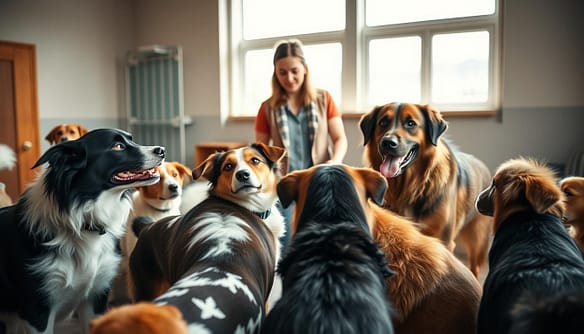
Herding Breed Drives in Shelter Settings
Herding dogs have a strong urge to control movement. In shelters, this leads to circling, nipping, and high anxiety. Limited space makes it hard for them.
Programs offer structured activities like leash walks and agility. These exercises meet their herding needs. They also provide mental and physical stimulation.
Fearful dogs from herding lines need confidence building. They start with simple, predictable games. This helps avoid overwhelming them.
Terrier Prey Drive and Kennel Stress
Terriers were bred to hunt and dig. Their prey drive causes barking, digging, and fixation on small animals. Shelters lack the right outlet for this.
Adjustments include scent games and puzzle toys. These activities use their natural hunting skills. Controlled digging boxes also help.
Terriers need short, intense training sessions. This keeps them focused and prevents frustration. It also lowers their kennel stress.
Guardian Instincts and Perceived Threats
Guardian breeds are naturally alert and protective. In shelters, this can lead to barking, resource guarding, and wariness. These are normal behaviors heightened by perceived threats.
Rehab programs build confidence without reinforcing guarding. They set clear boundaries and use positive association. This changes how dogs react to strangers.
Guardian dogs need a sense of safety. A designated, secure space in the kennel can greatly reduce stress.
The Overlay of Fear on Breed-Typical Behavior
Fear can alter breed-typical behavior. A fearful herding dog may stop circling. A scared terrier might freeze instead of dig. This makes initial assessments tricky.
First, programs address the fear. Gentle counterconditioning and desensitization are key. Only then can breed-specific activities be introduced.
Each dog’s needs are unique. A fearful dog with guardian instincts requires a special approach. Success depends on identifying the root cause—fear, drive, or both.
Adjusting programs to innate drives while managing fear is key. It turns problematic behavior into manageable traits for future owners.
Intake Behavior Assessments and Metrics
When a dog enters a rehab facility, it gets a detailed check-up. This process is key to helping the dog. It turns first impressions into clear data.
Places like the ASPCA’s Animal Recovery Center use these methods. They aim to understand each dog’s behavior. This helps create special decompression and enrichment plans.
Standardized Evaluation Protocols
Assessments happen in a calm place. Experts watch how the dog reacts to certain things. They look at several important behaviors.
They check for fear, anxiety, and how the dog reacts to certain things. They also see if the dog guards things or gets along with others. The whole thing is done carefully to avoid stressing the dog.
This careful method makes sure the data is good. It gives a clear picture of what the dog needs right away.
Key Metrics and Scoring
The dog’s reactions are turned into numbers. These numbers help track how the dog is doing over time. They also help everyone talk about the dog’s progress in the same way.
They look at how close the dog wants people to be, how it reacts to touch, and how it acts when it sees or hears something new. Each of these is scored from 1 to 5.
A low score means the dog is calm, while a high score means it’s scared or angry. This makes it easy to see if the dog is getting better.
| Assessment Metric | What It Measures | Common Scale | Informs Which Plan |
|---|---|---|---|
| Proximity Tolerance | Distance at which dog shows stress to approaching humans. | 1 (Comfortable) to 5 (Avoids/Flees) | Initial decompression space requirements |
| Handling Sensitivity | Reaction to touch on body, paws, ears, and muzzle. | 1 (Accepts) to 5 (Growls/Snaps) | Veterinary care protocols & socialization |
| Stimuli Reactivity | Response to loud noises, umbrellas, or rolling objects. | 1 (Ignores) to 5 (Lunges/Barks) | Enrichment item selection & environment control |
| Resource Guarding | Behavior around food, toys, or resting places. | 1 (No guarding) to 5 (Hard guarding) | Feeding routines & safety management |
| Social Interest | Initiative and comfort with calm, neutral dogs. | 1 (Seeks interaction) to 5 (Aggressive) | Socialization strategy & group play eligibility |
The data from these tests is just the beginning. It shows what the dog needs right away. It helps plan the best decompression and enrichment for the dog.
For example, a dog that’s very scared of new things needs a quiet place to start. Its enrichment will be calm at first. This way, the dog’s first steps in rehab are both kind and smart.
Decompression Plans and Enrichment Menus
Decompression plans help change a dog’s behavior by lowering their stress. This first step tackles the stress built up in shelters. It makes a calm, predictable space for better behavior watching.
This phase lasts from three to seven days. Dogs get less direct handling during this time. Regular routines help reduce anxiety caused by uncertainty.
Studies show that positive interactions with humans lower stress hormones in dogs. This helps them manage their emotions better. With less stress, dogs can learn and adapt more easily.
Structured Enrichment Implementation
After decompression, centers start structured enrichment menus. The ASPCA model includes daily activities like exercise, enrichment, and training. These help dogs regain confidence and reduce anxiety.
Enrichment programs focus on four main areas:
- Sensory enrichment includes controlled sniffing walks and new sounds. These activities spark curiosity without stressing the dog.
- Food-based enrichment uses puzzle toys and scatter feeding. It keeps dogs mentally active during meals, reducing frustration.
- Social enrichment involves short, positive interactions with humans. These sessions encourage dogs to engage willingly.
- Physical enrichment meets breed-specific needs through play and exploration. It helps dogs release energy in a healthy way.

Each type of enrichment has its own goals. Sensory activities help dogs handle new information calmly. Food puzzles improve problem-solving and patience.
Social enrichment sessions check a dog’s interest in interacting. Trainers watch body language and approach behaviors. This helps plan future training.
Physical enrichment directs energy into positive outlets. It prevents bad behaviors and keeps dogs healthy.
Structured enrichment tackles anxiety in dogs. It teaches them to handle new things without fear. Confidence grows with each positive experience.
The main goal is to make dogs behave naturally in safe places. Programs track what each dog likes and can handle. This helps match them with the right homes and supports them after adoption.
Evidence-Based Training Protocols (LAT, BAT, Counterconditioning)
More than thirty distinct behavior modification protocols are used in leading behavioral rehabilitation centers. These methods go beyond basic obedience. They aim to create lasting change in a dog’s emotional state and reactions.
Three key protocols are Look At That (LAT), Behavior Adjustment Training (BAT), and systematic counterconditioning. Each plays a vital role in a dog’s rehabilitation plan.
Look At That (LAT) Protocol
The Look At That protocol helps dogs manage their reactions to environmental triggers. It’s for dogs that fear or get aggressive when they see certain things, like other dogs or strangers.
When the dog looks at the trigger, the handler gives a high-value reward right away. This creates a positive link in the dog’s mind. The dog learns that seeing the trigger means something good is coming.
This reduces impulsive reactions. The dog can watch a trigger without getting stressed. It’s a step towards calm coexistence.
Behavior Adjustment Training (BAT)
Behavior Adjustment Training teaches dogs to behave well in tough situations. It helps them make choices that make them feel more comfortable.
Trainers set up controlled situations with a trigger at a safe distance. The dog is free to move and explore. Any calm behavior, like looking away or sniffing, is rewarded.
The main goal is to improve emotional control. The dog learns it can control its environment to feel safe. This is great for dogs with frustration or leash reactivity.
Counterconditioning Protocol
Counterconditioning changes a dog’s emotional response to a feared stimulus. It directly targets the negative feeling, replacing it with a positive one.
The process involves pairing a mild version of the trigger with a strong reward. For example, a distant stranger appears, and the dog gets chicken right away. The trigger becomes a reliable predictor of the reward.
The goal is a complete emotional shift. The feared stimulus now makes the dog feel happy and excited. This is key for treating deep-seated fears and phobias.
These protocols work together. They offer a structured, humane way to move from shutdown to social engagement. They focus on permanent emotional rehabilitation, not just temporary fixes.
Safety Plans and Bite-Risk Management
Managing bite-risk in shelter dogs needs careful safety plans and handling steps. These steps keep both humans and animals safe during training. They turn scary reactions into safe, planned actions.
Every plan starts with a detailed check when a dog first comes in. Staff figure out what scares the dog and how much stress it can handle. This info helps make all safety decisions.
Developing Individualized Safety Plans
A safety plan for each dog is always changing. It lists rules for safe interaction with a dog that’s scared or aggressive. The plan gets updated as the dog gets better.
Important parts include what scares the dog, what handlers should do, and areas to avoid. For example, a dog that guards food might not get fed by hand. Instead, food is put in a bowl or tossed to it.
Plans are clear and simple. They use signs like color-coded cards. Red means “Do Not Enter,” and yellow means “Be Careful and Use a Muzzle.”
Safe Handling Procedures and Kennel Management
Safe handling means avoiding direct fights. Staff learn how to handle dogs gently, like when putting on a leash or during vet visits. They use barriers or work in pairs to keep things calm.
Managing kennels is also key to keeping dogs safe. Strategies include:
- Using solid barriers on kennel doors to stop dogs from getting frustrated.
- Having quiet times to lower stress.
- Choosing different walking paths for dogs that get upset easily.
- Keeping tools, like slip leads, outside the kennel before entering.
These steps help prevent problems before they start.
Muzzle Conditioning Protocols
Using muzzles is a way to keep dogs safe, not punish them. Making them comfortable with muzzles takes time and treats.
A good plan includes these steps:
- Desensitization: The dog gets to sniff the muzzle while getting treats.
- Targeting: The dog gets treats for touching its nose to the muzzle.
- Short Wear: The muzzle is on for a second, then off for a treat.
- Extended Wear: The muzzle stays on longer during fun activities.
A dog that’s used to muzzles will put its nose in it willingly. This makes handling easier and less stressful.
Communication Systems for Staff and Volunteers
Good communication is essential for safety. Everyone needs to know how to follow safety plans. Daily meetings make sure everyone knows about any changes in a dog’s behavior.
Keeping track of a dog’s reactions helps avoid mistakes. This shared info helps everyone follow the same rules, no matter who is working with the dog.
This careful approach makes training safe. It lowers the risk of accidents and helps dogs learn to behave calmly.
Measuring Progress (Behavior Scales, Adoption Sustainability)
Tracking a dog’s journey from shutdown to social needs systematic tools. Good programs use both numbers and observations. This mix checks if training works and keeps dogs safe long-term.
Progress isn’t just assumed. It’s shown through regular checks. These checks compare a dog’s start, middle, and end.
Behavioral Assessment Scales
Standardized scales give clear numbers. Staff rate dogs on fear, anxiety, and social interest. These scores show how a dog is doing over time.
This data shows how fast a dog improves. It helps find the best training methods. For example, the ASPCA Behavioral Rehabilitation Center used this to improve their program.
Their changes worked well. Treatment time went from 19 to 12 weeks. Time to find a new home also dropped by 45%. These changes show the power of using data to improve programs.
Real-World Simulation and Social Testing
Kennel life is different from real-world situations. Programs use controlled tests to see if dogs are ready. These tests check leash skills, handling, and socializing.
Playgroups are key for these tests. Dogs meet other dogs in a safe place. Trainers watch how they act and play.
If a dog does well, it shows they’re getting better. It also helps them feel more confident. This is often the last step before a dog is adopted.
Evaluating Adoption Sustainability
Adoption success is about keeping a dog in its home. It means the dog stays without big behavior problems. This shows if the rehab worked.
Rescues check in with dogs and their families. They ask about how the dog is doing and if there are any issues. This feedback helps improve programs.
Good adoption rates mean rehab fixed the dog’s main problems. Low rates show where training or education needs work. This helps make future programs better.
The goal is a strong bond between dog and family. Showing progress in numbers and seeing success in homes shows a program’s worth.
Case Studies Across Breed Types
Data from rehabilitation centers shows how well these programs work. The ASPCA Behavioral Rehabilitation Center has shared many success stories. These stories show how different breeds can benefit from the same methods.
Each story follows a similar pattern. It talks about the dog’s first assessment, the training used, and the results. We look at three main types: guardian breeds with stranger fear, herding breeds with barrier reactivity, and terriers with high energy.
Playgroups are a big part of the training for these dogs. They help the dogs learn to interact with others.
Guardian Breed: Stranger-Directed Fear
A dog named Bailee was very scared of strangers. She would hide and avoid eye contact. She even trembled when she saw new people.
The team gave Bailee a lot of time to relax. They used treats to help her get used to strangers slowly. They made sure she was safe during these interactions.
Over time, Bailee became more confident. She even started to accept treats from strangers. Eventually, she found a new home where she was loved and cared for.
Herding Breed: Barrier Reactivity and Trauma Recovery
Niko, a Border Collie, was very scared of people and other dogs. He would bark and try to get to them through fences or windows.
The team helped Niko by giving him lots of exercise and mental games. They used a special technique called Look at That to help him calm down. They slowly introduced him to new things.
Niko got better over time. He learned to listen to his handler instead of reacting to everything. He found a new home where he could continue to learn and grow.
Terrier-Type: High Arousal and Impulse Control
A terrier mix was very energetic and had trouble controlling himself. He would jump and mouth the leash during walks. He also had trouble calming down after exciting moments.
The team worked on teaching him to control his impulses. They used exercises like “wait” for food and calmness training. They also introduced him to other dogs in a controlled setting.
Training sessions helped him learn to calm down and respect personal space. He was adopted and continued to improve. His new family reported that he was doing great.
These stories show how important good training is. Dogs like Bailee and Niko prove that with the right help, they can overcome their challenges. Their success stories help other dogs find forever homes.
These case studies show the power of good training. They help rescue organizations know how to help dogs like Bailee and Niko. They show that with the right approach, any dog can thrive.
Learn more about how dogs like Bailee and Niko are breaking breed stereotypes. Read about their adoption successes here:
A structured behavior rehabilitation program needs a dedicated volunteer team. This team offers consistent socialization and creates enrichment menus. They also collect important data on animal progress.
Recruitment and Tiered Training
We look for people who are methodical and empathetic. Training is tiered. New volunteers start with simple tasks like structured interactions. They then learn specific protocols for fear or reactivity.
Clear rules ensure safety and consistency. The ASPCA Pro helps develop volunteer programs. It’s important to have a smooth onboarding process and a culture of feedback.
Integration and Protocol
Volunteers are part of the program’s evidence-based framework. They follow plans and schedules made by staff. Their observations help track each animal’s progress.
This approach makes volunteers key members of the behavior team. Their work helps animals make progress and increases their chances of being adopted.