
Effective community cat management needs clear strategies and precise definitions. This analysis gives a factual overview of modern approaches.
It looks at the key differences between feral, stray, and socialized cats. Knowing these categories is key to finding the right outcome for each cat.
The role of breed and individual temperament in rescue placement is very important. Standardized health and behavioral protocols are the foundation of responsible shelter operations.
Lastly, working cat programs are shown as a life-saving option for some animals. This sets up an objective framework for the rest of the report.
Breed and Type Overview (DSH/DMH, Siamese mixes, Maine Coon traits)
Shelters use physical traits like coat length and body shape to classify cats. The most common labels are Domestic Shorthair (DSH) and Domestic Longhair (DMH). These labels focus on coat type, not breed.
Studies show that all cats share basic behaviors, like hunting instincts. These traits are the same for all cats, no matter their size or color. This helps us understand cat behavior in a general way.
Even without knowing a cat’s pedigree, we can guess their temperament by looking at their breed traits. These physical signs help shelter workers plan the best care and socialization for each cat.
Cats with pointed colors and a slender build are often Siamese mixes. They are known for being talkative and very social. Their need to communicate can shape how we interact with them early on.
Long-haired cats with tufted ears might be Maine Coon-types. They are often independent and have a strong build. This can affect how they adjust to a new home.
| Rescue Classification | Typical Observable Traits | Potential Temperament Notes | Common Socialization Considerations |
|---|---|---|---|
| Domestic Shorthair (DSH) | Short, dense coat; varied body types and colors. | Adaptable; wide range of personalities. | Assess individual confidence; standard introduction protocols often apply. |
| Domestic Longhair (DMH) | Medium to long fur; requires more grooming. | Can be placid; may require patience during handling. | Focus on positive grooming experiences early. |
| Siamese Mix | Pointed color pattern, blue eyes, slender frame. | Often vocal, attention-seeking, and socially engaged. | May benefit from constant companionship and interactive play. |
| Maine Coon-Type | Large size, long hair, ear tufts, rectangular body. | Frequently independent, intelligent, and observant. | Allow for more space and solitary enrichment; patient confidence-building. |
These profiles help us understand cats better at first. They guide us in finding the best socialization windows and methods. For example, a talkative Siamese mix might learn fast with clicker training. But a quiet Maine Coon-type might need a slower, more gentle approach.
Remember, these observations are just the beginning. Each cat’s personality is unique. Good rescue work balances these breed traits with ongoing behavior checks. This way, we can tailor each cat’s journey to their needs.
Health Protocols (vaccines, FeLV/FIV testing, URI management)
Every cat rescued gets a series of medical checks and treatments. These steps help keep each cat healthy and protect others in the shelter. The first step is a quick physical exam.
This exam looks for injuries, illness signs, and body condition. Staff then tackle parasites like fleas and ear mites. Cats get treated for these pests right away.
Next, cats get core vaccinations to fight off common diseases. The main vaccine is FVRCP. It protects against three major viruses and panleukopenia.
A rabies vaccine is also given, often needed by law for adoption. Below is a table showing common feline vaccines in rescue settings.
| Vaccine | Protects Against | Standard Schedule |
|---|---|---|
| FVRCP | Feline Viral Rhinotracheitis, Calicivirus, Panleukopenia | Initial series, then boosters every 1-3 years |
| Rabies | Rabies virus | Single dose, booster as per local law (1-3 years) |
| FeLV (for at-risk cats) | Feline Leukemia Virus | Initial series of two doses, annual booster for outdoors cats |
Screening for viruses is key. Tests for FIV and FeLV are done regularly. These viruses can affect a cat’s health for life.
Positive FIV/FeLV results guide where cats are placed. Cats with FeLV need indoor homes. FIV-positive cats can live with others if introductions are careful.
Managing Upper Respiratory Infections is common in cat rescue. URIs spread fast in shelters. Sick cats are kept separate.
Treatment includes antibiotics, fluids, and food. Humidifiers and nebulizers help with breathing. Most cats get better quickly with the right care.
Spay or neuter surgery is key for population control. It’s done on almost all cats before adoption. It stops unwanted litters and some behaviors.
Ear-tipping marks altered cats. A small ear piece is removed during surgery. It’s a big part of TNR.
Ear-tipping lets people know which cats are part of a TNR program. It stops unnecessary trapping and surgery. This is a big part of TNR for managing cat populations.
These health steps turn a stray cat into a candidate for adoption or outdoor life. They ensure cats get the care they need now and in the future.
Socialization Pathways by Age and Temperament
Finding the right home for a cat depends on understanding its social skills. These skills change with age and personality.
Kittens have a special socialization window from two to seven weeks old. Positive interactions with humans during this time are key for a social cat. Adult cats, on the other hand, have already formed their personalities.
Rescue groups use tests to see how cats react to humans. They check how cats feel about being close, touched, and interacted with.
Cats fall into three groups based on these tests. Feral cats are scared and avoid humans. Semi-feral cats tolerate humans but don’t seek them out. Socialized cats enjoy human company and seek it.
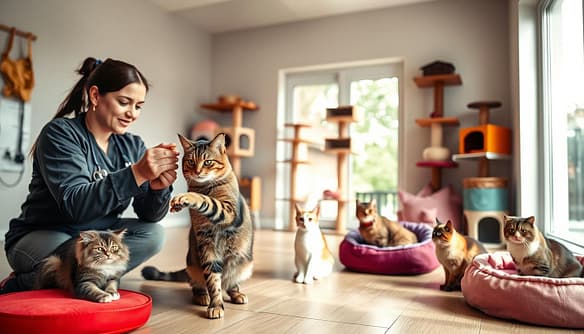
These tests decide where cats go next. Socialized cats can live in homes. Feral cats go back to their outdoor homes through TNR programs.
Semi-feral cats need special care. They are not ready for a regular home but can do well in places like barns.
The story of Lucy and Linus shows how cats can change. They started shy but grew more confident in a supportive setting. This shows that while a cat’s nature is set, it can adapt with the right environment.
In the end, a cat’s age and how it acts guide its future. Good assessments help find the best home for each cat.
Working Cat Programs (Placement Criteria, Care Standards)
Working cat programs have strict rules for where cats can go and how they must be cared for. These programs are a special part of the cat rescue world. They help cats that are healthy but don’t fit well in a home.
To join a working cats program, a cat must be in good health. Cats that are independent or don’t like people are often chosen. They help control pests outdoors.
People who adopt these cats sign a special agreement. This agreement makes sure the cat is safe and happy outside. It’s a big responsibility for the adopter.
| Care Standard | Specific Requirement | Purpose & Rationale |
|---|---|---|
| Shelter | A permanent, warm, and dry shelter must be provided. This is often an insulated barn, shed, or designated shelter box. | Protects the cat from extreme weather conditions, providing a safe retreat and a sense of territory. |
| Sustenance | Daily food and clean water are required, regardless of the cat’s hunting role. | Guarantees consistent nutrition and hydration, ensuring the cat’s primary welfare is not solely dependent on hunting. |
| Healthcare | The caretaker must provide ongoing veterinary care as needed, including annual check-ups. | Maintains the cat’s health, prevents suffering, and fulfills the adopter’s ethical responsibility for the animal’s well-being. |
| Acclimation | A secure 2 to 4 week confinement period in the new location is mandatory. | Allows the cat to associate the new site with food and safety, critically reducing the risk of flight and ensuring a successful transition. |
It’s common for cats to be placed in pairs. Places like the Kansas Humane Society often do this. Pairs help each other feel safer and more confident.
These programs can be in many places. Not just farms, but also warehouses, breweries, and churches. Any place that needs to control pests and can care for the cats is a good fit.
Placing a working cat is a big commitment. It needs careful planning and the right care. People can help by supporting ethical local organizations that care for these cats well.
Adoption Trends (Kittens vs Adults, Bonded Pairs)
The world of cat adoption is changing. People want kittens more than adult cats. Shelters and cat rescue groups see this difference clearly.
Kittens get adopted fast. They are popular because they are young and playful. People want them as pets.
Adult and senior cats have a harder time getting adopted. They stay in shelters longer. This is why new ways to help them are needed.
One solution is working cat programs. These programs help adult cats find homes. In 2020, over 13,200 cats were placed through these programs. Now, many programs have waitlists because they are so popular.
| Adoption Category | Average Time to Placement | Primary Candidate Profile | Key Placement Driver |
|---|---|---|---|
| Kitten Adoption | Weeks | Highly socialized, playful | Companionship in home settings |
| Adult Cat Adoption | Months | Variable socialization, calm demeanor | Seeking a specific personality match |
| Working Cat Program | Variable (often has waitlist) | Independent, less-socialized, feral-friendly | Pest control for barns, warehouses, breweries |
Adopting cats in pairs is common and works well. It’s good for both homes and working cat programs. Pairing cats keeps them happy and reduces stress.
For cat rescue groups, adopting pairs is a smart move. It makes the cats’ new homes more stable. This is key for community cats in working roles.
By focusing on kittens for homes and adults for work, we create a better adoption system. It meets the needs of different cats. This leads to better outcomes for all cats in shelters.
Environmental Enrichment for Breed Types
Environmental enrichment must be tailored to each cat’s needs. It depends on understanding their breed traits. This way, we can create a space that supports their natural behaviors and ensures their well-being.
Working cats, like semi-feral or community cats, need a lot of space. They should have a safe outdoor area with shelter. Their main enrichment is hunting rodents or pests.
A cat’s temperament affects where it will do best. A slightly social cat might like a place with some people, like a winery. A more shy cat might prefer a quiet farm or barn with little human contact.
Indoor cats, like active breeds or mixes, need special care. They lack natural hunting and exploration. Vertical space is key, providing high perches for safety and watching.
Scratching surfaces are essential for most cats. They help keep claws sharp, stretch muscles, and mark territory. Place durable scratching posts and pads in important spots to avoid furniture damage. Interactive play that mimics prey is also vital for their minds.
Breed characteristics determine specific needs. A big, sturdy cat like a Maine Coon might need bigger climbing structures and stronger toys. A slender, agile mix might enjoy complex puzzle feeders and fast games.
Matching a cat’s needs with its environment is key to success. A bad match can cause stress. This stress can lead to hiding, aggression, or other unwanted behaviors.
Offering the right enrichment based on breed traits helps reduce these problems. It makes the cat’s world predictable and engaging. This supports their physical and mental health for their whole life.
Case Studies and Outcome Metrics
Quantitative data and case histories show how effective modern cat rescue strategies are. They prove that matching cats to homes based on their needs works well.
Each cat is placed based on its individual needs and personality. This approach leads to successful long-term outcomes, whether in homes or working cats programs.
A case from Humane Animal Rescue in Pittsburgh is a great example. Leah Cullen wanted cats for her home. The rescue found Lucy and Linus, two feral cats, perfect for her.
Lucy and Linus were not socialized well. They needed a careful introduction to their new home. The rescue gave Leah clear instructions on how to introduce them.
The cats started in a safe room. Over time, they got more confident. Now, they enjoy being indoor-outdoor cats on Leah’s property.
This story gives Lucy and Linus a second chance at a happy life. The rescue played a key role in their adoption and provided support after. It shows that non-traditional placements can work.
Organizations also track annual metrics. These numbers show the impact of rescue, adoption, and TNR efforts. Here’s a table with data from established programs.
| Program Type | Cats Placed Annually (Avg.) | Success Rate* | Primary Cat Type |
|---|---|---|---|
| Working Cats/Barn Cats | 120 | 94% | Feral/Semi-Feral |
| Traditional Adoption | 850 | 96% | Socialized DSH/DMH |
| Community TNR Initiative | 600 | N/A | Unaltered Community Cats |
| Special Needs/Senior Adoption | 75 | 91% | Medical/Behavioral Cases |
*Success Rate: Cats stay in their new homes for over a year, based on surveys.
TNR metrics focus on controlling the cat population and improving health, not just placement success.
The data shows that working cats programs have high success rates. They offer a good option for cats that can’t live indoors. With strong TNR efforts, these strategies improve the lives of community cats.
Case studies and metrics prove that tailored placement saves lives. They show why we should keep supporting diverse rescue and management programs.
How to Support Local Cat Rescues
Supporting local cat rescues is key to their success. There are many ways to help.
Donating money helps with medical care, food, and shelter. Many groups have sponsorship programs for animals. Volunteering at shelters or adoption events is also important.
Fostering kittens or adult cats helps shelters. It’s great for young or sick animals. Helping with Trap-Neuter-Return efforts is humane and keeps cat populations under control.
Sharing information on social media helps reach more people. To learn about working cat programs, contact local shelters. These programs give cats a safe outdoor home.
Adoption fees for working cats are often free, thanks to grants. Businesses can help by providing space or resources. Every effort helps care for community cats.
Keeping the community involved is vital. It makes a big difference in the lives of cats locally.