
Imagine America’s animal shelters as the world’s saddest game of musical chairs. There are too many pets and not enough homes. When the music stops, lives are at risk.
In some places, there are too many homeless animals. But in others, there are people waiting to adopt with open hearts. It’s like a supply chain, but with pets.
These freedom rides do more than move pets. They bring hope to new places. I’ve seen how rescue transport turns sad statistics into happy stories. It cuts down euthanasia rates by 30-40% in busy shelters.
It’s like the animal welfare version of the Underground Railroad. A network of volunteers helps pets find new homes. Sometimes, salvation comes on four wheels, not four paws.
The Network
Imagine if Amazon ran animal rescue operations. That’s what we’ve built here, minus the bad labor practices.
Our system links overworked southern shelters with northern ones that have space. These shelter partnerships need more work than a peace treaty.
We aim for a deep connection, like Kant’s philosophy. We coordinate intake, medical care, and communication systems. These are better than most corporate networks.
It’s like Tinder for shelters, but we save lives instead of swiping. The key is when source and destination agencies work well together.
This teamwork creates something amazing. What seems chaotic works smoothly.
Source/destination shelters, data matching
Ever wonder how animal rescue teams work like NASA? They use spreadsheets to find new homes for pets. This is the heart of transport logistics.
Source shelters create detailed “pet passports.” These files are like something the CIA would use. They include:
- High-resolution photos showing every whisker and spot
- Medical records detailing vaccinations and health status
- Behavioral assessments noting quirks and preferences
- Intake histories explaining how they arrived at the shelter
The matching process is like a dating app and air traffic control combined. It’s not just moving animals. It’s finding the perfect match between supply and demand.
Destination shelters share their “wish lists.” These lists show what they need based on their community. The logistics team then matches these needs with the animals.
- Medical compatibility with receiving shelter capabilities
- Behavioral traits with adoptive family preferences
- Transport timing with shelter capacity availability
- Weather patterns with safe travel windows
After all this, the final transport lists are ready. Each animal has the necessary paperwork. The run sheets tell stories of second chances.
This isn’t just about moving animals. It’s about giving them a new life. Every match and every detail shows where an animal belongs.
Planning a Run
Ever tried planning a cross-country move for a dozen furry friends? That’s our life. Each trip needs more paperwork than a Pentagon briefing.
We’re talking about health certificates that make TSA agents look shy. Vaccination records as detailed as a kindergarten class list. And so much paperwork, it could cover the Lincoln Memorial.
Every state has its own rules. Maryland’s rules are different from Virginia’s, like deep-dish pizza is different from thin crust. It’s like a mix of bureaucracy and military precision.
But we make it work. It’s not just about the paperwork. It’s about getting our furry friends home safely.
Health certs, rest stops, crate protocols
Think of animal transport documents as the backstage pass for crossing state lines. These health certificates are more than just papers. They’re like love letters from vets to highway patrol, saying the animal is ready for the road. Without them, it’s like trying to sneak a cat across borders.
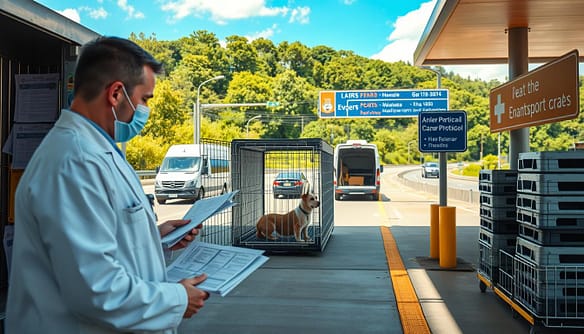
Our rest stop plan is impressive. Every 4-6 hours, we stop for “furry triage sessions.” These aren’t just breaks. They’re where we check on the animals, refill water bowls, and give snacks. It’s like a mobile wellness check that’s more thorough than a TSA scan.
Young animals need snacks often, just like cars need gas. We give them food breaks every 4-6 hours. Skipping these can lead to a big problem, like a cat rebellion.
The crates are like luxury condos for cats. They have comfy bedding, water systems, and privacy screens. Each crate is a mobile sanctuary, keeping the animals safe and comfortable on long trips.
This isn’t just moving animals; it’s a mobile wellness operation. Every detail is important, from the documents to the crate systems. We’re making sure the animals are comfortable, showing that animal care comes first. If humans complained as much as cats, travel would be much better by now.
On the Road
Welcome to the mobile menagerie, where our volunteer drivers become four-wheeled Florence Nightingales. They’re not just driving; they’re conducting a rolling symphony of compassion and logistics.
The two-driver system is more than practical wisdom; it’s psychological armor against highway hypnosis. Imagine keeping calm while your passenger’s idea of small talk is persistent meowing. These modern-day knights errant handle everything from sudden storms to anxious animals with the poise of a bomb disposal expert.
They’re part trucker, part zookeeper, part therapist – all fueled by coffee and a strong commitment to their precious cargo. Safety isn’t just a protocol; it’s their religion on wheels.
These unsung heroes prove that sometimes the most revolutionary act is simply showing up and driving through a blizzard to deliver kittens to safety. The road becomes their sanctuary, and every mile traveled is a testament to human kindness in motion.
Safety, weather, contingencies
Ever notice how everything that can go wrong, will go wrong? We operate under that assumption. Our contingency plans make NASA’s Mars mission protocols look like casual weekend plans.
Weather trying to ruin the party? We’ve got plans for blizzards that would make Frosty shudder and heat waves that would melt the Wicked Witch. Our meteorology game is stronger than your local weather channel’s ratings during hurricane season.
Mechanical failures? Our roadside network puts AAA’s platinum service to shame. We’ve got more backup options than a paranoid IT department. Every transport follows comprehensive emergency management protocols that would impress even the most cynical logistics expert.
We adopted Vision Zero principles because even one preventable incident is unacceptable. Our safety protocols read like spy novel extraction plans – because when lives are at stake, there’s no room for improvisation.
Backup drivers? Check. Alternative routes? Mapped. Emergency vet contacts every 100 miles? You bet. This isn’t just transport – it’s risk management meets animal welfare at its most sophisticated.
Think of it as a mobile command center with fur. Because when the stakes are this high, the only acceptable outcome is perfection.
Adoption Pipeline
Imagine a system that matches supply and demand, but for living creatures. That’s what we’ve created here. It’s a heartwarming way to match animals with homes.
We move animals from crowded places to shelters where they’re wanted. It’s simple economics with a heart. Shelters need good facilities and community support, ensuring no animals are euthanized for lack of space or time.
The fuel fund is the lifeblood of our animal relocation efforts. Without it, gas costs would be sky-high. The fuel fund makes long journeys possible.
We plan everything like a military operation. Adoption events are set up before animals arrive. Our goal is to save as many lives as possible.
Receiving shelters & foster intake
If you think TSA security is thorough, you haven’t seen a receiving shelter’s intake process. These places treat every animal like a celebrity. Instead of paparazzi, they have vet teams doing checks that make airport security look easy.
Every receiving agency has its own medical requirements that are strict. They check for vaccination records, parasite screenings, and behavioral assessments. These forms are longer than a tax return.

The intake process is precise. Paperwork is transferred like a medical handoff. Every detail is documented with care, like evidence in a trial.
Foster networks are like special forces for animal care. They provide extra attention when needed. These homes are ready 24/7 to help.
What makes this system work? Three key things:
- Medical documentation that would satisfy the CDC
- Behavioral assessments more detailed than a corporate HR review
- Foster networks trained for everything from neonatal care to senior pet support
The receiving shelter intake process turns southern pets into northern treasures. It’s where their journey ends and their forever home begins. It’s filled with paperwork, but the rewards are worth it.
Stories from the Route
If Hollywood screenwriters need material, they should ride along on one of these freedom rides. I’ve seen three-legged dogs find paradise in Vermont. Senior cats discover retirement bliss in Minnesota.
In Tucson, volunteers do health checks and whisper encouragement to anxious travelers. “We get to take care of them overnight, do their exams, make sure they’re healthy for travel” one coordinator said.
These aren’t just transports—they’re redemption arcs on wheels. Kitten litters destined for euthanasia become Instagram famous. Senior felines who’d given up hope find forever homes.
Each success story validates the insane logistics behind this operation. The bureaucratic hurdles? Worth it. The sleepless nights? Justified. These way stations of hope prove that sometimes, the longest journeys lead to the happiest endings.
Three happy endings
If transport were just about moving animals from point A to B, we’d be delivery drivers, not life-changers. The real magic happens when the crates open and the futures begin. Let me share three transport victories that keep our engines running.
First, meet Luna – the Alabama hound mix with more wanderlust than a Kerouac character. She traveled from overcrowded southern shelters to Massachusetts where she found her forever home. Now she’s hiking New England trails instead of pacing concrete kennels. Her transformation from shelter statistic to adventure dog exemplifies why we do this work.
Then there’s the dynamic duo that would make Thelma and Louise proud. This bonded pair of senior cats made the journey from Texas to Washington state. Most people overlook older animals, but these wise felines found their perfect match – a Seattle retiree who needed companionship as much as they needed a home. They now rule that apartment like furry monarchs receiving their daily tribute of treats and chin scratches.
The most dramatic rescue involved 25 kittens during a Southern heat wave. Emergency transport doesn’t get more urgent than saving vulnerable lives from extreme weather. The coordination was tighter than a Taylor Swift tour schedule. The result? Every single kitten was adopted within 48 hours of arrival. That’s not just success – that’s a statistical miracle.
These stories aren’t exceptions. They’re the rule we fight to make reality. But here’s the sobering truth: for every Luna or heat wave kitten rescue, countless animals remain in overcrowded facilities. Southern Arizona shelters, like many across the Sun Belt, face constant capacity crises.
| Rescue Story | Distance Traveled | Time in Shelter | Outcome Timeline |
|---|---|---|---|
| Luna (Hound Mix) | 1,200 miles | 4 months | Adopted in 2 weeks |
| Senior Cat Duo | 2,100 miles | 6 months | Adopted in 3 days |
| Heat Wave Kittens | 800 miles | 2 weeks | All adopted in 48 hours |
The data doesn’t lie – transport works. But it only works when communities step up. Shelters in states like Arizona need more than just transport. They need adopters, fosters, volunteers, and donors to create sustainable solutions. Every animal moved north represents space created for another rescue.
These happy endings prove that geographic relocation isn’t just about changing zip codes. It’s about rewriting destinies. The math is simple: more transport equals more lives saved. And more community support equals fewer animals needing transport in the first place.
How to Help
Ever wonder what makes some people true animal saviors? It’s not just about feeling good. It’s about putting in the miles and gas. While others share cute pet pics, we’re on the move, helping thousands of animals every year.
We need volunteer drivers who can go the distance and have a heart of gold. Think you’re up for the challenge? Your group should always be looking for new volunteers. Use social media, events, or email to spread the word.
Applying to help is easy, like swiping right on a dating app. But the benefits are huge. All we ask is for your time, your car, and your heart to join a bigger cause.
Help us fight against unnecessary animal deaths. Your car could be a lifeline for someone in need.
Become a driver, fund fuel, sponsor crates
Your average road trip has snacks and bad music. Ours saves lives and is all about precision. We’ve made volunteering a science to avoid mistakes when lives are at stake.
Driving positions are serious business with us. We offer training that’s top-notch, blending defensive driving with animal psychology and emergency response. Our job descriptions are clear paths to making a real difference.
Not ready to drive? You can help move our missions forward in other ways. $50 can move a cat 300 miles to its new home. That’s better than any car and way more fulfilling.
Our fuel funding program makes your money count:
- $25 = 150 miles of hope
- $50 = 300 miles of second chances
- $100 = complete regional transport
Crate sponsorship is another way to help. Each crate can carry about 250 animals a year. It’s like building a mobile sanctuary.
We offer many ways to help, like a choose-your-own-adventure book. Every choice saves lives. Our job descriptions are clear, making you feel like you’re making a real difference.
So, you can drive, fund fuel, or sponsor crates. Choose your role and we’ll give you a superhero cape (just kidding, but we do have great volunteer jackets).
Environmental & Ethical Considerations
Let’s talk about the elephant in the room – the carbon footprint of moving animals. It’s a big question that makes you think deeply.
Our logistics approach is top-notch. We’ve optimized everything from routes to vehicle maintenance. But, even the best systems use fuel.
Ethically, we’re doing a tough math problem with our hearts. We balance the cost of resources against saving lives. It’s complex, like solving an algebra problem with moral questions.
The ethics of our actions are debated by many. But we always choose compassion. Sometimes, the right choice isn’t the easiest one.
Our logistics are more than just moving animals. They’re about moving forward with our conscience. We do this one mile at a time.
The Final Mile in This Rescue Transport Network
This operation is like the most complex Uber pool ever. But, the passengers can’t complain about the route. Our rescue transport network shows human ingenuity and animal welfare coming together.
Always check in with the receiving agencies. Did the animals meet medical criteria? Were they alert when they arrived? This info helps us get better.
We’re saving lives that shelters would lose. It’s tough, sometimes sad, but it works. Now, we need your help in this rescue transport network.
Drive a leg, fund some fuel, sponsor crates, or share this story. Your help makes a big difference in saving lives.
The animals don’t care about state lines or fuel costs. They just know they have a second chance. Isn’t that what compassion looks like in action?