
Let’s cut through the bureaucratic nonsense. When shelters work alone, it’s like playing whack-a-mole with animal welfare. It’s a losing game everyone can see coming.
Sacramento’s Front Street shows what happens when we build bridges, not walls. Their Homeless Outreach Program didn’t just keep partnerships alive – it grew them. They’ve turned pet owners and community groups into real allies.
Think of it like that famous rising tide quote. But here, the boats are confused-looking rescue pups and the tide is cooperation. An open-admission shelter becomes a community anchor when it stops seeing others as rivals.
This isn’t just feel-good theory. It’s the difference between life and death for thousands. I’ve seen isolated facilities become community hubs with simple mindset shifts. The data shows – cooperation makes a lasting impact.
Leader Profile
Alma Torres doesn’t measure success by empty kennels. Instead, she counts handshakes and community connections. She’s made Fresno Animal Center a beacon of diplomacy in California’s animal welfare world.
Torres leads with a stateswoman’s touch, not just as a shelter director. Her morning mantra is “Every complaint is an opportunity, every concerned citizen a possible ally.” This mindset has changed Fresno’s approach from strict enforcement to community engagement.
What makes Torres’ leadership stand out? She views animal control as community organizing with animals. Instead of officers with fines, she sends “relationship ambassadors” who focus on de-escalation and connecting people with resources.
Her strategy is a modern guide for animal services:
| Traditional Approach | Torres’ Model | Community Impact |
|---|---|---|
| Reactive enforcement | Proactive partnership building | 70% reduction in repeat calls |
| Isolated operations | Integrated community network | 45% more volunteer engagement |
| Complaint-driven responses | Preventative education | 32% fewer intake cases |
The numbers show Torres’ animal control partnership approach works. But the real magic is in the qualitative changes. Neighbors seek advice before problems grow, and local businesses support pet food banks.
Her secret? Treating every interaction as a chance to build a diplomatic corps for animals. It’s a blend of community engagement and animal welfare, and it’s proving to be effective.
This isn’t just about better animal control. It’s about rebuilding trust between local services and communities. Torres shows that the best animal control partnership starts with listening, not lecturing.
Q&A
How do you outsmart mice when they have more money than animal shelters? This is the big challenge for shelters today. They’re moving from being like DMVs to being like a community safety net.
A: Shelters like Fresno’s are now matchmakers. They don’t wait for money. Instead, they team up with others.
Food banks give pet food, vets offer cheap clinics, and housing groups help families stay together. It’s like Tinder for social services, but with better results and less ghosting.
Q: What about the “tough cases” – aren’t some animals just better off in shelters?
A: It’s like saying people should only go to emergency rooms. The new approach focuses on preventing problems early on. It knows 90% of shelter visits could be avoided.
Think of it this way:
| Traditional Model | Community Safety Net | Impact Difference |
|---|---|---|
| Wait for surrender calls | Proactive outreach | 67% fewer intakes |
| Single-organization focus | Multi-agency collaboration | 3x more resources |
| Crisis response | Preventative care | 41% cost reduction |
Q: How do you measure success when you’re preventing something that never happens?
A: You look at empty kennels. You see families who don’t have to choose between pets and food. Success is when you see fewer animals coming in and more trust in the community.
Food banks, even with their own funding issues, join in. Together, they make sure no one has to choose between feeding themselves or their pets.
This isn’t about doing more with less. It’s about changing how we do things together.
Intake diversion & pet retention; reunification strategies; large-dog enrichment; crisis/disaster response; transparency
Welcome to the heart of animal welfare, where old ways are replaced with new, effective methods. This isn’t your grandma’s shelter anymore. It’s a new approach built on five key pillars that change how we help animals.
Intake diversion is all about preventing animals from coming to shelters. We use creative solutions to keep pets with their families. This includes fostering, food banks, and behavior help lines.
Pet retention strategies tackle the reasons why families give up their pets. Sometimes, a little help with food, vet visits, or advice is all they need. It’s cheaper and kinder than taking in more animals.
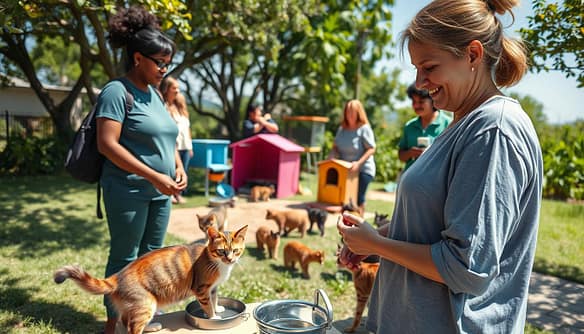
Reunification efforts show we now understand community cats better. Return-to-field programs are a big change. We fix and return cats to their homes instead of killing them.
Large-dog enrichment shows we get canine psychology. We use puzzle toys, rotation systems, and sensory activities. This keeps big dogs happy and safe.
Crisis response shows a shelter’s true character. When disasters hit, we need to act fast and be open. Good shelters have plans to keep animals safe during emergencies.
These five pillars work together like a Swiss Army knife. Each tool has its own job, but together they make a system that works. The return-to-field approach is a great example of this.
Organizations like the Cal for All Animals Multicultural Engagement Community of Practice show how to make these pillars stronger. They know that animal welfare must connect with the communities it serves.
The main point is, progressive sheltering is smart, not just nice. It’s about finding real solutions, not just cleaning up after problems.
Policy in Practice
Policy documents are like New Year’s resolutions – beautifully crafted on paper but usually abandoned by February. But when policies actually work in practice? That’s where the magic happens.
Take lost-and-found protocols. What sounds simple becomes revolutionary when implemented properly. Instead of treating stray holds as a countdown to tragedy, progressive shelters treat them as active reunification campaigns.
They’re using social media, neighborhood networks, and yes, even those ancient things called “flyers” to get pets home. The Capacity for Care framework isn’t some theoretical concept – it’s the recognition that overcrowding isn’t a badge of honor.
It’s a system failure. When policies actually align with practice, you get shelters that measure success by empty kennels. It’s the difference between managing crisis and preventing it.
Operating within Capacity for Care ensures every creature receives an appropriate outcome in a timely manner. This isn’t just policy – it’s practice perfected.
RTF/TNR, managed admissions, field services
Welcome to the animal welfare revolution’s operational triad. These three strategies work together like a well-oiled machine, turning chaos into compassion.
RTF/TNR represents the ultimate reality check. We’ve stopped fighting nature and started working with it. Community cats aren’t going anywhere, but we can manage populations humanely.
Managed admissions transforms shelters from overwhelmed facilities into strategic intake centers. It’s about working smarter, not just harder.
Field services have evolved dramatically. Gone are the days of simple animal control. Today’s field teams are community resource navigators.
Now, here’s the secret weapon that makes this entire system work: microchipping. This tiny device creates what military strategists call force multiplication.
Think of microchipping as the digital thread connecting all three strategies. A scanned chip means a stray cat can return to its colony instead of entering the system. It means a lost dog goes home instead of becoming another intake statistic.
The practical benefits are staggering:
- 24/7 pet identification without shelter involvement
- Instant reunification when scanners are available
- Reduced stress for animals, staff, and owners
- Data collection that informs better community programs
This isn’t just animal welfare – it’s compassion logistics. The session emphasized quick, realistic actions that create sustainable practices even under pressure.
When these elements work together, they create something remarkable. It’s like watching a perfect game of Tetris where every piece falls into place. The result? Reduced harm to animals, protected staff well-being, and communities that actually function.
Microchipping turns theoretical strategies into practical solutions. It’s the difference between talking about change and actually creating it.
Community Voices
Let’s talk about diversity in animal welfare. The field has historically lacked diversity, making a 1950s corporate board seem progressive by comparison.
But organizations like HEART L.A. are changing this. Director Diana Cruz-Rivas and caseworker Deisy Melero show that lived experience is a strength, not a weakness.
When communities see themselves in shelter staff, amazing things happen. Trust grows. Engagement increases. And results get better.
An open-admission shelter that doesn’t reflect its community is like a restaurant with unread menus. It’s technically working but fails its true purpose.
These voices are more than just checking boxes. They’re rewriting the rules on effective animal services. They do this through real shelter collaboration that actually works.
Volunteer/adopter quotes
Forget what you thought about animal control being slow. These stories show real teamwork in action. We’ve gathered feedback from the front lines where working together is key.
Jessica Lopez of Paw Mission says it straight: “Before teaming up with San Bernardino, we were like two restaurants fighting for the same customers. Now, we’re a united food truck coalition feeding the community.” Her words pack a punch.
Kristine Watson from San Bernardino Animal Services shares a big change: “We used to say ‘sorry, we’re full.’ Now, we offer three options almost instantly. Our partnership didn’t just grow our capacity – it changed who we are.”
Maria Rodriguez, an adopter, talks about the human side: “I expected long waits and lots of paperwork. But instead, I found a team working together smoothly. It was like watching a dance, not a mess.”
Volunteer James Chen points out the big change: “Now, we’re not wasting time or resources. It’s like building a shelter together, not fighting over umbrellas in the rain.”
| Aspect | Before Partnership | After Animal Control Partnership |
|---|---|---|
| Adoption Processing Time | 3-5 weeks | 5-7 days |
| Inter-Organization Communication | Email chains that went unanswered | Shared digital platform with real-time updates |
| Resource Utilization | Duplicate purchases and overlapping services | Coordinated resource sharing and specialized allocations |
| Community Perception | “Confusing and bureaucratic” | “Streamlined and collaborative” |
The numbers show a big change, but these voices tell the real story. It’s not just about sharing resources. It’s about speaking the same language, having the same goals, and working together. This way, everyone wins, not just one team.
One volunteer summed it up perfectly: “We stopped competing and started working together. The animals were the first to notice.” Sometimes, the simplest truth is the most profound.
How to Engage Locally
So you’re sold on the power of working together – now what? Building your local community safety net doesn’t require superhero status or overnight transformations.
Start with those painfully boring municipal meetings where budgets get decided. Someone needs to remind cities that certain services deserve more funding than pothole repair.
Support policy changes that recognize vital services as public health infrastructure. This way, they’re not seen as optional luxuries. Join volunteer teams that bridge gaps between official agencies and neighborhood organizations.
The beautiful part? You don’t need a fancy degree to make change. Resources like NACA’s free webinars give everyone access to professional knowledge. Just bring internet access and enough caffeine to survive municipal budget discussions.
Real change happens when ordinary people show up consistently. Your local community safety net gets stronger one meeting, one policy, one conversation at a time.
Attend meetings, support policy, join volunteer teams
There’s a big gap between caring about animals and actually helping them. Three key actions can bridge this gap: showing up, speaking up, and cleaning up. These actions are not about showing off. They are about making real changes through local governance and grassroots efforts.
Going to meetings is more than just sitting there. It’s about showing up at animal commission hearings with comments that matter. It’s like giving government services a review, but instead of burgers, it’s about life-and-death policies. Regular attendance shows that you care, just like your favorite barista remembers your coffee order.

Supporting policy means understanding that animal welfare comes from laws, not just feelings. This means backing programs like return-to-field initiatives that treat community cats as residents, not pests. It’s not just about better shelters. It’s about changing how cities view animals.
- Write informed letters to council members that use data, not just emotions.
- Use social media to mobilize others with clear actions, not just anger.
- Know about budget allocations because compassion needs funding to be real.
Being part of a volunteer team means doing work that won’t get you famous on Instagram. It’s about fostering animals, helping with microchipping clinics, or assisting with return-to-field efforts. It’s like helping your friend move instead of just liking their post about their new apartment.
The best volunteers focus on specific tasks, not everything. Here are some roles:
- Transport teams – the Uber drivers for animals in need
- Foster networks – temporary homes that prevent euthanasia
- TNR specialists – the ninjas of return-to-field operations
- Advocacy coordinators – who turn passion into policy change
Real change happens when we treat animal welfare as our responsibility. It’s about the paperwork, the messy fosters, and the late-night meetings. It’s not glamorous, but it saves lives.
Your local shelter’s return-to-field program needs more than sympathy. It needs your presence at meetings, your voice during comments, and your hands for Saturday morning tasks. This is how we turn concern into real change.
The Future is Collaborative
The old-school animal control model is outdated, like dial-up internet. We need a new way forward that involves working together. Tools like lost-and-found programs and microchipping are already available.
The Maddie’s Million Pet Challenge shows us the way. It uses proven strategies to help all shelter animals. We need to stop fighting over who does what and start solving problems together.
Animals don’t care who saves them, they just want to be saved. Help out with local lost-and-found efforts. Push for microchipping policies. Join volunteer teams. Our willingness to work together is our greatest strength.