
The Arctic’s working dogs have a history as tough as their home. Knowing this history is key for husky rescue and malamute rescue today. Their traits were shaped in the toughest conditions.
The Siberian Husky came from the Chukchi people in northeastern Siberia. These groups bred the dogs for pulling sleds over huge frozen areas. Living together was a must for survival.
This way of breeding made a dog perfect for teamwork and lasting effort. The dogs worked together, counting on each other and their handlers. These traits are seen in the breed today.
North America welcomed these dogs in the early 1900s. They were brought to Alaska for racing and hauling. Their biggest achievement was the 1925 serum run to Nome.
This event showed their amazing strength and will. It made them known as strong, driven working dogs. Their history affects their needs in today’s temperate climates.
Typical Temperament and Drive
Siberian Huskies and other northern breeds have unique behaviors. These traits come from being bred for harsh climates. This history makes many rescue dogs from these breeds similar.
These dogs are friendly and outgoing. They get along well with strangers and don’t guard much. They are also very smart but can be independent.
They love to talk and make sounds. This is how they communicate in their pack. It’s not usually a sign of trouble but a way to express themselves.
What really stands out is their energy. They have lots of endurance and need to stay active. It’s key to keep them happy and healthy.
They are known for their endless energy. Just a walk isn’t enough for them. They need activities that keep them busy for a long time. Without enough exercise needs, they might get anxious or destructive.
Understanding their nature is essential. Their friendly, independent, and vocal nature is part of who they are. Owners and foster homes need to plan well for their needs. This means giving them lots of physical and mental activities.
Common Medical Concerns (hypothyroidism, hip issues, heat risk)
Arcitc breeds need special care in warmer places. Rescue groups for Siberian Huskies and similar dogs must watch for health issues and climate dangers. They focus on early checks and safe living spaces.
Eye problems are a big worry. Huskies often get cataracts and retinal atrophy. Regular eye checks can catch these early. This helps keep their vision good.
Hip problems, like hip dysplasia, are another concern. This can cause arthritis and make moving hard. Rescues check the dogs’ hips. Keeping them at a healthy weight and exercising them right helps.
Thyroid issues, like hypothyroidism, are common. It affects how they feel, their fur, and energy. Blood tests can find it. Medicine usually helps manage it well.
Their thick fur is great for cold but bad for heat. It keeps heat close to their body. In warm weather, they can’t cool down well.
They need to exercise when it’s cooler. Morning or evening is best. They need shade and water always. Checking the ground temperature is also important.
Rescue groups have special heat safety rules. They use cool mats and keep places cool. Watching for heat stress signs is key. They have plans for when dogs get too hot.
Good health care covers all these issues. It includes genetic tests, safe living, and working with vets. This keeps northern breed rescues safe in warmer places. Keeping them cool is as important as treating health problems.
Shelter Challenges (Containment, Exercise, Prey Drive)
Shelters for Siberian Huskies and similar breeds face unique challenges. These include keeping them contained, managing their high energy, and controlling their prey drive. Without the right setup, dogs might escape, damage property, or fight with other animals.
The containment challenge is critical. Siberian Huskies are great at escaping. They can climb over six-foot fences and dig under barriers quickly. To keep them in, shelters need strong, secure enclosures with special features.
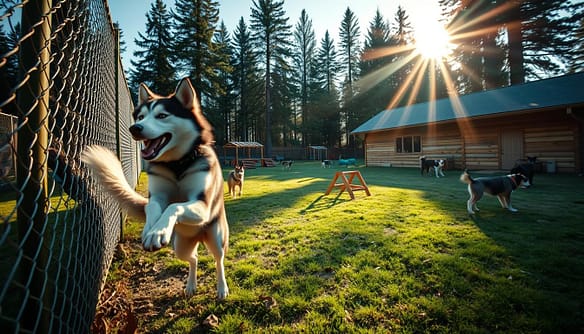
Not enough exercise leads to bad behavior. Huskies need more than just walks. Without enough activity, they might chew, bark, and dig, damaging shelters and stressing everyone.
These dogs also have a strong prey drive. This means they might chase small animals, like shelter cats or wildlife. It’s not aggression, but it needs careful handling.
To manage these issues, shelters need special strategies. The table below shows common problems and how to fix them for northern breeds.
| Challenge | Typical Manifestation | Recommended Shelter Protocol | Risk Level |
|---|---|---|---|
| Containment / Escape | Climbing fences, digging under barriers, testing gate latches | Install 8-foot fencing with dig-proof aprons, double-gated entry systems, and regular hardware checks | High |
| Exercise & Behavior | Destructive chewing, excessive vocalization, pacing | Implement structured run groups, provide heavy-duty chew toys, and introduce scentwork or puzzle feeders | Medium-High |
| Prey Drive | Focused staring, whining, or lunging at small animals | Maintain separate housing zones for species, use visual barriers, and conduct controlled assessments | Medium |
Keeping dogs from escaping is a top priority. Also, shelters need to keep high-energy breeds busy to prevent bad behavior. Managing their prey drive is also key. These steps help keep northern breeds safe and happy in shelters.
Foster and Training Protocols (Running Clubs, Scentwork)
Looking after northern breeds like Siberian Huskies needs a mix of physical and mental activities. Rescue groups have set rules to help these dogs use their energy right. These rules help keep the dogs calm and ready for a new home.
Siberian Huskies need lots of exercise to stay happy and healthy. They love activities like hiking, running, and sports like skijoring. Many rescue groups work with running clubs to give these dogs a place to run.
It’s also important to keep their minds busy to stop them from getting bored or destructive. Games like puzzle feeders, scent work, and obedience training are great. These activities are as good as physical exercise for their minds.
Training these dogs with positive rewards works best. Foster caregivers learn to use rewards to build trust and help the dogs adjust to their new home.
The table below shows the main activities foster homes do with northern breeds.
| Activity Type | Primary Benefit | Recommended Daily Duration |
|---|---|---|
| Running / Canicross | Meets high aerobic exercise needs, reduces hyperactivity | 30-60 minutes |
| Hiking on Trails | Provides physical and sensory enrichment, builds stamina | 45-90 minutes |
| Scent Work Games | Offers deep mental stimulation, satisfies natural prey drive | 15-30 minutes |
| Interactive Puzzle Toys | Challenges problem-solving skills, manages alone time | Multiple short sessions |
By following these activities, dogs get to use their energy in a good way. Happy and well-exercised foster dogs are more likely to find a home. This makes them more appealing to people looking to adopt.
Adoption Profiles That Thrive
Successful long-term placements are not random. They come from careful matching between a dog’s needs and an adopter’s abilities. Many northern breeds end up in rescue because of a mismatch. Owners often underestimate the daily exercise and coat care needed.
Rescue groups do behavioral checks to avoid these mismatches. They look at energy, prey drive, and how well the dog gets along with others. This helps find the best home for a dog.
The perfect home for a Siberian Husky or similar breed has a few key traits:
- An active lifestyle: The family loves to be outdoors and active. This matches the dog’s need for lots of exercise.
- Commitment to grooming: The adopter is ready to groom the dog regularly. This is key for keeping the coat healthy and managing shedding.
- Experience with independent breeds: Knowing how to handle smart, strong-willed dogs is helpful. It prepares the owner for training challenges.
- Secure, contained property: A fenced yard is important. It keeps the dog safe from wandering off or chasing prey.
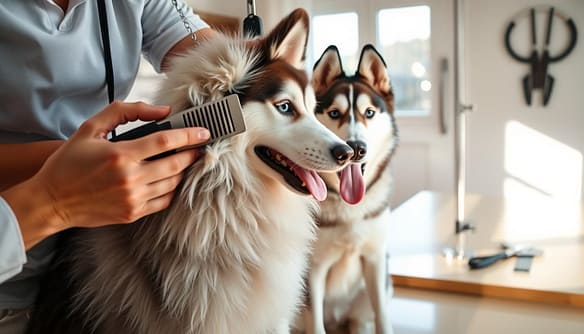
Good coat care is a big deal. Owners need to plan for quality grooming tools and time for weekly brushing. This is even more important during shedding seasons.
Rescues help match dogs with the right homes. They give adopters clear expectations and ongoing support. This helps keep these special dogs in their new homes longer.
Seasonal Intake and Adoption Trends
Weather patterns affect how many cold-weather dogs are surrendered and adopted. Shelters and northern breed rescues see changes in their numbers. These changes are linked to the weather, how ready owners are, and what people think.
Intake for breeds like the Siberian Husky goes up in two times. The first is after the winter holidays. This is when dogs given as gifts are often returned. The second big increase is in the summer.
High temperatures make problems for owners who aren’t ready. A dog made for cold can get destructive or anxious in the heat. This is why heat safety is key in summer. Many owners give up their pets because they can’t handle the heat.
Northern breeds have a natural cycle that matches the seasons. Siberian Huskies shed a lot in spring and fall. They can’t handle the heat as well as they can cold.
Adoption interest goes up when it’s cooler. People think these dogs are better suited for autumn and winter. Shelters change how they promote and advise based on this.
In warmer months, there’s a big push for heat safety. Adoption counselors teach about cooling, exercise, and keeping homes cool. They want to help owners keep their dogs safe and happy.
It’s important to match a dog’s needs with an owner’s ability all year. Knowing these trends helps rescues use their resources better. It makes sure dogs get the care they need when they need it most. This is key for ethical shelters and heat safety.
Case Studies with Outcome Metrics
Rescue stories give us hard numbers on how well they work. The story of Blue shows the usual problems and solutions in husky rescue.
Valley Animal Center in Fresno, California, shared a key example. “Blue is a 6-year-old Husky mix who’s finding it hard in the shelter,” they said. “He’s slowly learning to trust, but it’s a tough place for him.” This shows how hard it is for high-energy dogs in shelters.
To help Blue, the center used special plans. They put him in a foster-to-adopt program to get him out of the shelter. They also started him in scent work to keep him busy and happy. These steps are known to help northern breeds.
The results were clear. Blue stayed 94 days, with 30 of those in foster care. He was adopted to a family that knew about Huskies. This success needed careful planning and resources.
Other cases show similar trends. Data from animal welfare groups backs this up. Dogs do better when they have foster time before adoption. And they need the right family who can handle their energy and needs.
These stories help rescue groups improve. They show which methods work best. This data is key for making husky rescue better across the country.
Support and Volunteer Opportunities
Public support is key for northern breed rescues. Groups like Siberian Husky Rescue of California and Northern California Sled Dog Rescue help Huskies and Malamutes find new homes. They need volunteers to keep their work going.
Volunteering can mean many things. You could foster dogs, help with transportation, or support fundraising efforts. Fostering is a big help, as it helps dogs adjust to new homes. You can also check out foster-to-adopt programs to help.
There are groups focused just on Malamutes. They meet the unique needs of these dogs. Giving money can help more than giving things, as it lets rescues buy what they really need.
Keep up with rescue groups on social media for updates. If you want to volunteer, reach out to them directly. This way, you make sure your help is exactly where it’s needed.