
If you have been waiting for a practical animal event volunteer opportunity, the calendar right after September 15, 2026, offers several ways to serve pets, adopters, and conservation education teams. The best role is not always the most visible one. Sometimes it is greeting a nervous visitor with patience, keeping a booth tidy so staff can answer adoption questions, or helping a family slow down long enough to think carefully before bringing a pet home.
Volunteer work at animal events should never be treated as casual entertainment. Rescue pets and ambassador animals need steady handling, clear boundaries, and people who respect staff instructions. That is why the strongest volunteers ask what the organization needs first, then choose a role that fits their comfort, training, and time. If you are new, start with guest support, setup, cleanup, or information-table help. If the organization has trained you for animal handling, follow its procedures closely and speak up when you need help.
Animal Event Volunteer Roles With Real Dates
Two official opportunities stand out because their organizers have published event details for dates after September 15, 2026. Both show how broad volunteer service can be: one centered on pet adoption, the other on public education at a major zoo. They also remind us that event volunteering is part of a larger circle of care. A friendly booth matters, but so do fostering, transport, donations, and post-adoption support.
SPCA Of Texas Adoption Event Help
SPCA of Texas listed fall 2026 adoption events including the “Dog Days Fashion Show & Adoption Event” on September 19, 2026, from 9:00 AM to 12:00 PM in Coppell, Texas, and “Mobile Adoptions & Vendor Booth at The Parade on Cedar Springs” on September 20, 2026, from 2:00 PM to 5:00 PM in Dallas SPCA of Texas adoption events. The research notes for these listings describe roles such as helping run the event, supporting the mobile adoptions vehicle, greeting attendees, handling animals where approved, assisting vendor booths, and helping facilitate adoptions.
That mix of tasks is exactly why adoption-event help needs steady community members. One volunteer may be best suited to pointing guests toward staff. Another may be trained to help with animals near the mobile unit. A third may support the flow around vendor tables so adoption counselors can focus on careful conversations. Every role can protect the dignity of the animals by keeping the event calmer, clearer, and less rushed.
A good animal event volunteer also understands that adoption is not a race. If someone is drawn to a pet, volunteers can encourage them to speak with authorized staff about fit, time, housing, other animals in the home, costs, and daily care. Volunteers should not promise outcomes or give medical opinions. If a guest asks about health, medication, or symptoms, the kindest answer is to direct them to shelter staff and, for personal pet health decisions, a licensed veterinarian.
Animal Event Volunteer Fit At Boo At The Zoo
Smithsonian’s National Zoo and Conservation Biology Institute posted “Boo at the Zoo” for October 16–18, 2026, with hundreds of volunteers recruited for evening festivities, including treat distribution, guest assistance, and support around animal encounters Boo at the Zoo volunteer page. This is a different style of service from an adoption event, but it still supports animal welfare by helping guests have a safe, respectful experience around a conservation-focused institution.
Zoo event volunteering often asks for warmth without overstepping. You might answer directional questions, help families move through a line, pass out approved treats, or support staff who are managing visitor flow. The animal-care decisions remain with trained zoo professionals. Volunteers help create conditions where education can happen without adding stress to staff, visitors, or animals.
How To Choose A Safe, Helpful Role
Choosing the right assignment starts with honesty. Loving animals is a beautiful reason to show up, but love by itself does not prepare someone to handle a leash in a crowd or answer adoption questions. The most helpful volunteers match their role to their training. If you have not been approved for animal handling, ask for a non-handling job and do it well. Events depend on those jobs more than people realize.
Match The Task To Your Training
Before signing up, read the organizer’s role description and ask what is expected during the full shift. Will you stand outdoors? Will you lift supplies? Will you be near dogs, cats, crowds, children, costumes, music, or food? These details matter. A person who gets overwhelmed in crowds may shine in early setup. Someone who enjoys talking with families may be perfect at an information table. Someone with prior training from the organization may be assigned closer to animal care.
For adoption-centered events, a volunteer’s words can shape a family’s decision. Keep those words careful. Share only what the organization has authorized. Do not invent a pet’s background, behavior history, breed mix, or medical status. If you do not know, say so and find a staff member. That honesty protects adopters and rescue animals alike.
Prepare For Weather, Crowds, And Questions
Preparation is a kindness. Bring water for yourself, wear practical shoes, arrive early, and ask where to check in. If the event is outdoors, ask the organizer what to expect for sun, shade, rain plans, and breaks. If animals are present, keep your own pets at home unless the organizer has explicitly invited public pets and you are attending as a guest. Volunteers should be free to focus on the assignment they accepted.
For guest questions, keep a calm pattern: listen, answer only within your role, and refer to staff. If a family is excited about adopting, celebrate their interest while giving them room to think. Responsible pet ownership includes time, housing rules, daily exercise or enrichment, grooming, training, identification, and veterinary care. A thoughtful pause before adoption can be an act of love.
Adoption Support Starts Before The Booth
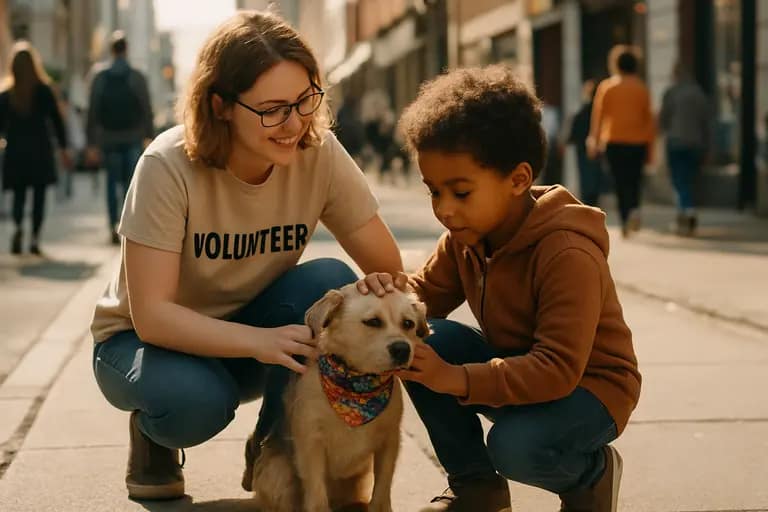
Event-day help is only one piece of rescue support. Adoption events work best when communities also help before and after the public hours. That may mean fostering a pet so a shelter has more space, transporting supplies, sharing accurate event information, or helping an adopter feel welcome after they have signed paperwork. If you want to understand the people power behind these days, our story on pet adoption events powered by volunteers connects the booth work to the quieter tasks that make adoption possible.
Respect The Adoption Process
Volunteers can be powerful advocates without pressuring anyone. The goal is not to place the highest number of animals with the least conversation. The goal is a safe, lasting match whenever adoption is the right fit. That means supporting staff as they ask questions, explain policies, and sometimes slow the pace. A careful “not yet” can protect a pet from a poor match and help a family prepare for a better one later.
It is also fair to remember that not everyone can adopt. Some visitors can foster, donate, clean, greet, transport, or share official event posts. Some can volunteer once. Others can become weekly helpers. A community that honors every honest contribution is stronger than one that treats adoption as the only way to care.
Make The Day Kinder For Animals
Animals at events may be surrounded by new smells, sounds, and people. Volunteers should avoid crowding, squealing, tapping on kennels, or encouraging visitors to reach for animals without staff direction. Calm is not boring; calm is protective. If you notice a concern, report it to the volunteer lead instead of trying to fix it alone.
- Ask first: Confirm your role, check-in time, dress expectations, and any training requirement.
- Stay in your lane: Let staff handle adoption approvals, medical questions, and behavior assessments.
- Use respectful language: Speak about rescue pets as individuals, not projects or sad stories.
- Support the whole team: Setup, cleanup, and guest flow can be just as valuable as animal-facing work.
- Follow up: If the experience fits you, ask about fostering, recurring shifts, or the next volunteer orientation.
Animal Event Volunteer Steps For September And October 2026
For dates soon after September 15, 2026, start with the official event pages for SPCA of Texas and Smithsonian’s National Zoo. Read the role descriptions, check whether shifts are still open, and complete any required application or orientation. If a role involves animals, expect the organization to set rules for safety and welfare. Those rules are not red tape; they are part of caring well.
If you become an animal event volunteer for the first time, give yourself permission to begin small. Hand out information. Direct foot traffic. Refill supplies. Thank adopters. Help a child learn how to give animals space. These acts may not make a dramatic story, but they create the steady conditions that rescue and education teams need. That is community care: practical, patient, and centered on the animals we are all there to serve.