
Let’s be honest. The classic science fair volcano is a bit of a letdown.
Today’s students are moving beyond the baking soda and vinegar. They’re diving into real questions about living animals. They explore heritability, behavior, and health.
Imagine a 15-year-old talking about Mendelian genetics in dogs. Or studying how certain dog lines affect health.
This isn’t just for kids. It’s the start of citizen science. Young minds meet the tough, real data from animal shelters.
Annie Boudreau is a great example. She started with classroom pets in elementary school. By high school, she was working with rabbit and goat pedigrees. This experience led to serious research.
It’s like Stranger Things for animals. Instead of fighting monsters, these students tackle genetic myths with science.
This shift turns shelter volunteer work into real research. Their questions are deep and meaningful.
College Internship Programs: Breed Research Through Rescue Organization Partnerships
Forget about fetching coffee; today’s interns are diving into real research. They’re studying canine behavior at local rescues. This shift turns educational animal volunteering into hands-on science.
At the University of Vermont’s CREAM program, students lead projects. Annie Boudreau, for example, created a partnership with Hunt Middle School. She didn’t just study animals; she built a community program.
Imagine a semester-long study on breed-specific playgroups in shelters. Your classroom is the kennel. Your work could change policies for shelters.
Programs like CREAM and the Owl Research Institute offer a framework. ORI uses volunteers for ecological studies. Apply this to shelters for teen animal science.
So, what’s the real value of this new internship?
- Project Ownership: Students become study designers, managing partnerships and data.
- The Living Lab: Shelters are seen as vital sources of data.
- Academic Currency: Internship hours earn course credits and boost graduate school apps.
- Tangible Impact: Work leads to actionable findings for shelters.
This is experiential learning at its best. It answers the question, “When will I ever use this?” right away. The partnership is the lesson. The data collected is the main text.
For those aiming to be vets, ethologists, or non-profit managers, this is key. It’s the difference between reading about dogs and observing them in a shelter. Internships become the core of your studies. The rescue gets a dedicated researcher, and you gain a unique story.
Student Data Collection: Shelter Statistics and Breed Population Analysis
The truth about saving breeds is not always emotional. It’s about using data to make a difference. Youth animal research turns into real science with the help of databases.
I’ve seen the mess: stacks of paper, confusing spreadsheets, and lost insights. Who can fix this? A tech-savvy student with a passion for animals. Groups like ORI need volunteers for “Data Entry and Proofing.” It’s not just typing; it’s making data useful.
Students also help collect data systematically. They use surveys like ORI’s “Winter Raptor Survey” to track shelter animals. They learn to manage databases and track important stats like adoption rates and return rates by breed.
This is like the Moneyball strategy for animal welfare. It stops guessing and starts knowing which breeds need help. Is a certain breed really surrendered often? Does a mix get adopted but then returned? The data shows the truth.
This research reveals important trends. It turns stories into facts. Here’s what kind of insights youth animal research can find:
| Breed Type | Primary Intake Reason | Avg. Length of Stay (Days) | Adoption Rate (%) | Return Rate (%) |
|---|---|---|---|---|
| Labrador Retriever Mix | Stray | 14 | 88 | 5 |
| Shepherd Mix | Owner Surrender | 22 | 75 | 12 |
| Bully Breed Mix | Stray | 45 | 62 | 18 |
| Small Terrier Mix | Owner Surrender (Housing) | 18 | 82 | 8 |
Look at the data? It shows bully breed mixes have long stays and high return rates. This is a real problem that needs a solution. Students become more than just data entry clerks; they become analysts.
This leads to a new kind of academic animal advocacy. Students learn valuable skills like SQL and statistics. Shelters get the data they need to make changes. It’s the behind-the-scenes work that makes rescue efforts possible.
Youth Photography Projects: Documenting Breed Diversity in Rescue Settings
Imagine if the best tool for a teen animal science project was a camera, not a spreadsheet. In the busy shelters, where dogs are often called “mixes,” photography is a powerful way to document them.
Looking at a row of “Shepherd Mixes,” you notice a wide range of ears, noses, and sizes. The famous “pit bull with a flower crown” photo is striking, but it oversimplifies the animals. It turns complex, unique creatures into a single image.
Student photographers aim to change this. They want to create a visual census. It’s like ORI’s “Special Need: Cataloguing of Photographic Archives,” where volunteers sort images for learning. They turn chaos into order and stereotypes into specific details.
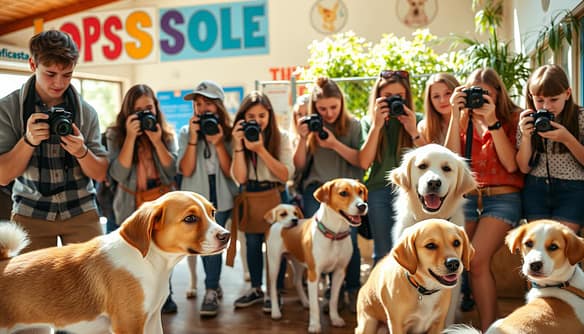
A student breed project in photography is more than an art task. It’s a scientific method with clear goals:
- Challenge Visual Stereotypes: Take photos of dogs labeled as the same breed to show their real physical differences.
- Create Authentic Assets: Make a collection of real, high-quality images for adoption marketing, not just sad faces or costumes.
- Build a Searchable Archive: Use accurate tags like size, color, and unique features instead of guessing the breed, making the shelter’s inventory easy to search.
This project is a mix of documentary and science, challenging common views. It gives data a face, showing hundreds of unique faces. For the student, it teaches observation, ethics, and the importance of representation. For the shelter dog, it might be the photo that finds them a home.
Social Media Research Projects: Breed Representation and Adoption Marketing Analysis
In today’s world, where every puppy picture can go viral, a new kind of scientist is rising: the social media data detective. This isn’t about scrolling mindlessly. It’s about studying what makes us click, share, and adopt. For students involved in educational animal volunteering, a shelter’s Instagram is more than cute pictures—it’s a treasure trove of data waiting to be explored.
Imagine doing a content audit on our emotions. Students use digital humanities to study rescue work. They examine posts with the same care as a literary critic. Which photo gets more likes? Does a video of a dog playing fetch beat a picture of a cat sleeping? The answers are hidden in the data.
This approach has a fascinating history. Think of Annie Boudreau’s work with the Adopt-a-Calf program. She created weekly newsletters based on student questions about the cow Aurora. It was a lesson in using feedback to improve content. Social media research projects take this idea online, to platforms like Facebook, TikTok, and X.
The numbers tell a story. Students can see which breeds get the most attention. But the real fun is in the words. Does calling a dog a “couch potato” lead to more interest than calling it a “high-energy companion”? The results often surprise.
The deeper side of this work is where academic animal advocacy gets really interesting. Does a sad story post work better for older pets, while funny quirks attract mixed breeds? Students learn to find themes, track feelings, and see how stories affect adoption rates. It’s a mix of psychology and pet pictures.
Students become mini social media experts. They make guesses: “Videos with foster volunteers will get more attention than text-only photos.” Then they check their theories and share their findings. It’s a crash course in marketing, economics, and ethics.
This work raises big questions. Are shelters really showing us the truth, or just trying to go viral? Is that “high-energy” dog really just anxious? Student research helps shelters make their messages clear and honest, a key goal of academic animal advocacy.
To see the choices shelters make, consider this breakdown of their posts and their effects. This is what a student project might uncover.
| Content Type | Primary Emotional Appeal | Average Engagement Rate | Typical Impact on Adoption Inquiry Speed | Best Suited For |
|---|---|---|---|---|
| Emotional Rescue Story | Empathy/Sadness | High (Shares) | Fast initial response, slower commitment | Senior animals, long-term residents |
| Humorous Quirk Highlight | Joy/Amusement | Very High (Likes/Comments) | Steady, sustained interest | Young dogs, cats with unique personalities |
| Breed Factoid & Myth Busting | Educational/Curiosity | Moderate (Saves) | Slow build, high-quality inquiries | Misunderstood breeds (e.g., Pit Bulls) |
| Live Q&A with Foster | Trust/Transparency | Variable (High Live Viewership) | Very Fast for featured animal | Any animal, builds broader audience trust |
The table is more than just a study. It’s a guide for shelters, based on real data. The best part of this educational animal volunteering project? Students learn to analyze data and communicate ethically. Shelters get a clear plan to turn online interest into real homes.
Interview Projects: Oral History Collection from Breed Enthuasiasts and Rescuers
Annie Boudreau started with a tape recorder and a question for her teacher’s friend, a Dalmatian rescuer. Her teacher suggested the interview for a class project. What Annie captured was a decade of burnout, hope, and the “101 Dalmatians effect.” This is the heart of oral history in youth animal research.

Forget dusty archives. The most vital records of canine culture are in living memory. Student breed projects that emulate oral history collections turn teenagers into anthropologists. They interview breed club veterans, long-time shelter volunteers, and breed-specific rescuers.
What’s the goal? To archive the lived experience behind the spreadsheet. Quantitative data tells you “what.” Oral history tells you “why.”
Imagine uncovering the real story behind breed popularity cycles. Everyone knows the movie-driven spikes. But what about the aftermath? A rescuer’s narrative about the flood of surrendered Dalmatians two years post-film is a masterclass in cultural cause and effect. These stories provide context that numbers can’t touch.
This form of youth animal research is like StoryCorps for dogs. The process is simple:
- Identify a knowledgeable source: a breed historian, a founding member of a rescue.
- Prepare open-ended questions: “What’s the biggest change you’ve seen in public perception?” “Can you describe a case that changed your approach?”
- Record, transcribe, and analyze. Look for recurring themes—like evolving attitudes toward guarding breeds or the impact of celebrity ownership.
These interviews do more than fill a grade sheet. They preserve institutional memory that is often one retirement away from being lost forever. They reveal the human cultural forces that shape the lives of millions of animals. When a student listens to a rescuer detail the long fight to reframe a breed’s reputation, they’re documenting a social movement.
This qualitative approach is potent for understanding complex issues like breed stigma. Personal stories of dedication and successes that break breed stereotypes carry an emotional weight that statistics lack. They show the face of advocacy.
For any educator or student designing a student breed project, remember: data has a heartbeat. The numbers on shelter intake are important. But the tremor in a volunteer’s voice when describing the one that got away? That’s where the real research begins. Annie’s project didn’t just earn an ‘A’. It archived a piece of history that would have faded, proving that the most advanced tool in youth animal research is sometimes just the willingness to listen.
Community Survey Projects: Local Breed Preference and Awareness Studies
Imagine mapping your neighborhood’s pet preferences like a political pollster tracks voting districts—that’s the power of youth-led breed awareness surveys. This isn’t about counting yard signs. It’s about decoding the canine cultural landscape of your town, one questionnaire at a time.
What does your zip code reveal about your dog? A student-designed community survey tackles this question head-on. It transforms casual curiosity into hard data on local breed popularity, knowledge of shelter resources, and public perceptions of common breeds. Think of it as grassroots political polling, but for pets.
Do affluent neighborhoods truly have a monopoly on “designer mixes”? Are working-class areas more likely to champion misunderstood guardian breeds? These are the hypotheses that fuel this brand of teen animal science. The answers paint a vivid socioeconomic portrait of a community through its choice of companion.

The project is a masterclass in practical research. Students learn to craft unbiased questions, distribute surveys ethically, and crunch the resulting numbers. It’s survey design, statistical analysis, and cultural anthropology rolled into one compelling package of educational animal volunteering.
The findings are more than just academic. They become actionable intelligence for local shelters and municipal governments. This data-driven guide can shape community outreach programs, target education campaigns, and even inform policy discussions about breed-specific legislation.
Consider the insights a simple survey can yield. The table below illustrates hypothetical data patterns students might uncover, turning anecdotal observations into quantifiable trends.
| Neighborhood Type | Most Common Breed Preference | Shelter Resource Awareness (%) | Prevalent Misconception |
|---|---|---|---|
| Affluent Suburban | Labradoodle / Goldendoodle | 42% | “Shelter dogs have too many behavioral problems.” |
| Urban Working-Class | American Pit Bull Terrier Mix | 68% | “Breed-specific legislation is effective for safety.” |
| Rural Mixed-Income | Australian Cattle Dog / Heeler Mix | 35% | “Local shelters only have ‘aggressive’ breeds.” |
| University District | Small Mixed Breed / Terrier | 81% | “Adopting a pet is prohibitively expensive.” |
This work moves beyond “what people think” to “why they think it.” It examines how media portrayal, personal experience, and community norms shape our views on animals. That’s the intellectual hook of this teen animal science endeavor.
The process itself is transformative. Students must navigate human subjects, interpret ambiguous answers, and present complex data clearly. They learn that numbers have narratives. A low awareness percentage isn’t just a statistic—it’s a map for where a shelter should place its next ad campaign.
Ultimately, these community survey projects bridge the gap between academic study and civic action. The final report isn’t filed away in a classroom. It’s presented to the local animal commission, discussed at a shelter board meeting, or shared with city planners. This is educational animal volunteering with tangible, real-world stakes.
It turns students into local experts. They become the people who can definitively say, “In our south-side neighborhoods, there’s high affection for large breeds but a critical lack of information about low-cost veterinary services.” That’s powerful knowledge.
In an era of polarized debates about dogs and breeds, this approach offers a cooler, data-driven path forward. It replaces fear with facts and assumption with analysis. That might be the most valuable lesson of all.
Genetics Education: DNA Testing Programs for Mixed Breed Identification
The “Lab Mix” label is often a shelter’s hopeful fiction. But, youth-driven DNA testing initiatives are changing this with hard genetic data. It’s not just biology class; it’s a real-life CSI: Canine Shelter Investigation. Students become genetic detectives, turning kennel uncertainty into a science lesson.
A team fundraises or partners with a canine DNA testing company. Then, the real youth animal research starts. They swab the cheeks of shelter dogs with unclear histories. This act makes genetics real and tangible.
The results change everything. That “Boxer Mix” might actually be a mix of Chow Chow, American Staffordshire Terrier, and Poodle. The “Shepherd blend” could have Dalmatian genes. It’s like a genetic paternity test.
But it’s more than just a surprise. Students compare the genetic data with the shelter’s guess and the dog’s behavior. Does the “Chihuahua mix” with Border Collie genes herd? The data links DNA to behavior.
The learning is huge. Students learn about genetic markers and debunk myths. They understand what really makes a “breed.” This is academic animal advocacy at its best: using science to help animals.
- Scientific Method in Action: They form hypotheses, collect samples, analyze data, and conclude.
- Data with Real-World Impact: The findings help shelters create accurate adoption profiles. A “Super-mutt with 10 breeds” is more interesting than a mistaken identity.
- Shattering Assumptions: It teaches empathy, showing a dog’s value and behavior aren’t based on a kennel card guess.
These programs do more than identify breeds. They find future scientists and advocates. It’s a mix of lab work, detective story, and identity. It gives shelters powerful tools, thanks to student curiosity and academic animal advocacy. The truth about understanding dogs is in their saliva.
Behavioral Studies: Youth Observers Documenting Breed-Specific Traits
Forget the tired clichés about lazy bulldogs and hyper herders. The real story of breed-specific behavior is being written by teen scientists with sharp eyes and sharper pencils.
Why trust a stereotype when you can collect data? The core of modern teen animal science is moving from assumption to observation. Students are being trained as neutral behavioral observers. Their mission? To document what dogs actually do, not what breed lore says they should.
Their primary tool is an ethogram. Think of it as a detective’s checklist for canine conduct. It’s the same methodology used by volunteers for organizations like the Owl Research Institute. Those volunteers dissect hours of nesting footage for specific behaviors. Our student observers apply this rigorous focus to the foster home or shelter play yard.
What does a “herding instinct” look like during controlled play? It might be a focused stare, a low crouch, or a specific type of nip at the heels. A so-called “high prey drive” could manifest as a rigid point, a sudden freeze, or a particular chase sequence. By logging frequency, duration, and context, students transform vague labels into quantifiable actions.
This objective data is revolutionary for adoption matchmaking. It separates genetic predisposition from individual personality and training history. The result is a sophisticated behavioral profile. It goes far beyond the generic “good with kids.” These profiles help shelters make perfect matches, reducing returns and increasing lifelong happiness.
The work does more than help one dog at a time. It builds a repository of local, real-world behavioral data. This information is gold for rescue groups. It can also contribute to larger formal research on canine behavior, as seen in studies that rely on objective behavioral data. Students aren’t just watching dogs. They’re contributing to a broader scientific understanding.
This hands-on research represents the future of student breed projects. It replaces outdated ideas with evidence. It empowers young researchers to see the individual behind the label. Ultimately, these observational studies prove a powerful point. The most truthful breed profile isn’t found on a Wikipedia page. It’s written in the wag of a tail, documented by a keen young observer.
Academic Publication Opportunities: Student Research Contributing to Animal Welfare Knowledge
What’s the final grade for youth-led breed research? Sometimes, it’s a digital object identifier. The ultimate validation moves past the classroom A+.
Ambitious projects become real science. A high school team’s study on fostering fearful herding dogs could set a new shelter protocol. Their names would be on the paper. This is the peak of educational animal volunteering. It transforms a student into a proto-colleague in animal welfare.
Annie Boudreau’s project shows the path. Her university advisors supported her capstone work, creating tangible community impact. This model is replicable. Student work can be presented at veterinary conferences or published in junior scientific journals.
This pipeline is active academic animal advocacy. It closes the loop. The data collected in shelters doesn’t just fill a local newsletter. It informs accreditation standards and pushes the entire field forward. The student scientist’s journey finds its most powerful expression here: contributing to the permanent record of knowledge for better animal lives.