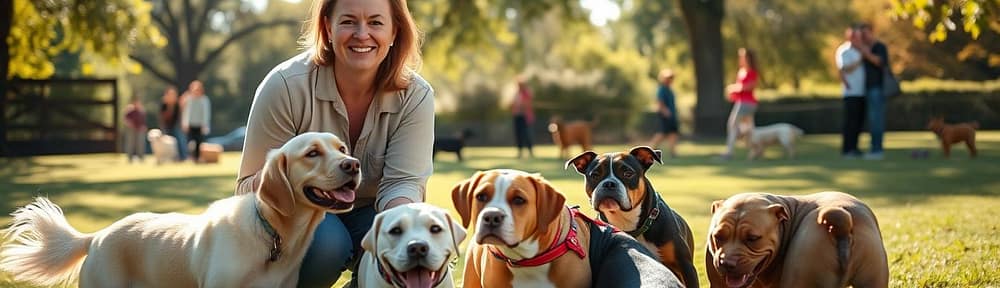
Imagine an animal shelter, but more focused. That’s what breed-specific rescue is like. It’s a VIP area for certain dogs.
These groups save dogs and learn about their breeds. They know each dog’s traits and history well. Their work is very detailed.
Volunteering here is unique. You might help with adoption apps, virtual visits, or moving dogs across states. Some groups, like those with virtual orientations, welcome remote helpers.
So, why help here? It’s because you can really make a difference. You’ll learn about dogs in a way that helps them more. Are you ready to make a big impact?
German Shepherd Rescue Volunteer Stories: Large Breed Handling and Rehabilitation
The AKC Rescue Network says foster volunteers get to know a dog’s history well. This is more than just breed rescue volunteering. It’s like solving a mystery with a dog’s body language and reactions. German Shepherds are smart, but they can be a challenge to handle.
Handling these dogs is a big job, as LHK9 points out. It’s not easy to move them safely. They are big and strong, and can get anxious easily. It’s like a big operation, not just a simple ride.
So, what does a volunteer’s week look like? It’s filled with special tasks:
- Foster Home Analyst: You don’t just provide shelter. You also write a detailed report on the dog’s personality and skills. You become the dog’s biographer and advocate.
- Strategic Transport Officer: This role is part safe driver, part calming presence, part muscle. You learn to crate dogs safely, drive smoothly, and read their stress signals.
- Behavioral Rehabilitation Assistant: You work with trainers to help dogs overcome breed-specific issues. This includes herding instincts and being wary of strangers.
- Adoption Matchmaker: You use your knowledge to find the right home for a German Shepherd. You look for specific traits that match the dog’s needs.
Let’s compare this to a general shelter. The special skills needed are the key difference.
| Aspect of Volunteering | General Animal Shelter | German Shepherd Rescue |
|---|---|---|
| Primary Knowledge Base | General dog handling and care | Breed-specific genetics, behavior, and common health issues |
| Physical Demand | Variable; often moderate | Consistently high; focused on large-breed control and safe movement |
| Volunteer-Canine Relationship | Often shorter-term, custodial | Deep, observational, and rehabilitative; fosters live with the dog |
| End Goal Focus | Safe placement into any loving home | Precise placement into a structurally appropriate home for this breed |
| Problem-Solving | Addressing immediate needs (food, walk, clean) | Solving complex behavioral puzzles rooted in breed traits and past trauma |
The reward is great, but it’s hard-earned. You’re not just filling a kennel. You’re changing a dog’s life. This purebred rescue work makes you a breed ambassador. You learn to explain the difference between protective and aggressive, between energetic and neurotic. You become a translator between dogs and people.
In the end, the story of a German Shepherd rescue volunteer is one of applied expertise. It’s where love for dogs meets the gritty reality of logistics, psychology, and advocacy. It’s the most demanding, and most enlightening, form of breed rescue volunteering you’ll find.
Golden Retriever Rescue Programs: Popular Breed Volume and Volunteer Needs
The Golden Retriever rescue is like a busy airport on a holiday. It’s full of dogs coming in, but not enough space to handle them. This is a big operation, not just a small task.
Why do so many dogs end up in rescue? The AKC Rescue Network has the answers. People often give up their dogs because of a change in lifestyle or not having enough time. They forget that Golden Retrievers are high-energy and need lots of attention.
One of the saddest reasons is when families realize they got the wrong breed. They thought a Golden Retriever would be perfect, but it’s not. This leads to a lot of dogs being given up.
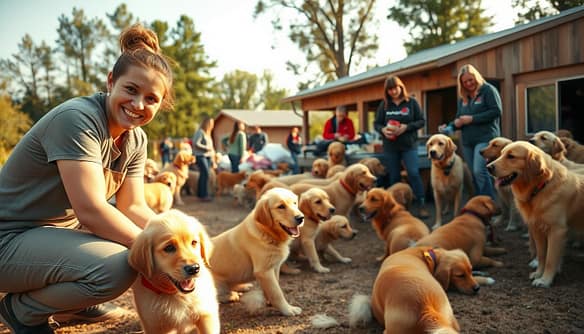
Rescues face big challenges like finding homes, people to help, and money. The work is both emotional and practical. It’s like managing a crisis of mistaken identity.
What does volunteering for Golden Retrievers really mean? It’s not just walking dogs. It’s about keeping the rescue running smoothly.
Volunteers deal with a lot, like screening applications and finding foster homes. Every foster home helps by freeing up space. This is key to solving the manpower problem.
Fundraising is more than just selling t-shirts. It’s about telling stories to help dogs get the care they need. This work is strategic and hands-on.
The table below shows the main problem and how it affects rescues:
| Owner Surrender Reasons (The Input) | Rescue Operational Shortfalls (The Bottleneck) | Resulting Volunteer Specialization |
|---|---|---|
| Change of Lifestyle / Lack of Time | Lack of Foster Homes (Manpower) | Foster Coordinator, Home Check Specialist |
| “Not the Right Breed” (Failed Expectations) | Lack of Manpower for Intake & Processing | Application Processor, Admissions Counselor |
| Financial Hardship (Often Unstated) | Lack of Funding for Medical Care | Medical Fundraiser, Grant Writer |
Volunteering with Golden Retriever rescues means you’re part of a big team. Your job is to keep the flow of adoptions going. It’s about managing time, people, and strategy.
The real volunteer work is behind the scenes. It’s about turning love for Golden Retrievers into action. It’s a big challenge.
Pit Bull Rescue Volunteering: Advocacy Work and Public Education Opportunities
The pit bull rescue volunteer is like a political strategist. They don’t just care about dogs; they fight for their rights. They use facts, social media, and patience to explain dog behavior to others. This is rescue breed advocacy at its core.
The Pit Bull Rescue Central (PBRC) is a great example. They work online, using digital activism. This 100% virtual group shows that the biggest battles are in public opinion and policy.
Volunteers work like a campaign team. They join committees to fight misinformation.
The Education & Public Relations committee is key. They create materials that debunk myths. They write social media posts that explain dog behavior to the fearful. It’s not just cute content; it’s strategic messaging.
The Fundraising committee is like the campaign finance team. They raise money for legal defenses and vet care. Every dollar helps fight breed-specific legislation and supports dogs in court cases.
The Spay/Neuter committee focuses on long-term policy. They promote affordable surgeries to solve overpopulation. It’s a data-driven approach to a big problem.
Here’s what this committee-based breed rescue volunteering looks like:
| Volunteer Committee | Primary Mission | Key Tasks | Required Skillset |
|---|---|---|---|
| Education & PR | Combat public misinformation and promote responsible ownership. | Create educational materials, manage social media, respond to public inquiries, write press releases. | Excellent writing, research skills, media literacy, patience. |
| Fundraising | Secure financial resources for medical, legal, and operational costs. | Grant writing, online campaign management, merchandise sales, donor relations. | Financial creativity, marketing savvy, persuasive communication. |
| Spay/Neuter | Reduce overpopulation through preventative veterinary programs. | Coordinating with clinics, managing voucher programs, community outreach on benefits. | Organizational skills, knowledge of veterinary resources, community networking. |
This work requires a special kind of person. You need to be thick-skinned and analytical. You translate dog behavior and data into human language.
The rewards are huge. You’re not just saving dogs; you’re changing the system. Every myth debunked and policy challenged is a step towards fairness.
This rescue breed advocacy is a long-term effort. It’s about rewriting cultural scripts, not just rescuing dogs. It’s for those who believe in using their minds and facts to make a difference.
Greyhound Rescue Volunteer Experiences: Retired Racing Dog Transition Support
The specialized animal rescue for a retired Greyhound is like a diplomatic mission. It’s not just about rehab; it’s about helping them adjust to a new life. They come from a world of speed and naps, and now they need to learn about life on a couch.
Greyhounds have never seen colors, stairs, or toys in the same way. Their world was all about racing and napping. This makes their transition to a new home very interesting.
Volunteers act as cultural translators for these dogs. They follow the AKC Rescue Network’s rule: fostering lasts as long as necessary. Teaching a fast dog to enjoy a couch takes time. It’s about creating a safe space for them to learn.
This work requires patience. It’s not just about training; it’s about guiding them. You watch as they learn to share a couch and enjoy bird songs. It’s like uncovering a new world for them.
To understand their transition, look at the differences between their old life and their new one:
| Aspect of Life | Track Life Reality | Volunteer Support Focus |
|---|---|---|
| Environment | Sterile kennels, limited surfaces. | Introducing slippery floors, stairs, glass doors, and furniture slowly and positively. |
| Socialization | Interaction mainly with other Greyhounds and handlers. | Careful exposure to children, small dogs, cats, and varied human personalities. |
| Physical Activity | Short, intense bursts of sprinting on a track. | Leash training for calm walks; teaching play without a mechanical lure. |
| Mental Stimulation | Focus singularly on the lure; limited problem-solving. | Introducing food puzzles, scent games, and basic obedience for mental engagement. |
| Basic Life Skills | None required. Meals are provided, elimination is scheduled. | House-training, learning to eat from a raised bowl, understanding “home” as a safe space. |
The reward in this work is truly special. Success is not just about following commands. It’s about building confidence. When a retired racer chooses to join you on the couch, it’s a big win. It shows they’ve found a new home. This is the heart of purebred rescue work.
Persian Cat Rescue Work: High-Maintenance Breed Grooming and Health Care
The world of Persian cat rescue is all about the truth: beauty comes with a price. It’s not just about caring for cats. It’s about mastering coat care and keeping their breathing healthy. For those looking for unique breed-specific volunteer opportunities, this is it.
Persians don’t clean themselves like other cats. Their long fur needs daily brushing to avoid mats and skin problems. Grooming is not just for looks; it’s a must for their health.
Their faces are adorable but come with health issues. Brachycephalic syndrome causes breathing problems. Their eyes need daily cleaning to prevent infections. Dental issues are common, making eating a challenge.
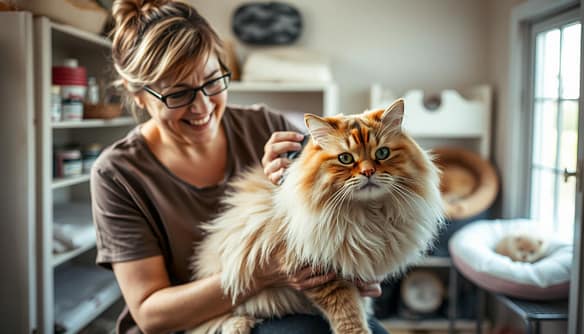
Volunteering here means more than just caring for cats. It’s about fighting for their health due to selective breeding. Every challenge is a chance to teach and advocate. It’s a battle fought with patience and kindness.
| Care Aspect | Persian Cat | Domestic Shorthair | Volunteer Skill Focus |
|---|---|---|---|
| Grooming Frequency | Daily brushing essential | Weekly brushing sufficient | Advanced detangling, patient handling |
| Common Health Issues | Brachycephalic syndrome, eye weeping, dental issues | Typically robust; fewer breed-specific issues | Medication administration, respiratory monitoring, eye cleaning |
| Adopter Education Need | High (lifestyle & cost commitment) | Moderate | Counseling, setting realistic expectations |
| Core Advocacy Angle | Ethics of extreme conformation breeding | General pet overpopulation | Specialized breed knowledge as a tool for change |
What do you get from this breed-specific volunteer opportunity? You gain a unique skill set. You learn to see beyond the cat’s looks to their real needs. This work teaches you the true cost of beauty, making you a stronger voice for animal welfare. It’s rescue breed advocacy at its most hands-on and revealing.
Border Collie Rescue Volunteering: High-Intelligence Breed Mental Stimulation Needs
Working with Border Collies in rescue is like being a mental coach for dogs. It’s not just walking dogs; it’s a cognitive boot camp. These dogs are like Einsteins, always ready to learn.
Imagine a Labrador’s brain as a sedan and a Border Collie’s as a Formula One car. If left alone, they’ll find their own fun, like playing with your furniture. The goal of purebred rescue work is to keep them engaged through creative activities.
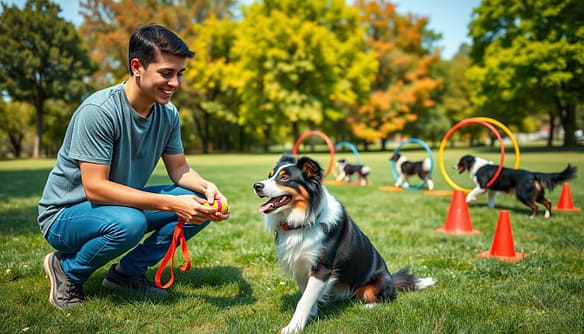
Training a Border Collie isn’t simple. You need to create new obstacle courses every day. They love puzzles and learning new tricks. It’s like running a doggy daycare, always coming up with new games.
Volunteers need to be creative, like writing adoption profiles that highlight a dog’s needs. A good profile might say, “Baxter loves solving puzzles.” Blogging about dog games is also important. It helps keep these smart dogs busy and happy.
The table below shows how different a Border Collie’s needs are. It highlights the need for volunteers to adapt their roles.
| Activity Type | Standard Dog Goal | Border Collie Requirement | Volunteer’s Adapted Role |
|---|---|---|---|
| Food Puzzle | Slow down eating, mild engagement | A multi-stage problem that requires tool use or collaboration | Engineer new puzzle designs; film tutorials for adopters |
| Training Session | Learn basic obedience (sit, stay) | Learn a chain of 5+ behaviors or discriminate between numerous named toys | Research and implement advanced trick training; create step-by-step guides |
| Social Time | Playful interaction, burn energy | Structured play with rules and objectives (e.g., “herd” balls into a zone) | Facilitate and referee complex play sessions; observe for optimal pairings |
| Content Creation | Basic adoption bio (“loves cuddles”) | Detailed psychological profile outlining mental needs and ideal home puzzle | Write nuanced profiles; craft newsletters on cognitive care—a key purebred rescue work skill |
Ignoring a Border Collie’s needs can lead to trouble. They might start organizing your belongings or testing your furniture. It’s important to teach them and their future owners about their needs.
This work is rewarding. You’re not just saving a dog; you’re unlocking its full genius. It requires patience and creativity. For those up for the challenge, the reward is a happy, engaged dog.
Senior Dog Breed Rescue: Age-Related Care for Different Breed Types
Checking a home for a senior rescue is more than a safety check. It’s about seeing if the home fits the special needs of an aging dog. You’re looking for a place that feels like a cozy retirement home for a dog. This is where breed-specific volunteer opportunities become very important.
As a volunteer, you’re not just checking boxes. You’re figuring out if a home is right for a senior dog. For example, is the hardwood floor safe for a dog with arthritis? Or is it too hard for a frail Chihuahua? The questions are very detailed.
Senior dogs, like Great Danes and Chihuahuas, have different needs. A Great Dane needs space and support, while a Chihuahua needs dental care and warmth. Your job is to find the right home for each dog.
Let’s look at the specific needs of different breeds. It’s not just about feeling sorry for them. It’s about finding the right fit.
| Breed Type | Common Age-Related Challenges | Volunteer Assessment Focus | Ideal Home Adaptation |
|---|---|---|---|
| Large/Giant Breeds (e.g., Great Dane, Mastiff) | Severe arthritis, joint degeneration, mobility issues, space consumption. | Floor traction, width of pathways, ease of outdoor access, support for rising. | Non-slip rugs, ramps over stairs, orthopedic bedding on ground level, open floor plans. |
| Small/Toy Breeds (e.g., Chihuahua, Yorkie) | Dental disease, fragile bones, difficulty regulating body temperature, tracheal issues. | Draft-free zones, accessibility of soft food/water, avoidance of collar pressure. | Warm, elevated sleeping areas, dental care routine, harnesses instead of collars. |
| Athletic/Working Breeds (e.g., Border Collie, Labrador) | Cognitive decline paired with physical slowing, weight gain, frustration. | Mental stimulation options, safe low-impact exercise areas, weight management plan. | Puzzle feeders, scent gardens, gentle daily routine, diet monitoring. |
This table is more than just data. It helps volunteers understand what a dog needs. It turns simple kindness into a detailed plan.
Volunteering for a senior dog means you need to be both an empath and an engineer. You ask questions that help find the right home. For example, “Where will this big Saint Bernard turn to get out?”
This work is about giving a dog a dignified end to its life. You’re not just finding a safe place. You’re creating a respectful home for its final days.
This is the top of specialized animal rescue work. It needs a volunteer who sees a dog’s whole life and finds the perfect home for it.
Small Breed Rescue Networks: Chihuahua, Yorkie, and Toy Breed Specialization
Rescuing a Chihuahua is not like saving a German Shepherd. It’s a special field of veterinary care and handling fragile bones. Welcome to the world of small breed rescue, where dogs are as small as a laptop and the rescue networks are as precise as a secret society.
This is not just about cute dogs. It’s about complex systems. The American Kennel Club’s Rescue Network has over 450 groups across the country. But toy breed rescues are like elite teams, driven by a passion for these tiny dogs. They can talk about Chihuahua types with the same intensity as wine experts.
The work is tough because these dogs are so delicate. A simple jump can hurt their bones. Their teeth are crowded, leading to dental problems. And their behavior can be challenging, like the “small dog syndrome.”
What makes toy breed rescue unique? Here are some challenges:
- Medical Fragility: These dogs often have issues like luxating patellas and tracheal collapse.
- Behavioral Rehab: They may have fear-based aggression and anxiety from being carried too much.
- Supply Chain Logistics: Moving a dozen Chihuahuas needs more care than two big dogs.
- Public Perception Warfare: Fighting the idea that small dogs are impulse buys is a daily battle.
This last point is key. Much of this work is about fighting the idea that small dogs are easy pets. They are not just cute accessories; they have big needs in a small body.
Volunteers here are very detail-focused. They know that a Yorkie’s hair mats easily. They understand that a Pomeranian can get stressed in loud places. This is not just saving dogs; it’s a deep study of their needs.
The real mission is to provide a safe place for these small dogs. It’s to teach people that caring for a toy breed is a big responsibility. Every adoption is a victory in the fight for these dogs’ lives.
Your role is to care for these dogs, teach people about them, and transport them safely. It’s a challenging job that requires a lot of heart and knowledge.
Exotic Breed Rescue Volunteering: Rare and Unusual Breed Special Requirements
The world of exotic breed rescue is like a secret club. You need to know how to say ‘Xoloitzcuintli’ right to get in. It’s a place where you’re not just walking dogs, but taking care of living treasures.
The AKC Rescue Network has 160 different breeds. Each one is like an island with its own rules and needs. It’s a big job, but it’s also very rewarding.
Every breed has its own special needs. A Saluki needs special care because it’s sensitive to anesthesia. A Tibetan Mastiff is a big dog with a strong instinct to protect. And a Xoloitzcuintli needs special skin care because it’s hairless.
Volunteers here learn fast. One day you’re learning about food, the next you’re figuring out a spitz breed’s diet. You become a historian, saving dogs and their stories. You’ll talk to experts to solve unique problems.
Starting out can be tough. But there are networks for primitive dog rescues to help. They use special rescue transports to move dogs to the right homes.
So, why do it? The reward is knowing you’re helping. You’re keeping genetic diversity and cultural heritage alive. It’s a job for those who love learning and preserving.
Building Breed Expertise: How Volunteers Become Breed Specialists Through Service
Want to become a breed whisperer? The lessons aren’t in books. They’re in paw prints and late-night feedings. True breed expertise comes from hands-on experience, not classroom lectures.
First, you learn the basics. Groups like PBRC teach you about breed traits. You gain knowledge by doing tasks like processing applications and conducting home visits. This is where theory meets reality.
The real teachers are often breeders and fanciers. They share breed history and details. Your education comes from each foster dog you help. Each placement teaches you about genetics and behavior.
This path is the best way to advocate for rescue breeds. You don’t shout from a megaphone. Instead, you explain a Pit Bull’s true nature to hesitant adopters. You write honest profiles for skittish rescues. You match the right dog with the right home, becoming a canine matchmaker.
This journey changes you. You get more than just puppy kisses, LHK9’s favorite reward. You gain a deep understanding of a breed, earned through transport runs and tough conversations. This is the hidden lesson of rescue work. It turns dog lovers into breed experts.