
Animal rescues go way beyond just dogs and cats. They now help many different species. Each one has its own special needs.
Knowing how to care for these animals starts with understanding their nature. It’s key to know their species temperament and how they behave naturally. This helps ensure they are happy and well-cared for.
Rescue teams use this knowledge to make the right choices. They decide where to keep the animals and who they should be adopted to. Places like those in a report on exotic animal rescues in Houston use this information.
For instance, bearded dragons are calm, while rats are very curious. Guinea pigs need friends to keep them company. Many small animals are active at night or in the twilight hours.
Common Health Issues and Preventive Care by Species/Breed
Rescue groups face big challenges with health problems from bad care. These issues can be stopped with the right care. This section talks about common health problems and how to prevent them for different animals.
Rabbits often get GI stasis, a serious slowdown of their gut. It’s caused by a bad diet, stress, or pain. Tools like daily weight checks and appetite logs can help spot it early. Rabbits also have dental issues, like teeth growing too long, which need vet checks.
In guinea pig rescue, scurvy from vitamin C lack is common. Guinea pigs need fresh veggies and special pellets to stay healthy. A good diet is key to keeping them well.
Chinchillas have dental problems because their teeth never stop growing. A diet without enough hay can cause pain. Getting dental care from a vet is very important for them.
Reptiles often get sick with respiratory infections and metabolic bone disease (MBD). Bad humidity and temperature can cause respiratory problems. MBD happens from a bad diet and no UVB light.
The table below shows health issues and how to prevent them.
| Species | Common Health Issue | Primary Cause | Key Preventive Measure |
|---|---|---|---|
| Rabbit | GI Stasis & Dental Malocclusion | Low-fiber diet, lack of dental wear | Unlimited grass hay, routine vet dental checks |
| Guinea Pig | Scurvy (Vitamin C Deficiency) | Diet lacking in vitamin C | Daily fresh bell peppers or supplemented pellets |
| Chinchilla | Dental Malocclusion | Insufficient hay for tooth wear | Constant access to high-quality hay, annual dental exams |
| Reptile (e.g., Bearded Dragon) | Metabolic Bone Disease | Calcium/Vitamin D3 deficiency, no UVB light | Proper UVB lighting, calcium-dusted feeder insects |
Preventive care must match the animal’s needs. Diets should be close to what they eat in the wild. For example, rabbits and guinea pigs need lots of hay. Insectivores and omnivores need live prey or protein.
Weight checks are important. Losing weight quickly can mean illness. Rescue groups should weigh animals regularly, like during quarantine. This helps catch problems early.
Regular vet visits are a must. Vets can find issues before they get worse. They can also plan vaccinations, parasite control, and dental care.
Good care of the environment helps prevent many problems. This means keeping the right temperature and humidity for reptiles. It also means providing the right bedding, hiding spots, and social groups to reduce stress. The right home is a big part of their health care.
Good care in a guinea pig rescue or other special place is key. Using these steps from the start helps animals stay healthy and ready for adoption.
Housing and Enrichment Standards
How we design enclosures affects the health of rescued small animals. It’s key to have husbandry standards that fit each species’ needs. These standards are essential for ethical rescue work.
Having the right size of enclosure is important. It helps animals move naturally and reduces stress. For example, guinea pigs need a cage with solid floors and good ventilation.
Arboreal animals like chameleons need places to climb. An upright, screened habitat is perfect for them. It lets them climb and keeps the air moving.
Bearded dragons need a tank with UVB lighting and a heat source. The tank must be safe and well-ventilated. This prevents breathing problems.
Keeping the environment right is critical. Reptiles need different temperatures and humidity levels. UVB light is also important for their bones.
| Species | Minimum Enclosure Size | Key Materials | Critical Environmental Parameters |
|---|---|---|---|
| Chameleon | 24″L x 24″W x 48″H | Screen mesh, live plants, branches | 70-85°F gradient, 50-70% humidity, UVB 5.0 |
| Guinea Pig | 7.5 sq ft for 1-2 animals | Wire cage with solid tray, hide house | 65-75°F constant, low humidity |
| Bearded Dragon | 48″L x 24″W x 24″H | Glass/PVC tank, slate tile, basking rock | Basking: 95-110°F, Cool: 75-85°F, UVB 10.0 |
| Rabbit | 12 sq ft pen area | X-pen with solid flooring, cardboard hide | 60-70°F, moderate ventilation |
| Small Parrot | 24″W x 24″D x 30″H | Powder-coated steel, natural wood perches | 65-80°F, avoid drafts |
Keeping animals engaged is vital. It prevents boredom and lets them act naturally. Digging areas and climbing structures are essential for their well-being.
Providing hiding spots helps animals feel safe. Foraging activities, like puzzle feeders, make them think and hunt. This mimics their natural behavior.
Modern tech helps keep up with husbandry standards. Smart terrariums monitor temperature, humidity, and UVB levels. This ensures the environment stays perfect for the animals.
These systems send alerts when conditions get out of range. This helps prevent health problems before they start.
Changing enrichment items regularly keeps animals interested. New things to explore and play with keep their minds active. The goal is to create a lively, challenging environment.
Following these housing and enrichment rules is key to professional husbandry standards. It helps animals recover in the best possible way. Sticking to these standards improves their chances of getting better.
Intake and Quarantine Protocols for Exotics
Effective quarantine protocols are key for biosecurity in exotic animal facilities. This is very important in reptile rescue settings, where health histories are often unknown. It protects new and existing animals from diseases.
The intake process starts with a detailed health check. Staff note the animal’s species, age, weight, and any health issues. This helps decide the care needed and where to isolate the animal.
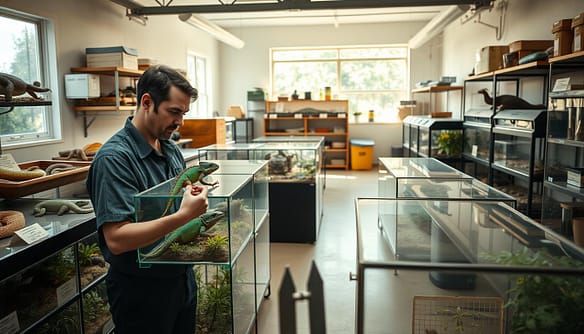
Next, animals go to a special quarantine area away from others. To prevent disease spread, they use:
- Separate cleaning tools and feeding gear for each quarantine area.
- Staff must wash hands and change gloves between handling animals.
- Quarantine rooms have negative air pressure if possible.
- Waste is disposed of in sealed, dedicated ways.
Quarantine time varies by species and suspected illness. It usually lasts from 30 to 90 days. This lets any hidden illnesses show up.
For animals that will live in groups, a slow introduction plan follows quarantine. They watch for signs of good behavior before mixing them.
Stress-sensitive species need special care during intake and quarantine. They should have a stable environment. This means the right temperature, humidity, and hiding spots to help them relax and stay healthy.
This whole process needs experts in exotic animal care. Doing it right follows ethical sheltering principles. It helps each animal get ready for a new home.
Adoption Counseling and Education (Diet, Habitat, Vet Access)
Good adoption counseling makes sure people know the long-term commitment of caring for exotic pets. It’s not just a quick talk. It’s a detailed lesson to help match the pet’s needs with what the owner can handle.
It talks about how long pets live. For example, parrots can live up to 60 years. Reptiles need daily care for their temperature and food. Counselors share these facts clearly. They want to make sure only serious people adopt.
These sessions focus on three main areas: diet, habitat, and vet access. Each part gives practical advice for the long run.
Diet advice goes beyond just what to feed them. It covers how to get the right nutrients, how much to feed, and when. Counselors also talk about the cost of these diets over time.
Habitat advice is also detailed. It includes the cost of the first setup, ongoing expenses, and future upgrades. Adopters get a clear idea of what to expect financially. This helps avoid problems later.
The most important part is about vet care. Counselors make sure adopters find a vet for exotic animals before they adopt any pet. This is a must. It ensures pets get the care they need, whether it’s for emergencies or regular check-ups.
Good adoption counseling leads to happy, permanent homes for pets. It turns good intentions into real responsibility. This approach lowers the number of pets returned and improves their lives.
Measuring Outcomes and Returns
Outcome measurement turns stories into useful data for animal rescues. Good groups track their work to see how well they do. This helps them make smart choices based on facts, not just hopes.
They look at numbers like how many animals they take in and how long they stay. They also check how many animals find a new home. These numbers help them see if they’re doing a good job.
The return rate is very important. It shows how many animals come back to the rescue. Looking at why this happens helps them improve their work.

Often, animals come back because their new homes aren’t right for them. This is true for animals like rabbits, which need a lot of space and like to be with others. A rabbit rescue might see returns because of bad housing or because the rabbit needs a friend.
By understanding why animals return, rescues can do better. Here’s a table showing why animals come back for different types of animals.
| Species Group | Primary Return Reason | Associated Care Challenge | Data-Driven Intervention |
|---|---|---|---|
| Rabbits | Insufficient Housing Space | Need for large, multi-level enclosures | Enhanced habitat counseling & pre-adoption home checks |
| Small Rodents (Rats, Guinea Pigs) | Unanticipated Social Needs | Requirement for same-species companionship | Mandatory pair/small group adoptions |
| Reptiles (Bearded Dragons, Snakes) | Specialized Equipment Costs | Expense of proper heating, lighting, and humidity control | Detailed cost breakdowns provided during counseling |
| Small Birds (Parakeets, Cockatiels) | Behavioral Issues (Screaming, Biting) | Lack of environmental enrichment and social interaction | Adopter training on enrichment and positive reinforcement |
This data helps in three main ways. First, they can teach adopters about common mistakes. Second, they can train foster families better. Third, they can help new owners after they bring an animal home.
By tracking how they do, rescues can always get better. They learn what works and what doesn’t. This helps them use their resources wisely and care for more animals.
Case Studies: Turnarounds via Correct Husbandry
These stories show how fixing husbandry can really help animals. They prove that knowing what each species needs is key to their health.
Rescue groups share these stories to show their methods work. They turn theory into real action.
A panther chameleon was brought in with skin problems and tiredness. It had trouble shedding and looked dull. People thought its home was humid enough.
A tech put in a digital sensor to check the humidity. It showed the humidity was too low, even when it was misted.
To fix this, they added a misting system and plants. Soon, the chameleon shed its skin healthily. It started eating and moving more.
This shows how sensors can find problems we can’t see. We often guess about our pets’ needs without checking.
A rabbit was recovering from surgery at home. People checked on it every few hours. It seemed okay.
But a special device showed its heart rate and movement. It found the rabbit was in trouble.
Staff checked it right away and found a serious problem. They started treatment quickly. The rabbit got better without needing the hospital.
These stories teach us a big lesson. Animals do best when we meet their specific needs. The table below shows important details from these success stories.
| Species | Presenting Condition | Primary Husbandry Correction | Monitoring Tool | Documented Outcome |
|---|---|---|---|---|
| Panther Chameleon | Chronic skin retention, lethargy | Stabilized enclosure humidity to 60-80% range | Digital climate sensor | Complete shed; improved activity and appetite |
| Domestic Rabbit | Post-surgical recovery | Early medical intervention for GI stasis | Wearable biometric device | Full recovery; prevented emergency complication |
| Common Theme | Subtle signs of distress | Data-driven adjustment to care protocol | Technology-assisted monitoring | Reversal of health decline |
These stories show a common thread. Each animal had a problem that could be fixed. They needed tools or methods beyond just looking at them.
Fixing these issues made the animals get better. This shows how effective rescue medicine works. It helps animals before they get sick.
These stories are key for training and making better care plans. They show how making small changes can make a big difference. This helps all animal rescue work.
How to Start or Support a Small-Animal Foster Network
Starting a foster network for small animals and exotic species is key. It helps expand rescue efforts. A good network increases shelter space and improves animal care.
First, you need to set up the basics. Create a foster application form to find the right volunteers. Also, make care manuals for each species. These guides help with diet, housing, and behavior.
Getting the right volunteers is essential. They need training on the specific needs of each animal. For example, they must know how to feed guinea pigs or keep reptiles warm.
It’s also important to partner with vets who know about exotic animals. This ensures animals get the medical care they need. It also helps volunteers with any questions or concerns.
Supporting a foster network can be done in many ways. Donations for vet bills or supplies like habitats are helpful. You can also offer skills like website management or help with transport.
Creating a foster network is a smart way to help rescue animals. It tackles the challenges of caring for non-traditional pets. This approach greatly improves their welfare.