
The Super Adoption Event returned to the Salt Lake City area with the kind of community energy shelter pets need: many organizations in one place, many families asking thoughtful questions, and a clear message that adoption is not a casual errand. It is a promise. Hosted at the Mountain America Expo Center in Sandy, Utah, on August 1-2, 2026, from 11 a.m. to 4 p.m. each day, the event marked the return of Best Friends Animal Society’s large-scale adoption gathering after a seven-year break, according to Best Friends Animal Society.
That return matters because adoption events do more than introduce people to dogs and cats. They create a shared civic moment around animal welfare. A person who has been quietly thinking about adopting can meet shelter teams, ask about temperament, talk through household fit, and see how many pets are waiting for a steady home. For rescue groups, the event can bring attention to animals who may be overlooked in a kennel setting. For the public, it offers a reminder that shelter pets are not second-best pets. They are individuals with histories, needs, and real potential to become beloved family members.
Why The Super Adoption Event Mattered
Super Adoption Event Details Families Saw
The event brought together 18 animal shelters and rescue groups and presented more than 500 adoptable dogs and cats to the public. Adoption fees were set under $150, a choice that likely helped reduce one financial barrier for families while still keeping adoption within an organized shelter or rescue process. Lower fees should never be read as lower commitment. Food, supplies, preventive care, training support, and veterinary visits remain part of responsible ownership long after adoption day.
The reported outcome was strong: more than 450 pets found new homes during the two-day gathering. That number is encouraging, but the real measure comes later, in the quiet weeks after the excitement fades. A successful adoption is not only a signed form and a ride home. It is a pet settling into routine, an adopter honoring follow-up care, and a household giving the animal time to decompress.
A Community Event With A Shelter Mission
Best Friends’ Salt Lake City return was not framed as a simple pet showcase. Attendees also found family-friendly activities, exhibitor booths, giveaways, and a photo booth. Those features may sound lighthearted, but they serve a practical purpose. They make animal welfare approachable. A family might arrive for a community outing and leave with a better understanding of fostering, volunteering, or adopting at a later date.
For readers who want a related local preview, our coverage of the Salt Lake City adoption event looked at the public-facing details and the value of arriving prepared. That preparation is especially valuable at a large event where many pets and many hopeful adopters are present at the same time.
Super Adoption Event Planning For Adopters
Questions Worth Asking Before Saying Yes
A large adoption hall can make the heart move faster than the calendar. That is human. A shy cat blinking from a carrier or a dog leaning gently into a volunteer can stir a person’s best instincts. Still, the kindest adoption choice is the one that fits the animal and the household beyond the first meeting. The Super Adoption Event gave families access to many pets, but each match still deserved patient thought.
Before adopting, families should talk honestly about work schedules, housing rules, exercise expectations, children in the home, resident pets, budget, and access to a licensed veterinarian. If a dog or cat has known medical needs, behavior notes, or adjustment concerns, adopters should ask the shelter or rescue team what support is available and what kind of follow-up is recommended. This is not about looking for a perfect pet. It is about building a fair plan for a real animal.
- Ask about daily routine: Feeding, activity level, litter habits, crate comfort, leash manners, and alone time can all affect the first month at home.
- Plan for decompression: Many pets need a quieter start, predictable spaces, and slow introductions after a busy event environment.
- Budget beyond the fee: Adoption fees may be under $150, but long-term care includes food, supplies, licensing where required, and veterinary care.
- Use professional help when needed: For health concerns, consult a licensed veterinarian. For behavior concerns, ask the adoption group for qualified trainer or behavior support referrals.
Why Prepared Homes Help Shelter Pets Stay Home
Responsible adoption protects both sides of the match. Pets who enter homes with realistic expectations are more likely to be given time, structure, and care. Adopters who understand the adjustment period are less likely to panic when a newly adopted dog paces at night, a cat hides under a bed, or a pet needs slow introductions to the household rhythm.
That is why events like this one work best when excitement is paired with counseling. Volunteers and adoption staff are not there merely to move pets out the door. Their better task is to help people choose wisely. A calm conversation can prevent a mismatch, and preventing a mismatch is an act of kindness.
What The Numbers Say About Utah Rescue
No-Kill Progress And What It Means
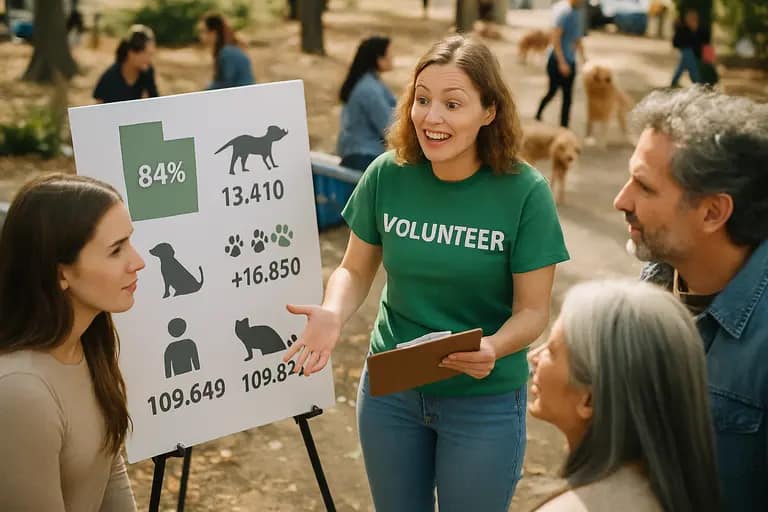
Best Friends reported that, as of July 2026, 56 of Utah’s 59 animal shelters had achieved no-kill status, which Best Friends defines as a 90% save rate for animals entering a shelter. The organization also said that if one in every 1,000 Utahns chose adoption instead of buying their next pet, it would end the unnecessary killing of dogs and cats in Utah shelters, and that a 6% increase in adoption among the estimated 7 million U.S. households expected to add a pet this year would end unnecessary shelter euthanasia nationwide, according to Best Friends’ announcement.
Those figures are not an invitation to oversimplify shelter work. A 90% save rate is a benchmark, not a magic wand. Shelters still need foster homes, transfer partners, veterinary support, behavior resources, public education, and adopters who can commit for the long run. The numbers do show, however, that individual choices add up. One family choosing adoption may feel small in the moment. In a statewide effort, that choice becomes part of a larger pattern.
Why Collaboration Makes The Difference
The strength of the Super Adoption Event came from collaboration. Eighteen organizations sharing space means more pets seen by more people, but it also means shared labor. Shelter and rescue work can be emotionally heavy. Volunteers help with setup, animal care, greetings, cleaning, transport, and adopter support. Staff members bring knowledge of each pet’s needs. Community members bring attention, donations, and homes.
Best Friends Animal Society’s mission in Utah centers on working with local shelters, rescue groups, and the public to make the state no-kill. Events can be a visible expression of that mission, but the less visible work continues every day: intake decisions, foster coordination, medical checks, adoption counseling, and community outreach.
Community Care After The Salt Lake City Adoptions
Adoption Day Is The Starting Line
The pets who left the Super Adoption Event did not need perfect people. They needed committed people. The first days after adoption can be tender and awkward. A dog may not know where to sleep. A cat may need time before approaching the family. A household may need to adjust plans after learning what the pet finds stressful or comforting. Patience is not a bonus in adoption. It is part of the work.
Families can help by keeping routines simple, limiting rushed introductions, and giving the pet a safe place to rest. If appetite, energy, elimination habits, or behavior raise concern, the responsible next step is to consult a licensed veterinarian or contact the adoption organization for guidance. No article can replace professional advice for an individual animal.
How Neighbors Can Keep The Momentum Going
Not everyone who attended could adopt, and that is okay. Responsible non-adoption is better than an adoption made under pressure. Community members can still help by fostering, volunteering, sharing adoptable pets from official shelter pages, donating supplies requested by local groups, or offering transport if a rescue has that need. The Super Adoption Event showed what happens when many people gather around shelter pets, but the follow-through belongs to the whole community.
Salt Lake City’s adoption momentum should be measured not only by one weekend, but by the steadiness that follows. If families keep choosing adoption thoughtfully, if volunteers keep showing up, and if shelters and rescues keep receiving community support, more pets will have the best possible chance at safe, lasting homes.