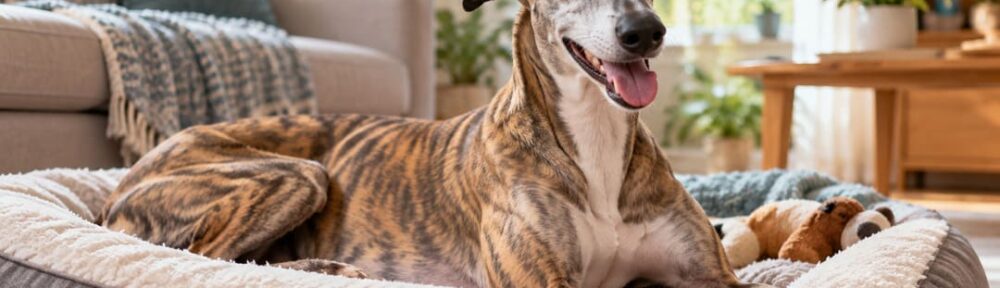
Retired racing greyhound adoption offers a former canine athlete a new chapter, but the transition from racing kennels to family life deserves more preparation than many people expect. A comfortable bed and a welcoming family are important beginnings. What matters most is matching the right dog with the right household and creating a safe, predictable environment where trust can develop naturally.
Greyhound racing has long been connected to spectator sports and wagering, although today’s sports-betting market extends far beyond racing. Reviews exploring why BetOnline is a popular sportsbook focus on betting markets, platform features, and consumer preferences. For retired greyhounds, however, a different question deserves attention: what happens after the competition ends, and how can families provide the lasting care these dogs need?
The answer starts with understanding that a former racer is not necessarily an inexperienced or neglected dog. Many greyhounds have established routines, previous caregivers, and distinct personalities before adoption. What may be unfamiliar is the household environment itself, from glass doors and staircases to televisions, vacuum cleaners, and the everyday rhythms of family life.
Retired Racing Greyhound Adoption Starts With the Right Match
One of the biggest misconceptions about retired greyhounds is that they all have identical personalities. Their shared athletic background does not determine how they will behave around children, other dogs, cats, or unfamiliar visitors.
Some are outgoing and affectionate. Others prefer quiet surroundings and need additional time to build confidence. Their responses can also change as they become familiar with a new environment.
Organizations such as American Greyhound emphasize individual compatibility over quick placement. Their greyhound adoption process considers household activity levels, resident animals, children, and observations from foster families.
Before adopting, families should discuss several practical considerations:
- Temperament: How does the dog respond to unfamiliar people, environments, and handling?
- Other animals: Has the greyhound been assessed around cats or smaller dogs?
- Daily routines: What feeding, sleeping, and exercise patterns are familiar?
- Health records: Which vaccinations, examinations, and other veterinary services have been completed?
- Post-adoption support: Will the organization provide guidance if behavioral or adjustment difficulties arise?
A successful adoption is not about selecting the greyhound that appears most excited during a first meeting. It is about identifying a dog whose individual needs align with a household’s capacity to provide care.
Preparing a Home for a Former Racing Dog
A greyhound entering a house for the first time may encounter surfaces and objects that were not part of its previous routine.
Slippery flooring can make movement uncomfortable or uncertain. Large glass doors may be difficult to recognize as barriers. Staircases can seem confusing to dogs that have had limited opportunities to use them.
Home preparation should prioritize safety and confidence, rather than introducing every new experience immediately.
Provide a quiet resting area with comfortable bedding, away from busy walkways. Place nonslip rugs where necessary, make large glass panels visible with suitable markings, and supervise the dog’s introduction to staircases.
Outdoor security matters just as much. Use a properly fitted collar or harness recommended for the dog, check gates and fencing, and keep the greyhound securely leashed in unenclosed areas.
When the dog arrives, avoid arranging a large welcome gathering. A calm introduction, access to drinking water, an opportunity to toilet, and time to explore a limited area are more useful than immediate excitement.
The objective is simple: allow the greyhound to discover that its new surroundings are predictable and safe.
What the First Month of Greyhound Adoption Can Look Like
Moving into an unfamiliar household can temporarily change a dog’s behavior. A greyhound that was playful and confident in familiar surroundings might become quiet, hesitant, or unusually observant during its first days at home.
American Greyhound describes a commonly used adoption guideline involving the first three days, three weeks, and three months. These periods are approximate observations, not a timetable every dog must follow.
The following planning guide focuses on what adopters can do rather than how quickly a dog is expected to adjust.
| Adjustment period | What adopters may notice | Recommended response |
|---|---|---|
| First few days | Cautious exploration, changes in sleep, uncertainty around household sounds | Maintain quiet surroundings, regular meals, supervised exploration, and consistent routines |
| First several weeks | Greater curiosity, emerging preferences, gradual familiarity with family members | Introduce reward-based training, manageable new experiences, and predictable exercise |
| Beyond the first month | Growing confidence, stronger household habits, or adjustment needs that remain unresolved | Continue consistent care, monitor behavior, and seek qualified support when necessary |
Progress should be measured through the individual dog, not a calendar.
A greyhound may settle into sleeping routines quickly while remaining uncertain around visitors or other animals. Another might become comfortable outdoors before learning to relax inside.
Adopters should contact their veterinarian or adoption organization if the dog exhibits persistent distress, significant appetite changes, unexplained physical symptoms, or behavior that creates safety concerns.
Exercise, Prey Drive, and Everyday Safety
Although greyhounds are recognized for their speed, retired racers do not necessarily require hours of vigorous activity every day.
Many enjoy regular walks, relaxed indoor time, opportunities to investigate their surroundings, and occasional energetic play. Exercise needs should reflect the individual dog’s age, physical condition, and veterinary guidance.
Their athletic abilities do introduce important safety considerations.
A greyhound can accelerate rapidly when startled or interested in a moving animal. Even a dog that appears calm on ordinary walks may respond instinctively to a squirrel, rabbit, or unfamiliar movement.
For this reason, secure leash handling and properly enclosed exercise areas are essential.
Compatibility with cats and smaller dogs also requires individual assessment. Some greyhounds can share households successfully with smaller animals, while others may not be suitable for those environments.
Adoption organizations can provide guidance based on observed behavior, but supervision and appropriate separation remain important during introductions.
Reward-based training is especially valuable when teaching unfamiliar household behaviors. Short, positive sessions can help a greyhound learn new routines without creating unnecessary pressure.
Veterinary Care and the Financial Side of Adoption
Bringing home a retired racing greyhound involves more than an initial adoption fee.
Every adopter should review the dog’s available medical history and arrange veterinary follow-up appropriate to its condition and the care already provided.
A veterinarian can assess weight, dental health, mobility, skin condition, parasite prevention, and other routine needs. Existing injuries or medical concerns should be discussed directly with the adoption organization and veterinary team.
Families should also consider the ongoing expenses of food, bedding, identification, safe walking equipment, preventive care, and unexpected medical treatment.
The broader article on pet adoption costs and responsible ownership explains why financial planning matters before accepting responsibility for a companion animal.
An especially useful approach is to distinguish between three categories of spending: initial supplies, predictable recurring care, and unexpected expenses.
This distinction helps adopters prepare without assuming every greyhound will have identical needs or medical costs.
Why Long-Term Support Matters More Than a Perfect First Week
Retired greyhound adoption should not be judged by how quickly a dog becomes affectionate, learns a staircase, or feels comfortable around visitors.
Some dogs adjust with relatively little difficulty. Others benefit from extended routines, additional training, or professional behavioral support.
Adoption organizations and experienced foster caregivers can provide valuable information about the dog’s known habits and preferences. Maintaining contact with them during the transition may help families resolve problems before they become overwhelming.
If a placement ultimately proves unsuitable, adopters should review the organization’s return or rehoming agreement rather than attempting an unsupported private transfer.
The most meaningful outcome is a stable, safe relationship between the greyhound and its family.
Racing may have shaped part of the dog’s history, but retirement opens the possibility of a different daily life. With thoughtful matching, patience, veterinary attention, and a secure home, a former racing greyhound can develop new routines and enjoy companionship long after its competitive career has ended.