
Legacy isn’t just about speed or trophies. Take Pat Foster, a “racer’s racer” known for his skill. He didn’t just focus on power; he was a problem solver, figuring out “evil spirits” in a chassis with his crew-chief’s mind.
His bond with car owner Barry Setzer was like a brotherly tie. Together, they aimed to win every race. Now, imagine applying this teamwork to a new challenge.
The Foster racing dynasty is our guide. Turning a big ranch into a home is like swapping a car’s chassis. Helping a nervous Off-Track Thoroughbred is like fixing a haunted fuel system.
The key is the same: dedication, partnership, and skillful adaptation. It’s not about winning races. It’s about the quiet wins of successful adoptions and the happy homes made by horse foster families.
The Johnson Family: From Skeptics to Advocates
Skepticism is not against progress; it’s a step before true belief. The Johnsons didn’t start as horse rescue fans. They began with a simple question: “Can this really work?” They were the kind of people who wanted proof before believing.
Barry Setzer, a North Carolina textile magnate, first visited Ed Pink’s California race shop. He was amazed by the California guys, but realized they were just like him. The Johnsons took the same approach to horse fostering.
They met the horses and the people. They found that the rescue community was made of ordinary folks solving a big problem. Their home became a place to prove things.
They saw small victories, like a skittish Thoroughbred learning to trust. These moments showed them the truth. The Johnsons became fascinated by solving the puzzle of finding homes for horses.
Their change from skeptics to advocates was a mental journey first. They didn’t just fall in love with the animals. They were drawn to the systemic puzzle of matching need with resource.
Their record of successful adoptions proved their point. Each horse finding a forever home was evidence. It showed that with care and patience, anything is possible.
Now, the Johnsons inspire newcomers. Their home is a living example, and their adoption success stories are proof. The most convincing advocates are those who have been there and done the math.
The Johnsons’ story shows that skepticism can lead to stronger advocacy. It’s not a barrier, but a stepping stone.
Converting a Cattle Ranch to Horse Haven
Imagine turning a NASCAR garage into a place for vintage bicycles. That’s what it’s like to change a cattle ranch into a horse foster home. The plans don’t fit, the tools are off, and it’s more than just fixing things up.
This isn’t just about switching animals. It’s about changing everything. Cattle ranches are built for strength and moving herds. Horse foster families focus on OTTB transformations and need to understand the horses’ minds. It’s moving from tough handling to gentle care.
Think of Pat Foster, known for his skills in both “pipe” and “tin.” Changing a ranch to a horse haven needs that skill. The pipe is the structure: strong fences, extra water systems, and special shelters for Thoroughbreds.
The tin is the environment. It’s about the right space for horses, visual barriers, and feeding areas that feel natural. A cattle pen tells horses to stay. A horse haven encourages them to heal.
John Buttera’s Pro Stock car design is a great example. Every part is easy to get to. Your ranch should be the same. Gates for vet trucks, paths for nervous horses, and everything ready for emergencies.
It’s not cheap. You’re not just buying food; you’re building a new place. But the reward is seeing a nervous OTTB relax in a place you made just for them.
That moment is like a perfect test drive. The engine is quiet, and everything works. You’ve not just changed land; you’ve helped a horse heal.
If you want to start a horse foster family on a rural property, remember. The best start isn’t always new. It’s using what you have, with a builder’s touch and a rescuer’s heart.
Single Mom Fostering Three OTTBs Successfully
Imagine being the first call for a team when a high-strung machine needs debugging. That’s the role of a single mom running a foster home for Off-Track Thoroughbreds. She isn’t just a caregiver; she’s the test pilot de rigueur for equine rehabilitation.
Her mission? To diagnose three unique sets of “handling issues” with the calm precision of an engineer. A spook at a trash bag isn’t a flaw. It’s data. Herd-bound anxiety isn’t stubbornness. It’s a system feedback loop begging for recalibration.
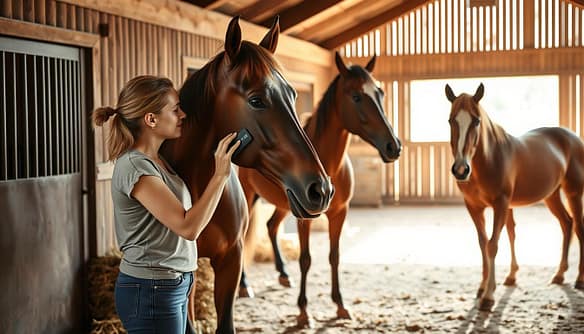
This work demands the ultimate behaviorist. Recklessness has no place here. Every interaction is a calculated step in a long-term tuning process. The goal isn’t to break the spirit built for the track, but to redirect its formidable energy.
So, how does one person manage this high-wire act? It starts with a ruthless system.
- The Morning Diagnostic: Each horse gets a visual and behavioral scan before breakfast. Is there stiffness? Unusual alertness? This isn’t paranoia; it’s preventative maintenance.
- Individualized Sessions: One horse works on standing quietly at the mounting block. Another practices walking past the scary corner of the paddock. The third just learns to breathe deeply while being groomed. Three different programs, running concurrently.
- Data Logging: Mental notes become actual notes. What triggered a reaction? What caused a breakthrough? This logbook is the blueprint for each horse’s OTTB transformation.
The real engineering happens in the incremental gains. The day a formerly anxious horse dozes in the cross-ties is a bigger victory than any ribbon. It means the system is stable.
These adoption success stories are written long before the new owner arrives. They are authored in the daily, methodical work of building a reliable, peaceful mind inside an athletic body. The foster mom isn’t just preparing a horse for a home. She’s compiling a complete manual on its operation.
Her success is measured in aggregate data. Three complex creatures, slowly syncing to the rhythm of a quiet life. It’s the most undervalued form of engineering—transforming raw speed into dependable peace.
Retired Couple’s Second Career in Horse Rescue
Bob and Carol never saw retirement as a final stop. Instead, they saw it as a chance to start a new journey. They chose to fix up old Thoroughbreds, turning their retirement into a new adventure.
Imagine Pat Foster, a drag car legend, fixing up classic cars after racing. That’s what Bob and Carol do with horses. They use their skills to bring new life to these animals.
Barry Setzer once said the excitement was in creating, not just doing. Bob and Carol feel the same way. They love the challenge of fixing up a horse, not just giving it a home.
They don’t just take in horses. They have a special place for each one. They treat each horse like a project, fixing up its body and mind.
They run their horse rescue like a business. They keep track of money and progress. This careful approach makes their work a true second career.
The best part for them is seeing a horse come back to life. They love watching a scared horse become confident. It’s like magic.
When a horse is ready, they find it a new home. They’re happy to see it thrive with someone else. This is their way of giving back.
Bob and Carol’s story shows that retirement can be exciting. They’ve found a new purpose in life, helping horses. They’ve traded in their old jobs for a new passion.
Their story inspires others to keep working. They show that you can always find a new challenge. Their work is a testament to a life well-lived.
Urban Foster Family Making It Work
The urban foster family is like a drag racer in a small garage. Every inch is important, and being efficient is key. People often think horse foster families need lots of land, but city families show that’s not true. They show that kindness knows no bounds, not even by zip code.
City families get creative with space. They use vertical hay storage and multi-use paddocks. They plan out every detail, making a small backyard into a place for horses. It’s like solving a puzzle, and it’s very challenging.
They face modern challenges like zoning laws and dealing with neighbors. It’s like following a complex rulebook. They need to be good at talking to people and solving problems. This is how they create adoption success stories, not in big fields but in the city.
It’s like Jakey Davies and his “Bov Boys” team dealing with city life. They have to be careful about noise and what others think. For city horse foster families, every sound and movement is important.
Success comes from being part of the community, not apart from it. These families teach others and get support. They show that sharing their story can change minds.
Seeing a horse happy in the city is rewarding. These adoption success stories show that anything is possible. They prove that horses can adapt and that humans can be creative.
This shows that horse foster families can make a difference, even in small spaces. You don’t need a lot of land to help a horse. The heart, not the size of the land, is what matters most.
The Challenges of Multi-Horse Households
Managing multiple horses is like a high-stakes pit crew tuning three engines at once. It’s not like the “Rhodes Runner” with its 90wt gear oil. Missing a horse’s medication or misreading a social cue can cause chaos.
Adding more horses makes things more complex, not just more. Each new animal brings new variables that can affect others in unpredictable ways. One anxious OTTB can upset the whole herd’s balance. What looks simple from afar is actually a complex system under constant stress.
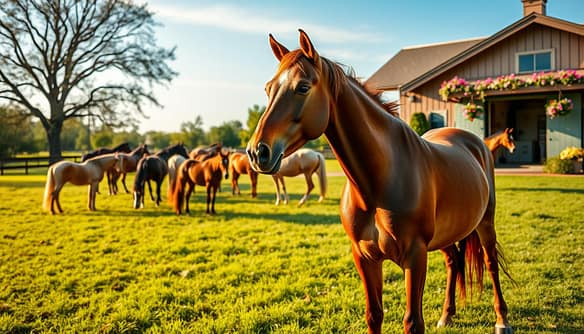
Managing a multi-horse household is like managing a system of living beings. It’s not just about feeding and watering. You must track medical histories, manage pecking orders, and predict how changes affect everyone. It’s like being Roland Leong’s crew chief when Foster’s transmission exploded at Irwindale.
The daily checklist becomes your holy text. Morning feedings need to be done with precision. Turnout schedules must consider each horse’s personality and space needs. Medication times can’t overlap or be missed. This is not just horsemanship; it’s predictive logistics with hooves.
Within this controlled chaos, OTTB transformations are fascinating. Watching a nervous ex-racer learn to be “just a horse” again is educational. Seeing three others act normally adds to the lesson.
Planning for successful adoptions from a multi-horse environment is complex. You’re not just preparing one animal for transition. You’re adjusting the entire herd’s dynamics after the departure. Who becomes the new leader? Who might grieve the loss?
The reward is seeing the system function smoothly. Watching OTTB transformations happen within a supportive herd is rewarding. Celebrating successful adoptions that leave the remaining system stable is worth it. It’s like winning the race while rebuilding another engine in the same trailer—exhausting, maddening, and worthwhile.
Financial Planning for Foster Families
Every adoption success story has a financial backbone. Whether it’s a napkin or QuickBooks, money keeps the rescue going. For horse foster families, it’s about keeping things running smoothly.
There are two main ways to manage finances. The Pat Foster Special is all about passion and little money. Many families live this way, giving up a lot for their love of horses.
Then, there’s the Barry Setzer model. Setzer was a businessman who funded his horse racing with his textile company. His smart planning made his passion work.
The smart family balances both worlds. They don’t just save receipts. They plan like a business, thinking about hay and vet bills. Fundraising becomes a way to grow their support.
| Financial Aspect | Passion-Fueled Model (The Foster Way) | Strategic Business Model (The Setzer Way) | Hybrid Approach for Modern Families |
|---|---|---|---|
| Funding Source | Personal income, side gigs, sheer willpower | Dedicated business revenue, investments, sponsorships | Diversified streams: grants, fundraising, strategic partnerships |
| Budget Mindset | Month-to-month survival, reactive spending | Annual projections, contingency funds, growth planning | Quarterly reviews with emergency buffers |
| Veterinary Care | Emergency-focused, often financially stressful | Preventive care scheduled, insurance considered | Tiered care plan with community vet partnerships |
| ROI Measurement | Emotional satisfaction, successful placements | Social capital, network expansion, reputation building | Combined metrics: placements + financial sustainability |
| Long-Term View | Season by season, hope for the best | Five-year vision, succession planning, legacy building | Three-year rolling plan with adaptability built in |
The hybrid approach is about keeping things sustainable. It’s not about getting rich. It’s about changing lives and building a community.
Think of hay costs like your utility bill. Farrier visits are like car maintenance. Fundraising is marketing to your community. This changes everything.
For horse foster families, it’s all about heart and head. Pat Foster’s passion is essential. But Barry Setzer’s planning skills are just as important. They help you keep doing the good work.
Done right, financial planning turns adoption success stories into lasting legacies. It’s the difference between a one-time event and a lasting impact on horses and humans for generations.
Adoption Day Celebrations and Traditions
When a foster horse gets on its new trailer, it’s a big win. This win is about healing and trust, not trophies. It’s like reaching the end of a race, but it feels more like a relief than a victory.
It’s like the winner’s circle for everyone. No fancy awards or big checks. Just a halter, papers, and a feeling of joy. The photo is taken in a driveway, not a race track. The prize is a signed contract.
What makes this moment special? Every foster family has their own way of celebrating. These moments turn the handoff into something special. They mark the end of a journey.
Some families take a “victory lane” photo. They take pictures like famous racing legends. The new owners smile with their horse. The foster family looks on, happy but a little sad. The horse is the real star.
This reminds us of a great racing saying. The owner of Secretariat said the best way to show a horse’s greatness is to let it speak for itself. The same is true here. The best proof of successful adoptions is a happy, healthy horse going to its forever home.
Other families have their own traditions. They exchange halter, a symbol of passing on responsibility. The old halter, with its familiar marks, is kept as a reminder.
Then there’s the portfolio. It’s a collection of the horse’s life story. It includes vet records, training notes, and favorite treats. Giving it over is like handing over the keys to a well-cared-for machine.
| Adoption Day Tradition | Symbolic Meaning | Typical Emotional Impact |
|---|---|---|
| “Victory Lane” Family Photo | Celebrates the completed team effort; frames the transition as an achievement. | Bittersweet pride mixed with poignant loss for foster family. |
| Ceremonial Halter Exchange | Physical transfer of responsibility and care; marks the official change in stewardship. | Tangible ritual that provides closure and a clear new beginning. |
| Journey Portfolio Handoff | Passing of knowledge and history; ensures continuity of care for the horse. | Foster family feels heard and respected; new owners feel informed and welcomed. |
| Small Token Gift (from new to foster family) | Gesture of gratitude and acknowledgment of the foster family’s sacrifice and work. | Foster family feels valued; connection is honored, easing the feeling of “loss.” |
The celebration after is quiet. It’s coffee and stories in the kitchen. They talk about the horse’s journey, its growth, and its quirks. There’s laughter, but also a sense of closure.
This is the moment of recognition for a job well done. It’s not about showing off. It’s about knowing you helped in a successful adoption story.
These adoption success stories are your real trophies. Not trophies on a shelf, but memories on your phone. You see videos of happy horses and updates from their new owners.
The trailer leaves, and you’re left alone. It’s quiet. That’s when you realize the true tradition. It’s not the photo or the halter. It’s the quiet joy of a job well done. The horse is now happy in its new home, thanks to your work.
Creating Lifelong Connections
What’s the real scoreboard for a foster family? It’s not just about how many horses they help. The real goal is building lasting bonds.
Take Barry Setzer and trainer Pat Foster, for example. Their partnership ended in 1973, but their friendship lasted a lifetime. Even years later, Setzer’s connection with Foster’s son, Cole, remained strong. A simple comment from Cole, “I want you to know that you’re always relevant,” meant the world to Setzer.
This is what foster families do. They create a network of support and care. A successful adoption is just the start. The real victory is the ongoing relationships they build.
It’s not just about the horses. It’s about the people and families they touch. As the years go by, your efforts become a lasting legacy. Your family’s stories become part of a bigger, living history.
Even when you’re not actively fostering, you can feel the impact. A photo, a card, or a message from someone whose life you’ve touched can be incredibly rewarding. These moments prove that the bonds you create are truly lasting. They transcend time and generations.