
Last Christmas Eve, Dr. Susan Lindner saved a Moluccan cockatoo named Sammy. This wasn’t a typical rescue mission. Sammy came from a Beverly Hills mansion, where he was decorating a marble foyer like drapery. It was a strange holiday twist.
Foster Parrots’ latest report shows a sad truth. Over 85% of “rehomed” birds suffer from malnutrition. They are treated as avian accent pieces, not pets. These birds are feathered refugees in a global trade that’s both exotic and exploitative.
Rescue operations now rival corporate moves in complexity. Last year’s Operation Skyway moved 217 parrots from Dubai to Colorado. But for every success story, three birds remain in gilded cages, crying into their gold-plated bowls.
The real question isn’t if we can move tropical birds across continents. It’s why we confuse conservation with showing off. No creature evolved to be a peacock for Instagram influencers.
Challenges of International Adoptions
Imagine a world where brokers make money whether things go up or down. Replace them with poachers, and the items with macaws. This is the $15 billion exotic pet trade. It’s a system that harms forests and funds extinction, leaving parrot rescue groups overwhelmed.
Dr. Jane Lindner’s study shows the harsh reality: “50% of smuggled birds die on the way.” Those that survive often face trauma in their new homes. That colorful bird on your Zoom call? It’s likely suffering from the trauma of being caught.
“We’re like avian divorce mediators,” says Foster Parrots’ director. “Ozzie the African Grey has had seven homes in ten years. People don’t think about the long-term when they adopt ‘decorative’ pets.”
The numbers are stark:
- 700+ birds are surrendered to Foster Parrots every year.
- Large macaws cost $2,000 a month to feed.
- These birds can live up to 40 years, outlasting many human relationships.
This rehoming birds crisis shows our cultural flaw. We see intelligent creatures as mere decorations. Like when your neighbor tried to sell his parakeet as an NFT during the pandemic. It’s a harsh reminder of our failure to respect nature.
But there’s a glimmer of hope. Rescue groups are using forensic accountants to track smugglers. They’re also teaching birds new tricks to help them adjust to new homes. It’s not ideal, but as Ozzie learned after his eighth home, progress is better than perfection.
Stories from Around the World
The world stage for birds getting a second chance is as exciting as any Netflix story. Sammy, a Moluccan cockatoo, was once a “salmon-colored scream machine”. He had been through three owners and a smuggling operation. Thanks to bird adoption programs, he became a PTSD therapy bird. He now uses his voice to calm veterans during panic attacks.
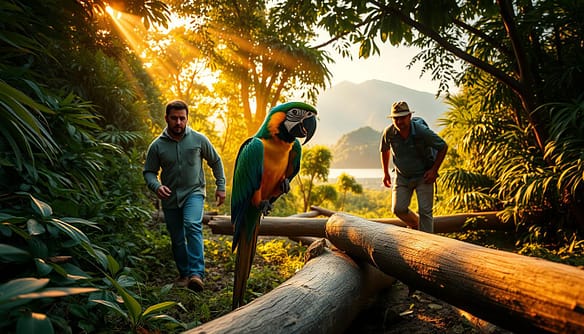
Photographer Christian Trippe has captured amazing changes in his work. His series “From Cage Rage to Sage” shows Tango the macaw’s journey. From showing off his chest feathers to teaching sign language to autistic teens, Tango’s story is inspiring.
At Serenity Park in California, veterans and parrots help each other. An Air Force medic calls it “trauma survivor trading posts.” African greys with anxiety issues sit with soldiers dealing with phantom limb pain.
“We’re all just teaching each other new coping playlists,”
In Southern California, feral parrots are changing the game. They are the descendants of 1980s smugglers’ “inventory leaks”. Now, they help sustain wild populations of threatened species. Their nests even host native owls and bats. Who knew illegal pet trade fallout could lead to a cross-country rescue story starring nature itself?
Humanitarian Partnerships
Imagine a world where former parrot smugglers now protect wildlife. This is happening in Indonesia’s Spice Islands. International pet adoption groups are making this change through unexpected partnerships.
Foster Parrots in Rhode Island is like an Avian Ellis Island. They rescue over 300 birds every year. Their work with Guatemala’s MCCR has changed local lives:
| Income Source | Annual Revenue | Conservation Impact |
|---|---|---|
| Black Market Parrots | $15/bird | Species depletion |
| Ecotourism Permits | $200/visitor | 23 nests protected |
| Adoption Programs | $450/bird | 89 birds rehomed |
In the Moluccas, Dr. Lindner found an interesting fact. Former poachers are now the best nest protectors. Ahmad, a former trader, now leads patrols. He says, “They know all the smuggling tricks.”
“We’re not just saving birds – we’re hacking incentive structures.”
Could Instagram birding tours help rehoming birds? Rhode Island’s “virtual aviary” has raised $12k in 6 months. This money helped fund 18 bird surgeries. A donor said, “Now, tweets that matter.”
These partnerships show that we can protect both economies and ecosystems. It’s about making a system where saving parrots is more rewarding than poaching them. The big question is: Can we grow this model faster than deforestation?
How to Adopt Abroad
Adopting a bird is like finding a partner for life, but for endangered species. It’s like Tinder, but instead of swiping right, you commit to a 30-year bond. Dr. Lauren Lindner’s sanctuary has rules that feel like a marriage contract. They ask if you can handle loud noises and if you’ll support your new feathered friend financially.

Before you fall in love with a bird online, think about these five things:
- “No, your studio apartment can’t handle a macaw’s 120-decibel ‘alarm clock’ service”
- “Yes, that ‘rescued’ African Grey might be a CITES-certified kidnapping victim”
- “Maybe reconsider if ‘free flight’ means your cockatoo redecorating the neighborhood”
- “Absolutely not if you think clipped wings solve behavioral issues”
- “Hell no if your idea of bonding is teaching curse words for TikTok clout”
Foster Parrots’ adoption flowchart shows the funny side of parrot rescue. It has questions like:
“If ‘free bird’ means Lynyrd Skynyrd karaoke nights, not caring for a bird for life – leave now.”
Be careful of exotic pets sold through loopholes. It’s like buying a fake Rolex. Good sanctuaries, like Lindner’s, check birds thoroughly. They look at flight feathers, scan for microchips, and ask tough questions.
The adoption process is like a test to see if you’re ready for a bird. They check your home, your finances, and your knowledge of bird behavior. If you pass, you’ll get to clean up after your new friend for 30 years.
Urgent Global Needs
In a world where Kardashian-tier parrots cost as much as private jets, real bird rescue efforts struggle to find funds. The 2021 Foster Parrots sanctuary fire showed how thin our safety nets are. It left 1,200 birds without homes, with no help from celebrities.
Rebuilding after the fire is like starting an Avian Marshall Plan. We’re talking about building homes for cockatoos, not rebuilding Europe. California’s plan to get rid of exotic bulbuls could help parrots for three years. It’s time to change our priorities.
| Funding Source | Annual Budget | Allocation Priorities |
|---|---|---|
| Government Grants | $2.1M | Pest control > rehabilitation |
| Private Donations | $4.8M | Sanctuary operations |
| Celebrity Purchases | $23M+ | Rare species acquisitions |
Serenity Park is a unique program. It helps veterans with PTSD teach parrots to trust humans. Their success rate is high, showing how effective this approach can be.
The debate in California about exotic birds raises big questions. Should we be eradicating 14,000 birds or finding them homes? It’s a tough choice, depending on what you value more.
Every dollar spent on eradicating birds could help sanctuaries. We could build solar aviaries and use AI for adoption. But first, we need to see birds as refugees, not just as pets.
Conclusion
Imagine if every parrot perch was also a place for birds to connect with us. Dr. Irene Pepperberg’s work with Alex the African grey shows that talking to animals is real. It’s happening in homes all over the world.
Paco the conure, who came to Foster Parrots with bald spots and a broken beak, showed us something special. His recovery was more than just fixing his body. It was a story of hope and healing, as told in Dr. Marc Lindner’s Uncaged Diplomacy.
Sanctuaries say 63% of parrots learn to talk again in just six months. These birds are like phoenixes rising from the ashes. Their stories are not just heartwarming tales. They are about building bridges between species.
Now, companies are helping by funding bird aviaries and offsetting carbon emissions. Former lab birds even speak out at climate talks through dance. This is not just activism. It’s a new way of communicating through birds.
There are 3.5 million birds without homes, but only 12% of U.S. homes consider adopting one. Instead of just feeding birds, think about sponsoring an aviary. Your local birds will thank you. Paco would say, “Pretty bird” is not just a compliment. It’s a call to action.