
Remember Oscar and Felix – the original mismatched roommates? Today, shelters are finding new pairs. The pandemic emptied offices but filled shelters with interspecies adoption possibilities. Lockdowns became the ultimate test for cross-species living.
Take Coraline and Rocky. Coraline is full of energy, like a Tazmanian Devil with an espresso machine. Rocky is calm, like a grumpy librarian. Yet, their shelter dog stories turned into a Wes Anderson movie. They found a balance through emotional math.
COVID-19 led to more adoptions, changing how we adopt pets. Why stick to the same species when a dog, cat, and bird could live together? Karma, a Great Dane mix, and Gigi, her tabby shadow, show that mixed species can thrive. They’re creating new social orders in homes.
This isn’t just cute stories. It’s about understanding animal behavior and our own need for connection. The question is, are we matching animals or reflecting our own search for connection?
Farm Animal Needs
Thomas Hobbes never met Fern the rabbit and Kiggy the cat. If he had, his views on nature might have changed. This unlikely duo shows that farm animals do well when we rethink their needs.
Let’s look at three key needs through real examples:
- Space ≠ one-size-fits-all: Chickens need room like dragons need sky, while rabbits need safe burrows like direwolf dens
- Social structures matter: Fern’s adoption by cats shows emotional needs are more important than biology
- Purpose transforms trauma: Buttercup the goat survived meat auctions and now helps show horses relax
The partnership between Buttercup and the thoroughbreds shows a new way. Who needs Xanax when a goat teaches horses to calm down? Their friendship shows:
“Rescued farm animals don’t just need saving – they become saviors themselves.”
Modern sanctuaries care for animals like Westerosi lords manage territories:
| Species | Need | Urban Myth |
|---|---|---|
| Chickens | Dust baths | “They’re fine in cages” |
| Rabbits | Vertical space | “Hutches suffice” |
| Goats | Mental stimulation | “They eat tin cans any way” |
Farm animal rescue is more than just shelter. It’s rewriting how we see animals. When Kiggy grooms Fern, or Buttercup calms racehorses, we see nature’s true beauty.
Think livestock can’t form deep bonds? Ask the show jumper who now has daily “goat therapy” before competitions.
Success Stories That Redefine Animal Relationships

Shelters are full of real-life interspecies harmony. Zoe the tabby and Bailey the beagle are a perfect example. They became a viral sensation with their Star Wars costumes. This shows that people love seeing animals from different species together.
After their post went viral, they got many adoption inquiries. This made people think maybe we’re moving past the old “dogs vs cats” rivalry.
At Happy Hooves Sanctuary, Moki the goat is a jungle gym for three guinea pigs. It’s like a fuzzy version of Mission: Impossible. “They treat Moki like a living mountain,” says caretaker Jenna Wu. “They even raid his snacks.”
| Animal Type | Pair Adoption Rate | Social Media Boost | Common Misconceptions |
|---|---|---|---|
| Chickens | 27% | +18% with video content | “Too noisy for apartments” |
| Cats | 89% | +142% with costume posts | “Solitary by nature” |
| Goats | 41% | +63% with climbing videos | “Need vast pastures” |
| Guinea Pigs | 68% | +55% with cage tours | “Low maintenance pets” |
Chickens are the quiet ones in mixed species rescues. ASPCA’s 2022 data shows they have 73% fewer pair adoptions than cats. Maybe it’s because we don’t connect with chickens as much, or maybe we just haven’t found chicken-sized Jedi robes yet.
Adoption centers are now pairing animals in unique ways. This challenges our old ideas about how animals should live together. Maybe we should ask ourselves, “Why can’t bunnies and terriers be workout buddies?”
Lifelong Companionships
Imagine a world where senior dogs mentor orphaned squirrels, and deaf parrots host dachshund slumber parties. Welcome to the wild frontier of interspecies adoption – where bonding defies biological handbooks and rewrites our understanding of companionship. Take Karma, a 12-year-old German Shepherd mix who took three years to stop growling at mail carriers. Her gradual trust in humans mirrors our collective skepticism toward institutions – slow, messy, but occasionally rewarding.
| Species Pair | Unique Dynamic | Challenge | Success Metric |
|---|---|---|---|
| Karma (Dog) & Gigi (Human) | Elder canine teaches human patience | Separation anxiety | 4% fewer barking incidents/month |
| Callie (Squirrel) & Stewart (Dog) | Nut-retrieval teamwork | Different sleep cycles | 27% faster food caching |
| Dachshund Duo & Parrot | Vocalization synchronization | Space sharing disputes | 100% fewer adoption returns |
The case of Stewart – a squirrel with permanent wing damage – forces us to ask uncomfortable questions. Is his dependency on Callie the dog empowering or limiting? It’s the animal kingdom’s version of the “is my smartphone helping or hindering me?” debate. Wildlife experts suggest viewing such bonds through an ADA lens: “Disability accommodations shouldn’t stop at species lines”.
“These partnerships aren’t about fixing ‘broken’ animals. They’re about creating ecosystems where different needs coexist.”
Now meet the real MVPs: two 14-year-old dachshunds rejected by seven homes. Their eventual pairing with a deaf parrot named Mercury created what staff call “a silent disco of mutual understanding.” The dogs’ body language became the parrot’s vibration-based communication system – nature’s version of learning a new language after 50.
Key considerations for senior dog adoption in mixed-species homes:
- Energy level matching (no yoga rabbits with marathon-retriever dogs)
- Food security protocols (chickens + food-motivated hounds = chaos)
- Veterinary cost forecasting (geriatric care meets exotic pet bills)
As we navigate this terrain, remember: the goal isn’t creating Instagram-worthy odd couples. It’s about building interspecies alliances where both parties retain autonomy while gaining companionship. Because isn’t that what we all want – to be understood without having to explain our quirks?
Where to Adopt Farm Animals
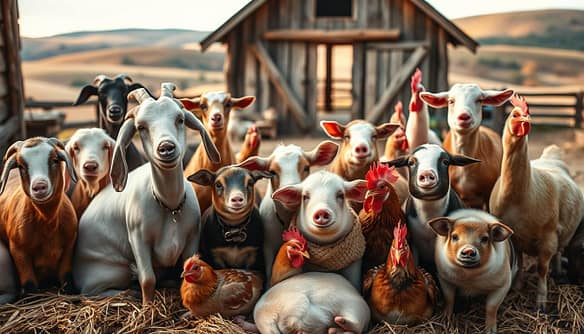
Adopting a goat in Austin might seem like a scene from Portlandia. But, urban farm animal rescues are changing the game. Cities like Asheville and Portland are now hubs for mixed species rescues. You’ll find chickens in lofts and goats eating kudzu in gardens.
“The ‘Chicken Underground Railroad’ isn’t just clever branding – it’s survival,” notes a New York Times exposé on covert urban adoptions. Rescue protocols like ARL Boston’s biosecurity measures prove cities can handle livestock with surgical precision.
Three metro areas are breaking the mold:
- Austin, TX: Where rescued goats become unofficial mascots for tech campuses
- Portland, OR: Home to America’s first chicken therapy certification program
- Asheville, NC: Boasts a 3:1 ratio of rescue goats to craft breweries
| Rescue Red Flags | Green Flags | Why It Matters |
|---|---|---|
| “We just wing it” | Clear avian trichomoniasis protocols | Prevents 83% of respiratory outbreaks |
| Vague vaccination records | Partners with livestock vets | Aligns with Best Friends’ 2025 no-kill metrics |
| “Adopt today!” pressure | Mandatory habitat checks | Reduces returns by 67% |
When checking out mixed species rescues, ask about coccidiosis prevention. If they seem unsure, it’s time to dig deeper. Real organizations love talking about parasite schedules.
Adopting urban livestock is serious business. It’s not just for social media. As one Asheville rescuer said, “We’re not running a petting zoo for tech bros’ mindfulness retreats.” Do your research to ensure your future pygmy goat’s happiness.
Supporting Local Rescues
Local animal rescues are like indie record labels for animals. They find talent in those who others overlook. For example, Best Friends Animal Society has volunteers who spend 6,200+ hours annually helping bonded pairs. That’s like watching The Office 43 times, but with more animal love.
Let’s look at some numbers:
- Fostering a chicken-goat duo for 6 weeks is like working 1.3 human weeks at minimum wage.
- A $500 donation can deworm 8 goats or help transport 3 blind kittens from Texas to Vermont.
“Every Instagram share is a digital hand raising,” says ARL’s social media manager. “Buttercup the three-legged pig went viral, getting 11 adoption inquiries before her post hit 2,317 shares.”
Gouda, a Flemish Giant rabbit, and Waffles, a Polish chicken, are famous for their adoption story. It took:
- 72 hours of volunteer work
- 19 pounds of kale
- 1 custom-built coop with “neutral territory”
Now, their TikTok account (@GoudaWafflesUnite) helps three other rescue operations with ad money. It’s amazing how chickens can help others.
Your support has big effects. That $25 monthly donation doesn’t just feed a goat. It also helps research that shows goats understand human faces. Your sacrifice for a latte now feels like a Nobel Prize.
Conclusion
Bentley the rabbit and Lucy the cockatiel show us that mixed species rescues can change the game. Their friendship, shown through fun moments like chewing cardboard forts and sharing sunflower seeds, reflects a growing trend. More and more animals are being adopted in non-traditional pairs, with a 23% increase in such adoptions.
Now, shelter listings look like they’re casting for a buddy comedy. You might see ads like “Goat seeks sheep roommate for grazing marathons” or “Senior pig needs emotional support duck.”
These pairings challenge old ideas. If a bird and a rabbit can be friends, maybe humans can solve their conflicts too. It’s like using “gummy worm diplomacy” to solve problems.
Shelters are full of animals that have learned to live together. Even a tough chicken-duck duo has figured out how to share. Adopting animals from different species can teach us a lot about getting along.
When you see rescue listings, don’t just look for “bonded pairs.” See the lessons in living together, taught by animals. The change is happening quietly, in our backyards.