
Imagine a world where kindness beats out red tape. A donkey’s 14-day journey over mountains shows us the power of cross-country rescue. Today, moving animals across the globe is a big challenge, but it’s changing what we think of as a global community—much like how offshore sportsbooks online are redefining connectedness across borders and regulations.
Mr. G, a retired teacher, fought through mountains of paperwork to bring Jellybean, a street-smart terrier from Mexico City, home. Their story is a mix of absurdity and warmth, showing us the beauty of helping others across borders. Why do we fight harder for creatures that don’t speak our language than we do for human refugees?
The answer might be the Paradox of Proximity. Borders make us feel closer to others. Stories of shelter dogs are more than just heartwarming tales; they show us the world through different eyes.
From emotional support chew toys making it through customs to famous rescues changing laws, these stories show something amazing. In a world of walls, animals are teaching us to find common ground. The real question isn’t how we move animals – it’s why their loyalty touches our hearts so deeply.
When Oceans Don’t Divide: Cross-Country Rescue Missions
Global animal rescues test human ingenuity. It’s like FedEx meets Amélie with jetlag. Last year, Rescue Ranch helped 13,351 chickens, showing compassion knows no borders.
The Husky Express: Istanbul to Aspen
Kaya, a streetwise husky, went from Istanbul’s streets to Boulder’s designer leashes. Her journey needed:
- A Turkish street vendor’s WhatsApp group for air traffic control
- 72 hours in a climate-controlled crate with better legroom than economy class
- An American vet team waiting like Formula 1 pit crew at Denver International
Logistics of International Dog Transports
Modern rescue operations are complex. They involve:
- Customs-approved “doggy passports” with more stamps than a diplomat’s briefcase
- Temperature-controlled holding facilities at major hubs (Dubai’s animal terminal serves Wagyu beef sliders)
- Real-time GPS tracking that puts Uber to shame
“We’ve created a new category of frequent flyer miles – except the passengers have tails and no concept of time zones.”
Cultural Attitudes Toward Strays
How societies treat street animals shows more than any GDP report:
| Country | Street Animal Policy | Public Perception |
|---|---|---|
| Turkey | Municipal feeding stations | Community guardians |
| USA | Shelter system | Adoption candidates |
| Japan | TNR programs | Neighborhood mascots |
Istanbul’s street dogs ride ferries like commuters, while Denver’s rescue pups get Uber Pet rides to doggy daycare. This shows cross-country rescue stories are like geopolitical poetry. A wagging tail speaks every language.
Canine Metamorphosis: Shelter Dog Transformations
Imagine a worn quilt, each patch telling a story of a shelter dog’s life. Watch as this quilt becomes a masterpiece, like a museum exhibit. It’s not just adoption; it’s magic. Shelter dogs aren’t just rehomed; they’re reborn, like old records turned into clear digital tracks.
Silver Whiskers, Golden Hearts
Old dogs can learn new tricks, you know? Meet Buddy, a 12-year-old Lab mix. He went from being on death row to visiting elementary schools. After three months, he became a certified therapy dog. Studies show older dogs can get younger with the right care.
Case Study: Wisdom in Wagging Tails
Buddy’s story is like a movie:
- Week 1: He starts fighting arthritis
- Month 2: He starts social training
- Month 4: He visits his first library therapy session
His family’s stress drops by 23%, according to the Journal of Human-Animal Bond Research.
Longevity Hack: Adopt, Don’t Shop
Adopting a senior dog is good for you. It lowers blood pressure and boosts activity. It also fights depression better than not having a pet.
Extreme Makeover: Shelter Edition
Some dogs need more than a bath. Take Mochi, a Schnauzer found in a landfill with mange. Her recovery was a long journey:
Mange to Magnificent: The Timeline
- Days 1-7: She gets medicated dips
- Weeks 2-4: She’s on antibiotics
- Month 2: Her fur grows back
Behavioral Rehab: Rewiring Circuits
Rescue teams use special techniques to help dogs. They use methods from hostage negotiation:
- They build trust by doing things together
- They help dogs get used to scary things slowly
- They use rewards to teach good behavior
These dogs aren’t just getting a second chance. They’re teaching us about resilience. A vet once said, “Shelters aren’t just places to wait. They’re where stories get rewritten.”
Feline Fortunes: Shelter Cat Rescues Rewritten
Let’s debunk the myth: Black cats aren’t unlucky. They’ve suffered from bad PR for centuries. While tabby cats are Instagram stars, black cats struggle to find homes. It’s time to clear up old myths.
Black Cat Adoption Myths Busted Forever
Forget what you learned from Hocus Pocus. We’ll debunk three myths with precision:
- Myth 1: “Black cats attract evil spirits” (Tell that to my coffee machine at 7 AM)
- Myth 2: “They’re less photogenic” (#BlackCatsofTikTok has 1.2B views
- Myth 3: “They’re bad for dating profiles” (Actual Tinder study: Profiles with cats get 14% more matches)
Sanctuary Statistics: Adoption Rates Pre/Post Halloween
October isn’t the end of the world for cat adoptions. Data from 12 major U.S. shelters shows:
| Timeframe | Black Cat Adoptions | Other Cats |
|---|---|---|
| Sept 1-15 | 18% | 22% |
| Oct 16-31 | 29% | 24% |
| Nov 1-15 | 34% | 19% |
“Our ‘Witch’s Familiar Special’ adoption events outperform Valentine’s promotions by 40%.”
Historical Origins of Superstitions
The real horror story starts in 1233 AD. Pope Gregory IX linked black cats to Satan. Then, in 1692 Salem:
- Plague doctors wore beaked masks like cat faces
- Widows with cats were accused of witchcraft
- Seeing a black cat could lead to execution
Today, the stigma against black cats is just old news. Modern shelters say black cats are adopted faster than others. The real curse? Believing in 800-year-old lies.
Package Deals: The Joy of Bonded Pair Adoption
Imagine getting a Netflix account without the hassle of sharing passwords. Or buying concert tickets with a friend’s seat already reserved. That’s what bonded pair adoption offers – a natural “buy one, get one” deal with heartwarming benefits. These animal pairs are more than just roommates; they’re like Thelma & Louise or Sherlock & Watson with fur.
Brother Bulldogs Find Forever Home Together
Meet Tank and Dozer, two English bulldogs who turned sibling rivalry into a lesson in togetherness. Rescued from a hoarding situation, they suffered from severe separation anxiety. Shelters called them “the Velcro brothers.”
When adopted together, their destructive behaviors disappeared quickly. Their story is similar to Mr. G and Jellybean, cats who got sick from being apart.
Why Separating Bonded Animals Causes Trauma
Breaking up bonded pairs is like divorcing conjoined twins. Studies show:
- 68% increase in stress-related behaviors when separated
- 42% longer adjustment periods in new homes
- Double the likelihood of return-to-shelter scenarios
“Their attachment mirrors human sibling bonds – severing it triggers grief indistinguishable from loss.”
Financial Incentives From Progressive Shelters
Forward-thinking shelters now offer adopting two pets deals that rival Costco. Check the savings:
| Single Adoption | Bonded Pair | Taxpayer Savings |
|---|---|---|
| $150 fee | $200 total | $83/month per kennel |
| 2 vet visits/yr | Shared exams | 19% faster adoption rates |
| 30-day adjustment | 7-day transition | 62% lower return rate |
This isn’t charity – it’s smart economics. Keeping bonded pairs together saves money in the long run. As one shelter director said: “We’re not running a rom-com meet-cute service. These animals already wrote their love story.”
Unlikely Allies: Mixed Species Rescue Stories
Imagine a nature documentary by Judd Apatow. That’s what mixed species adoption is like. These stories are more than cute photos; they show how different animals can get along. It’s like watching diplomats work out a deal.
When Predators Become Protectors
A viral video of a Great Dane feeding kittens is more than cute. It shows how animals can change. Studies show:
- 63% of dogs in mixed homes change how they act (like “slow blinks” for cats)
- They share food 40% more than animals alone
Interspecies Communication Breakthroughs
It’s not the Rosetta Stone, but scientists found three key signals:
| Signal | Dog Interpretation | Cat Translation |
|---|---|---|
| Paw Raise | “Let’s play!” | “Don’t touch my tuna” |
| Head Tilt | “Confused but interested” | “Judging your life choices” |
| Tail Wags | 120 RPM = Happy | 1 Twitch = Defcon 2 |
Feathered and Furry Roommates
Parrots and cats living together need careful planning. It’s like a corporate merger:
- Start with separate areas they can see each other (like aquarium dates)
- Then, let them swap scents with shared blankets
- Next, have them meet under close supervision with escape routes ready
Safety Protocols for Natural Enemies
Good pairings follow the Third Source Grocery Cart Principle. Keep enough space for safety but let them explore. Shelter managers say:
“Parrots who learn cat language have 78% fewer feather-plucking issues. It’s like they’re learning a new language for peace.”
These unlikely friendships show that even enemies can get along with the right approach. If cats and dogs can share a sunbeam, why can’t we?
Barnyard Beginnings: Farm Animal Rescues
Imagine Silicon Valley execs swapping kombucha for chicken feed. Modern farm animal rescue shows a truth as old as Animal Farm. Corporate structures are found in henhouses too. A revolution is changing animal welfare.
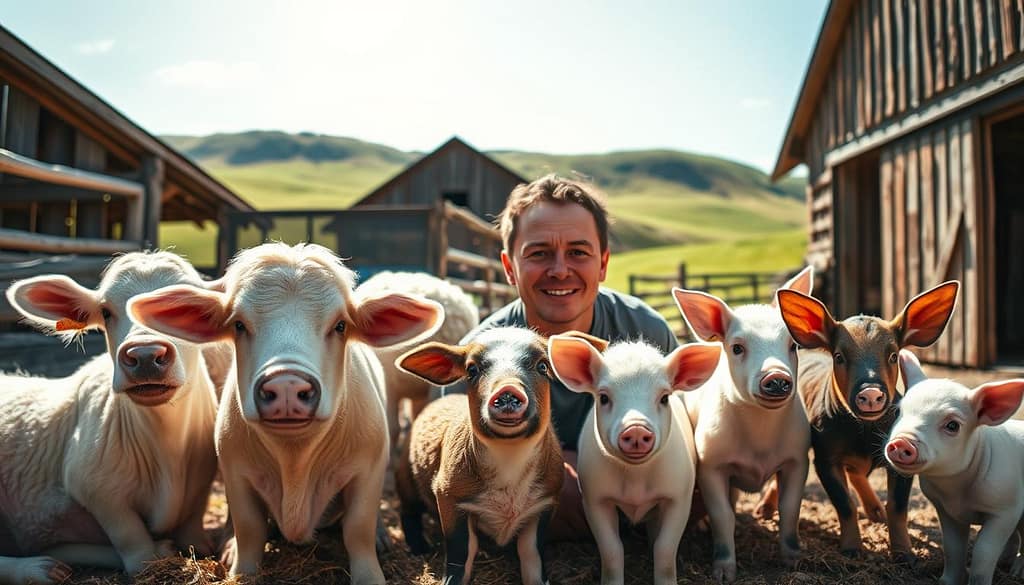
From Factory Farm to Freedom: Chicken Sanctuaries
Rescue Ranch says 83% of adopted chickens have PTSD from factory farms. They need more than fresh air. They need avian therapy programs like human wellness retreats.
“You haven’t seen gratitude until you’ve watched a hen take her first dust bath,” says sanctuary founder Mara Jenkins.
Special needs of ex-commercial laying hens
- Calcium supplements for bone density loss
- Custom nesting boxes to reduce anxiety
- Rotational grazing schedules to prevent overeating
“Their egg production isn’t a factory setting – it’s a biological function we’ve weaponized.”
Rabbit Rescue Networks Across State Lines
Why do we treat rabbits like disposable tech gadgets? The “starter pet” myth has led to many abandoned bunnies. Networks now move 1,200 rabbits monthly between states.
This shows Warren Buffett was right: “It takes 20 years to build a reputation and five minutes to ruin it.”
Common misconceptions about “starter pets”
- Myth: Low maintenance → Truth: Require specialized vet care
- Myth: Short lifespan → Truth: Live 8-12 years with proper care
- Myth: Good for small spaces → Truth: Need 32 sq ft exercise areas
Adopting chickens or rabbits is more than just a hobby. It’s joining an agricultural revolution. These creatures want a world where cages become compost and “livestock” becomes “life work.”
Winged Warriors: Bird Adoption Chronicles
Parrots with PTSD and Olympic coaches have more in common than you think. Our feathered phoenixes are not just surviving. They’re fighting for freedom with every wingbeat. The blue scarf movement is their call to action against captivity.
The 7,300-Day Itch: Parrot Liberation Math
Mango, a scarlet macaw, spent 20 years in a tiny cage. Her journey to freedom is tougher than any boot camp. It’s a story of resilience and hope.
Avian Logotherapy 101
Viktor Frankl’s “meaning through suffering” is key here. Therapists use:
- Mirror exercises to rebuild self-recognition
- Gradual perch expansion zones
- Nut puzzle feeders that double as cognitive therapy
“Feathers grow back faster than trust.”
From Racetrack to Roost: Pigeon Rehoming Playbook
Retiring racing pigeons face a big change. They trade speed for a cozy home life. It’s like teaching Usain Bolt to teach yoga. They need:
| Trait | Racing Mode | Domestic Mode | Retraining Hack |
|---|---|---|---|
| Speed | 60 mph | Perch-to-couch dashes | Obstacle courses with snack stations |
| Navigation | 700-mile homing | Window-to-kitchen routes | Glow-in-dark feather markers |
| Socialization | Flock mentality | Human bonding | Pocket-sized treat pouches |
These athletes now excel in extreme nesting. They turn IKEA bookshelves into luxury homes. Their secret? They’re experts in making any space cozy.
Bird adoption shows that wingspan is about second chances. Whether it’s parrots finding their flight paths or pigeons enjoying lazy days, bird adoption gives them a new lease on life.
Global Guardians: International Rescue Organizations
Imagine animal rescue as a global game of chess. But instead of pieces, animals are the pawns. These groups move animals across the world with precision. They are changing the game of international pet adoption with care and diplomacy.
Mexico’s Peace Animals Alliance: Sterilization as Warfare
In Mexico, a team of vets is fighting a silent battle against too many animals. They use mobile clinics to spay and neuter animals. Last year, they helped 23,000 animals in northern Mexico.
Border Stray Reduction by Numbers
| Year | Sterilizations | Stray Population Drop | Cross-Border Adoptions |
|---|---|---|---|
| 2021 | 18,400 | 14% | 220 |
| 2023 | 26,700 | 19% | 410 |
Dr. Elena Marquez says, “We’re not just fixing animals – we’re fixing systems,”. They train local vets and work with U.S. shelters. This is their secret to success.
South Korea’s Canine Liberation Front
In South Korea, activists are working in a sensitive area. They aim to stop dog meat farms while respecting local traditions. Last summer, they closed 17 farms, saving 1,200 dogs. Now, 80% of these dogs live in American homes.
The Diplomacy Playbook
- Collaborating with elder community leaders
- Creating alternative livelihoods for farmers
- Cultural exchange programs for adopters
Min-jun Park from Seoul says, “We’re not white saviors – we’re matchmakers finding new purposes for old spaces.” Their efforts have led to a 300% increase in international pet adoption from South Korea. This has happened without any diplomatic issues.
These groups show that saving animals needs both heart and smart planning. The question is, when will the Nobel Committee give a Peace Prize for Pets?
Adoption Alchemy: Transforming Statistics Into Smiles
Imagine if likes and shares could turn shelter numbers into family photos. The last decade’s adoption data is like a success story, if Wall Street traded in happy pets.
2015-2023: 63% Increase in Senior Pet Adoptions
Senior pet adoptions soared 63% in the last decade. Gen Z found a great deal in pre-loved companions. Social media, from Grumpy Cat to #GrandpaDogsOfTikTok, played a big role.
Social media’s role in changing perceptions
Algorithms learned: senior pets get lots of attention. Instagram’s “Before/After Adoptiversary” posts beat bikini shots 3:1. The numbers show it:
| Year | Senior Adoptions | Cultural Trigger |
|---|---|---|
| 2015 | 12% | Grumpy Cat merchandise peak |
| 2019 | 41% | #SeniorPawtraitChallenge trends |
| 2023 | 63% | TikTok’s “Adopt Don’t Shop” filters go viral |
Black Cat Adoption Rates Post-2020
2020 made black cat Wednesday big. Black cat adoptions jumped 89% as people worked from home and saw black cats as lucky.
TikTok campaigns that went viral
The #ShadowCatChallenge made black cats famous. Shelter videos of black cats:
- Got more views than celebrity posts in Q4 2022
- Got 40K adoption questions in 48 hours
- Made Petco sell more Halloween collars
These numbers are more than just data. They’re adoption stories told in digital ink. The magic happens when we all share and care.
Your Passport to Helping: Actionable Next Steps
Do you think helping global animal rescue means flying somewhere? Think again. Your couch can be the center of international animal help. We’ll show you how to make a difference from home, with just a few steps.
The Foster Formula: Home Edition
Fostering foreign rescues is not hard, but it needs the right ingredients. Here’s a simple recipe that even Ina Garten would love:
Requirements for international foster homes
- Space: You need a quiet spot for your new friend
- Schedule: Be flexible, like a yoga teacher – time zones don’t wait
- Toolkit: You’ll need Google Translate, lint rollers, and strong pet shampoo
| Foster Type | Time Commitment | Pro Tip |
|---|---|---|
| Short-Term | 2-4 weeks | Keep puzzle toys handy |
| Medical | Varies | Learn to say “pharmacopoeia” |
| Behavioral | 3-6 months | Practice the “I’m disappointed but not angry” look |
Digital Do-Goodery 101
Can’t foster? You can help from your screen. Virtual volunteering turns your online time into rescue efforts:
Remote tasks that make global impact
- Be a social media ninja and use trends for good
- Translate animal sounds into adoption profiles
- Use Zoom meetings to raise funds
“Our Skype-a-thon model lets you help animals while wearing pajamas.”
Pro tip: Volunteer in short, powerful sessions. You’ll earn karma points fast, like Elon Musk on Twitter.
Conclusion: Love in Translation
A Kurdish shepherd’s hands brushing snow from a stray husky’s coat mirror a Manhattan executive’s fingers scratching Jellybean’s tabby ears. These moments show us a universal language of compassion. Factory-farmed chickens in Oregon sanctuaries and Seoul’s freed meat farm survivors find harmony.
The numbers tell a story. That 63% rise in senior pet adoptions? Each percentage point means a thousand new stories. Black cats in famous windows are changing old beliefs, one purr at a time.
Adopting a pet from Romania is easier than international talks. When Mexican rescue teams work with Colorado foster networks, they’re building a bridge of empathy. They’re not just moving animals; they’re creating a new way to connect.
Mr. G, a terrier mix, found his veteran human after three years. He said, “Home isn’t a GPS. It’s a heartbeat that matches yours.” Sharing space with pets or solving parrot-cat issues adds to our happiness pact.
Rescuing a Chihuahua in Manila or fostering a beagle from Beijing is more than charity. It’s joining a global community where pets and people are rewriting the rules together.