
Many people overlook the joys of older dogs when looking for a new pet. These dogs bring life experience, calm behavior, and good manners. Adopting an older dog can be very rewarding for both the dog and the owner.
Older dogs are often easier to train and fit into a home because they are calmer. They already know basic commands and household rules. This makes the transition smoother for everyone.
It’s important to know about the 3-3-3 Rule for these dogs. In the first three days, they might feel overwhelmed. By the end of three weeks, they start to settle in. And in three months, they usually feel comfortable and bonded with their new family.
Experts like Tamar Love Grande say that older dogs form a special bond with their owners. She believes, “All pets love unconditionally, but older ones love more deeply.” This deep connection can change both your lives, as they show their gratitude in touching ways.
Unfortunately, older dogs often face being the last to be adopted and the first to be euthanized in shelters. This is due to misconceptions about their abilities and life span. By adopting an older dog, you save a life and gain a loyal friend who values a loving home.
Health Screening Baseline Labs Dental X Rays Common Breed Age Flags
Adopting a senior pet means understanding their health is key. A detailed health screening is vital for new senior pets. This first visit should include many tests to set a baseline for future health checks.
- Baseline Labs: A senior blood panel is essential. It should include thyroid tests, urinalysis, fecal tests, and a rectal exam. These tests help spot any hidden problems early.
- Dental X-Rays: Older pets often ignore their teeth. Many face dental disease, which can cause serious health problems if not treated. Regular dental checks and X-rays can stop these issues before they get worse.
- Common Breed Age Flags: Different breeds have unique health issues. For example, big breeds might have joint and mobility problems, while small breeds could have heart issues. Knowing these can help you watch your pet’s health closely.
Expect to pay between $150 and $400 for this first vet visit. Many animal shelters work with local vets to offer free check-ups within 3–5 days after adoption. Some vets also give discounts for shelter animals, making costs more manageable.
While some senior pets come with known health issues, many are surprisingly healthy. With the right care, even those with ongoing health needs can live well on affordable treatments. For example, Lori Fusaro adopted a 16-year-old dog named Sunny, who needed eye treatments and pain medication for just $60 a month.
Home Setup Ramps Rugs Raised Bowls Warming Beds Litter Box Adjustments
Turning your home into a senior-friendly space makes your furry friend feel safe and comfy. A few thoughtful changes can really improve your senior pet’s life. Here are some key adjustments to think about:
- Ramps: Ramps let your senior pet reach favorite spots like couches or beds without jumping. This is great for older dogs and cats with joint problems.
- Non-Slip Rugs: Use non-slip rugs on slippery floors to stop falls. This simple step helps keep your pet’s confidence and movement.
- Raised Bowls: Elevated food and water bowls ease neck strain, making meals more comfy for senior pets.
- Warming Beds: Orthopedic warming beds offer soothing heat for stiff muscles and joints. They can be a cozy haven for your pet.
- Litter Box Adjustments: For senior cats, use low-sided litter boxes for easier access. This helps avoid accidents from using high-sided boxes.
It’s important to create a quiet space for your new pet when they feel stressed. A regular routine for meals, walks, and rest helps reduce anxiety. It also makes your pet feel secure.
If you have other pets, introduce them slowly. Start with controlled meetings in neutral areas. This helps the transition and keeps the household peaceful.

Nutrition Senior Formulas Weight Management Kidney or Heart Friendly Diets
Understanding the nutritional needs of senior pets is key to their health. As pets get older, their diet needs change a lot. Choosing the right senior dog food helps with joints, digestion, and immune system. These special diets are made to meet the needs of older pets, helping them stay healthy.
Managing weight is very important for older pets. They might not be as active, which can cause weight gain. The right diet can help prevent or manage age-related health issues.
Senior formulas are different from regular dog food. They have:
- Adjusted protein levels to support muscle without harming kidneys.
- Glucosamine and chondroitin for joint health.
- More fiber for better digestion.
- Calories that match their slower metabolism.
Therapeutic diets also address specific health issues:
| Condition | Diet Type | Key Features |
|---|---|---|
| Kidney Disease | Kidney-Friendly | Restricted phosphorus, lower protein |
| Heart Disease | Cardiac Diet | Controlled sodium, added taurine |
| Obesity | Weight Management | Lower calorie, high fiber |
Nutrition is not one-size-fits-all. A 12-year-old Labrador with arthritis needs different food than a 12-year-old Chihuahua with heart issues. It’s important to read pet food labels carefully, separating marketing from real benefits.
Getting help from vets is a good idea. They can help pick the best food for your senior pet. It’s also important to deal with feeding challenges like less appetite or dental problems. Keeping pets hydrated is also key, as their kidneys may not work as well.
Medication and Supplements NSAIDs Joint Support Cardiac Meds Thyroid Setup
Adopting a senior pet means understanding their health needs. Senior pets often deal with arthritis, thyroid issues, and heart problems. The right meds can greatly improve their life quality.
Arthritis is common in older pets, causing joint pain and stiffness. NSAIDs help manage pain and improve movement. There are also supplements like glucosamine that can help joints.
Thyroid issues, like hypothyroidism, are common in senior dogs. A blood test can diagnose it. Daily meds can manage it well, but regular check-ups are key.
Heart disease is another big concern for older pets. Early treatment with meds can extend their life and improve their quality of life. Keeping to a strict medication schedule is important.
Here are some tips for managing medications:
- Stick to a regular dosing schedule.
- Watch for any side effects.
- Regular blood tests are important for pets on meds long-term.
- Use treats or pill pockets to give pills to pets that don’t like them.
Medicating a new pet might seem scary at first, but it becomes routine quickly. The right meds can make a big difference in their comfort and energy. For example, Sunny, a 16-year-old dog, needs pain meds that cost about $60 a month. Many senior pets can live happily on affordable treatments.
| Condition | Common Medications | Cost Range |
|---|---|---|
| Arthritis | NSAIDs, Glucosamine | $30 – $100/month |
| Thyroid Disorders | Levothyroxine | $20 – $50/month |
| Heart Disease | ACE Inhibitors, Diuretics | $40 – $120/month |
In conclusion, knowing about senior pets’ meds is key for new owners. With the right care, your pet can enjoy their golden years comfortably and happily.
Exercise Gentle Mobility Routines Scent Games Stroller Walks
Exercising senior dogs can greatly improve their life quality. As they age, their exercise needs change. Many older dogs do well with short, frequent walks instead of long runs. Three short walks a day can keep them happy and healthy.
They might enjoy a brief sprint, but focus on gentle routines that prioritize their comfort. Physical activity is key for joint mobility and heart health. Low-impact exercises prevent muscle loss, which can speed up aging.
Here are some gentle mobility routines to consider:
- Short, leisurely walks around the block.
- Playtime in the yard, allowing for sniffing and exploration.
- Gentle stretching exercises to keep muscles flexible.
Mental engagement is also vital for senior pets. Scent games are a great way to keep their minds active with little physical effort. Hiding treats around a room encourages exploration and uses their strongest sense—smell. This activity keeps them engaged and satisfied without stressing their aging joints.
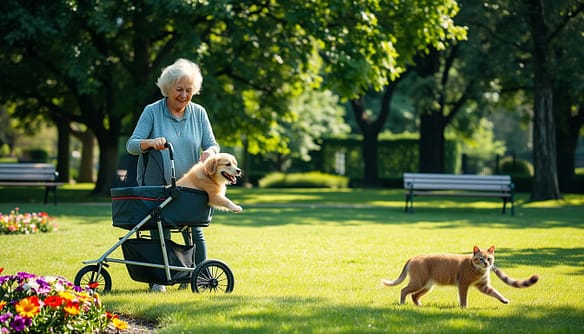
For dogs with significant mobility issues, stroller walks are a great option. They get to enjoy fresh air and new sights without overdoing it. It keeps them part of family activities and boosts their social interaction.
It’s important to listen to your senior pet’s signals during exercise. Knowing when they’re showing enthusiasm but might be in pain is key. Their ability to handle activity can change daily. It’s about finding the right balance that keeps them happy and dignified.
| Activity Type | Benefits | Recommended Duration |
|---|---|---|
| Short Walks | Maintains joint mobility | 15-30 minutes |
| Scent Games | Enhances mental stimulation | 10-20 minutes |
| Stroller Walks | Provides fresh air and socialization | 30-60 minutes |
Adapting exercise routines for senior pets ensures they stay active and engaged. For more tips on playing with older dogs, check out this helpful resource.
Vet Schedule Twice Yearly Exams Monitoring Logs QoL Scales
Senior pets need regular vet visits to stay healthy. A proactive vet schedule helps catch health issues early. It’s best to see the vet at least twice a year.
These visits should include:
- Comprehensive wellness exams: Done right after adoption to check health needs.
- Bloodwork: Done yearly to keep an eye on health.
- Joint supplements or medications: Helps with movement and comfort.
- Dental cleanings: Crucial for good oral health.
- Weight management plans: Made just for the pet’s needs.
- Specialized diets: Changed for age-related health.
Keeping a monitoring log is very helpful. It tracks changes in:
- Appetite
- Water intake
- Mobility
- Behavior
These logs give clear data to vets. This makes health talks more effective. It helps make treatment plans better.
Quality of Life (QoL) scales are also useful. They help check a senior pet’s happiness and comfort. This makes it easier to talk about health concerns with the vet.
Even though regular vet visits might worry you, they show you care a lot. Catching health issues early can prevent a lot of pain.
The main goal of caring for senior pets is to improve their life quality. By sticking to a vet schedule, you can make your pet’s life better and more comfortable.
Insurance Pre Existing Caveats Alternatives Care Funds
Financial readiness is key when bringing a senior pet home. Adopting an older pet can be very rewarding but comes with unexpected costs. You might spend $1,500 to $2,000 in the first year, depending on your pet’s needs and size.
Many senior pets need regular check-ups and a healthy lifestyle. But some may need more vet care. This is where pet insurance helps. Yet, most policies don’t cover pre-existing conditions. This is a big worry for those adopting older pets.
Even with these limits, there are options. Some insurance plans cover new conditions after you sign up. Accident-only plans also offer protection, no matter your pet’s age. Consider these alternatives:
- Pet care savings accounts let you save for vet bills.
- CareCredit helps finance vet services, making costs easier to handle.
- Community resources, like breed-specific rescue groups, may offer medical support for seniors.
- Veterinary discount plans and wellness packages can lower the cost of routine care.
Preparing a budget for a senior pet is more than just for medical costs. It shows your commitment to their happiness and health for life. By planning, you can manage expenses and enjoy the benefits of senior pet adoption.
Adopting Bonded Seniors and End of Life Planning
Adopting senior pets, like those who are bonded, is a deeply emotional choice. These pairs have formed strong bonds, giving them comfort and security. By welcoming them into your home, you give them a second chance and honor their lifelong bond.
Adopting two senior pets at once might seem challenging. Yet, it can be incredibly rewarding. These pairs support each other in their new home, making the transition smoother. Their love and companionship bring joy to you as well.
Adopting bonded seniors requires a bigger financial commitment. But the emotional rewards are worth it. Keeping their bond alive enriches your life and theirs. Organizations like Old Dog Haven help find homes for these deserving pairs, ensuring they live out their days with dignity.
When adopting bonded seniors, preparing for end-of-life planning is key. Knowing when to switch from palliative to hospice care is important. It helps you make informed decisions about your pet’s quality of life.
Hospice fostering is a compassionate way to care for pets with terminal illnesses. It provides a loving home for animals with limited time left. Creating advance care directives is essential. These directives outline your wishes for emergency situations, ensuring your pet gets the care they need.
Recognizing quality-of-life indicators is also vital. These indicators help guide humane decision-making. They allow you to provide a peaceful farewell to your beloved companion. While losing a pet is heartbreaking, guiding them through their final days can be profoundly meaningful.
| Aspect | Bonded Seniors | End-of-Life Planning |
|---|---|---|
| Emotional Connection | Deep bonds provide comfort | Guided by love and compassion |
| Financial Commitment | Higher initial costs | Consider ongoing medical expenses |
| Care Approach | Supportive environment | Hospice fostering for terminal pets |
| Decision-Making | Joint adoption for comfort | Quality-of-life assessments |
Adopting bonded seniors and planning for their end-of-life journey is a profound act of love. It transforms both the giver and receiver, creating lasting memories. The joy and gratitude you experience make every moment with your senior pets invaluable.
Success Stories and Adopter Support Communities
Senior pet adoption has changed lives for both the animals and their new families. Stories like Chloe Kardoggian and Marnie the Dog show how these pets become ambassadors for senior adoption. They remind us that older pets have vibrant personalities and lots of love to give.
Events like Animal Planet’s Dog Bowl, featuring older dogs like Gus and Dino, challenge stereotypes. They show the joy and energy these dogs bring to our lives. This shift encourages more people to adopt older animals, valuing their unique qualities.
There are many resources for those starting their senior pet adoption journey. Online communities share advice and encouragement. Local groups, like Old Dog Haven, focus on senior dogs, ensuring they get the care and love they need. In Knoxville, Wagbar hosts events for adopted seniors to socialize and build confidence.
Adopting a senior pet is more than kindness; it creates deep bonds and emotional fulfillment. For those facing post-adoption challenges, these communities offer support and guidance. Adopters can connect with others who understand the journey, sharing experiences and solutions.
Choosing to adopt a senior pet enriches lives and promotes compassion. Remember, you’re not alone when welcoming an older dog into your home. Join a network of passionate adopters ready to support you. For more inspiring stories, visit this link and explore the joy of senior dog adoptions.