
Getting a new dog is both thrilling and tough. When you decide to bring one home, your space changes a lot. It becomes a new world for your pet, full of new sights and sounds.
Planning is key to make this transition smoother. Setting up your home before your pet arrives helps you focus on them. A decompression space is a must. It’s a safe spot for your pet to adjust to their new home.
This space should be cozy and familiar. Add a comfy crate, blankets with your pet’s scent, and white noise to block loud sounds. This setup helps your pet feel safe and builds trust right away. It also cuts down on their stress.
Safety sweep toxic plants cords meds trash human food hazards escape routes
Getting your home ready for a new pet is a big job. It’s all about making sure your home is safe for them. By looking at your home through their eyes, you can find dangers you might miss.
Identifying and Removing Common Household Toxins
There are many dangers in our homes. Plants, food, and more can be harmful. Here are some common dangers:
| Toxin | Source | Effects on Pets |
|---|---|---|
| Lilies | Common houseplant | Kidney failure in cats |
| Chocolate | Human food | Vomiting, diarrhea, and potentially fatal |
| Xylitol | Sugar substitute | Insulin release, hypoglycemia |
| Sago Palm | Ornamental plant | Liver failure, death |
| Onions | Human food | Red blood cell damage |
It’s important to keep these items away. For example, keep chocolate and xylitol where pets can’t get them. Also, choose safe plants for your home.
Toxic Plants and Human Food Hazards
Some plants can be very dangerous to pets. Aloe vera and sago palms are examples. Also, foods like grapes and onions can be deadly. Always check your plants and food before bringing a pet home.
Securing Medications and Cleaning Supplies
Medicines and cleaning products need to be kept safe. Use child-proof locks on cabinets. This stops pets from getting into things they shouldn’t.
Managing Physical and Electrical Dangers
There are also physical dangers to watch out for. Loose cords and trash cans can be a problem. It’s important to fix these issues for your pet’s safety.
Tucking Away Electrical Cords and Blind Cords
Electrical cords can be tempting for pets. Use cord covers or tuck cords under carpets. Also, keep blind cords out of reach to avoid strangulation.
Securing Trash Cans and Escape Routes
Make sure trash cans are closed tight. Also, check your home for places your pet could escape. Make sure windows and fences are safe to keep them in.
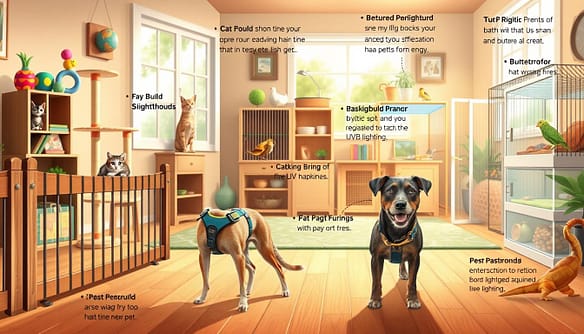
Species and breed specifics prey drive fences cat trees sighthound harness birds and reptiles heat UVB
Every pet species and breed has its own needs. It’s important to make your home fit these needs. This makes your pet more comfortable and safe. Let’s look at how to make your home right for dogs, cats, and exotic pets.
Tailoring Your Home for Canine Instincts
Dogs have instincts based on their breed. For example, sighthounds like Greyhounds need a fenced yard. They also need a sighthound harness to prevent running off.
Managing High Prey Drive and Secure Fencing
High prey drive breeds need strong fencing. Here are some tips:
- Install dig-proof barriers along the fence line.
- Ensure the fence is tall enough to prevent jumping.
- Use materials that are difficult to climb.
The Non-Negotiable Sighthound Harness
A good harness, like the Ruffwear Front Range Harness, is key for sighthounds. It stops pulling and keeps them safe on walks.
Creating Vertical Territory for Felines
Cats love vertical space. It’s key for their happiness, letting them explore and hide. A good litter box plan fits well with cat trees and shelves.
Strategic Placement of Cat Trees and Shelves
Put cat trees and shelves near windows or quiet spots. This lets cats watch outside and have a safe place. Here are some good spots:
| Location | Purpose | Benefits |
|---|---|---|
| Near Windows | Observation | Stimulates natural hunting instincts |
| Quiet Corners | Resting | Provides a safe retreat |
| High Shelves | Exploration | Encourages physical activity |
Specialized Habitats for Exotic Pets
Exotic pets need special homes. For example, a Bearded Dragon needs the right heat and UVB light. A parrot’s cage should be away from kitchen smells.
Maintaining Proper Heat and UVB Lighting for Reptiles
Make sure your reptile’s home has:
- Heat sources that mimic natural sunlight.
- UVB lighting for calcium metabolism.
- Secure enclosures to prevent escapes.
Safe Room Placement for Birds
Birds need a quiet room away from drafts and noise. A calm place helps them stay happy and healthy.
By checking your home against your pet’s needs, you can make a safe and fun place for them. For more tips, visit this link.
Gear list collar tags microchip reg crate bed bowls slow feeder litter boxes carriers
Creating a thoughtful supplies list is key for a safe and welcoming home for your rescue pet. It’s important to get the right gear before your new furry friend arrives. This gear ensures their safety and comfort.
The Foundation of Identification and Safety
Identification is critical for any pet. Before your new companion arrives, make sure they have:
- A well-fitted collar: Even if you use a harness, a collar is needed for ID tags and licenses.
- ID Tags: Ensure the tag has your contact info for quick identification.
- Microchip Registration: Start the microchip process early, linking the number to your contact details.
Collar, ID Tags, and Microchip Registration
Choosing the right collar is vital. It should fit snugly but not too tight. This prevents slipping off or discomfort. Also, consider a reflective collar for better visibility during walks.
Selecting the Right Crate and Bed for Security
Your crate is more than a containment area; it’s a safe space for your pet. Choose a crate that lets your dog stand, turn, and lie down comfortably. The MidWest Ultima Pro Double Door Folding Dog Crate is a good choice, known for its sturdiness and safety.
Pair the crate with a comfy bed for a cozy den-like feel. This makes your pet feel secure in their new home.
Feeding Station Essentials
Setting up a feeding station is vital for your pet’s health. Include:
- Stainless Steel or Ceramic Bowls: These are easy to clean and more hygienic.
- Slow Feeders: Use slow feeder bowls to prevent bloat and promote healthy eating.
Choosing Between Stainless Steel Bowls and Slow Feeders
Stainless steel bowls are durable and easy to clean, making them popular. Slow feeders, on the other hand, provide mental stimulation and help regulate eating speed, which is important for some breeds.
Waste Management and Transportation
Proper waste management keeps your home clean. For cat owners, the right litter box is key. Consider these factors:
- Type of Litter Box: Choose a box that suits your cat’s preferences, whether covered or uncovered.
- Unscented Litter: Many cats prefer unscented litter, so opt for this to avoid any aversion.
- Strategic Placement: Place the litter box in a low-traffic area, away from their feeding station.
Airline-Approved Carriers and Crash-Tested Travel Harnesses
When it comes to transportation, safety is key. Look for airline-approved carriers like the SturdiBag Pro 3.0 for small pets. For larger dogs, a Sleepypod ClickIt Sport harness is recommended, with a five-star crash-test rating.
By preparing this gear list, you’re ensuring a safe and comfortable home for your new rescue pet. For more pet care tips, check out this article on what no-kill means and doesn’t.
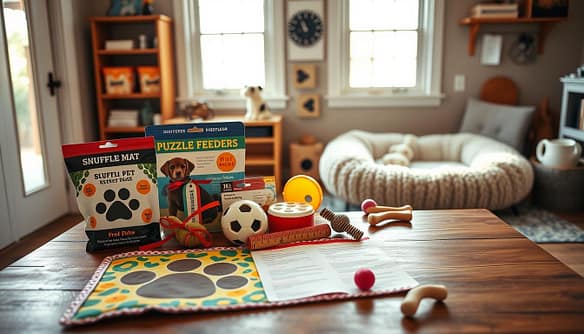
Enrichment and exercise breed matched toys snuffle mats flirt pole puzzle feeders
Playtime and enrichment are key for a happy dog. Toys help your dog act naturally. It’s important to pick the right toys for your pet’s happiness.
A variety of toys lets your dog find their favorites. This makes playtime more fun for them.
The Science of Canine Enrichment
Understanding what your dog needs is important. A happy dog is less likely to get into trouble. Using breed-matched toys can make a big difference.
Breed-Matched Toys for Instinctual Satisfaction
Each breed has its own needs. For example, Beagles love sniffing toys. These toys keep your dog’s mind active and happy.
Snuffle Mats and Puzzle Feeders for Mental Work
Snuffle mats and puzzle feeders are great for your dog’s mind. They make mealtime fun and challenging. These toys are a great way to keep your dog’s mind sharp.
Interactive Play and Physical Outlets
Exercise is vital for your dog’s health. Playing together helps burn energy and strengthens your bond.
Flirt Poles for High-Drive Dogs
Flirt poles are perfect for energetic dogs. They offer a fun way to exercise and satisfy their natural instincts.
Structured Exercise Plans for Different Energy Levels
Every dog is different, and so are their energy levels. Tailoring exercise to your dog’s needs is important. This keeps them active and happy.
| Activity Type | Recommended Duration | Ideal Breeds |
|---|---|---|
| Interactive Play | 30-60 minutes | All breeds |
| Flirt Pole | 15-30 minutes | High-energy breeds |
| Snuffle Mat | 10-20 minutes | Scent hounds |
| Puzzle Feeder | 15-30 minutes | All breeds |
Children rules and training petting consent quiet zones door discipline
Getting your home ready for a rescue pet is more than just making it safe. It’s also about teaching your kids how to be gentle with their new friend. It’s key to have clear rules for a good relationship between your kids and the pet.
Establishing a Foundation of Respect and Safety
Teaching kids about petting consent is very important. They need to know that a wagging tail doesn’t always mean they can pet the animal. Animals can get too stressed, and it’s important to respect their space.
If a dog goes to its bed or crate, it’s asking for privacy. This is a sign that it needs some alone time.
Teaching Petting Consent and Reading Body Language
Teaching kids about animal body language is key for safe and respectful interactions. Here are some important points:
- Watch how the animal stands and moves its tail.
- Teach kids to move slowly and calmly when approaching.
- Make sure they ask before petting the animal.
The “Quiet Zone” Rule: When the Pet is Off-Limits
Setting up “quiet zones” in your home is a smart move. These areas let the pet have a safe place to relax without being bothered. Common quiet spots include:
- The pet’s crate
- A specific room
- Areas with gates to keep others out
This rule helps keep the pet calm and reduces the chance of it getting defensive, like biting.
Practical Management for a Harmonious Household
To keep your home peaceful, you need good management strategies. This includes teaching kids how to safely and responsibly interact with the pet.
Door Discipline to Prevent Bolting
Door discipline is critical to stop pets from running away. Teach your family to:
- Always check if the pet is around before opening a door.
- Use a leash when going outside.
- Practice a family drill to make this a habit.
Age-Appropriate Responsibilities and Interactions
Give kids tasks that fit their age to make them feel part of the pet’s care. Younger kids can do simple things like:
- Filling the water bowl
- Gently brushing the pet
Older kids can handle more, like walking the dog or cleaning up after it. This teaches them responsibility and strengthens their bond with the pet.
| Key Concepts | Importance | Implementation |
|---|---|---|
| Petting Consent | Prevents overwhelming the pet | Teach children to ask before petting |
| Quiet Zones | Gives pets a safe retreat | Designate specific areas |
| Door Discipline | Prevents escapes | Family drills and checks |
| Age-Appropriate Tasks | Encourages responsibility | Assign tasks based on age |
By teaching these values, you create a caring and respectful home. This is key for a strong bond between your kids and their new rescue pet.
Multi pet staging scent swap barrier greetings baby gates vertical space
Bringing a new pet home needs careful planning. It’s important for a smooth transition for all pets. Start by setting up a decompression space for the new pet. This lets them adjust slowly without feeling overwhelmed.
The Art of the Slow Introduction
Slow introductions help pets get along better. It’s a step-by-step process to reduce stress and encourage good interactions.
Staging and Scent Swapping Before Visual Contact
First, keep the new pet in a separate room with a solid door. This decompression space makes them feel safe. Next, do scent swapping. Rub a cloth on one pet and place it under the other’s food bowl. This helps them get used to each other’s scent before seeing each other.
Conducting Barrier Greetings Through Baby Gates
After scent swapping, it’s time for barrier greetings. Use a strong baby gate, like the Cardinal Gates SS-30, in a doorway. This lets pets see, smell, and hear each other safely. It helps prevent fights and makes the introduction calm.
Architecting a Peaceful Multi-Pet Home
Creating a peaceful home for multiple pets needs careful planning. It ensures each pet feels safe and valued.
Utilizing Vertical Space for Feline Confidence
Cats need vertical space. Cat trees and shelves give them a safe spot to watch newcomers. This reduces stress and boosts their confidence.
Resource Management to Prevent Competition
Managing resources is key to avoid pet competition. Make sure there’s enough food, water, and places to rest. This reduces tension and helps pets live together peacefully.
For more tips on a multi-pet home, read this article on multi-pet integration.
Travel kit car restraint cleanup kit calming aids vet records
Having a well-prepared travel kit is key when bringing your new pet home. It should have safety gear and calming aids to keep your pet comfortable and safe. Here’s how to put together a kit that meets all your pet’s needs.
Assembling a Mobile Safety and Comfort Kit
The heart of your travel kit is a reliable car restraint. An unsecured pet can become a dangerous object in an accident. Choose a crash-tested harness, like the Sleepypod ClickIt Sport, or a sturdy carrier, such as the SturdiBag Pro 3.0. These options ensure safety and comfort.
Crash-Tested Car Restraints: Harnesses and Carriers
It’s important to pick the right restraint. Look for ones that have passed crash tests to protect your pet in emergencies. Here’s a look at some popular choices:
| Product | Type | Crash-Tested | Weight Limit |
|---|---|---|---|
| Sleepypod ClickIt Sport | Harness | Yes | Up to 90 lbs |
| SturdiBag Pro 3.0 | Carrier | Yes | Up to 30 lbs |
| PetSafe Happy Ride | Harness | Yes | Up to 75 lbs |
A Complete Cleanup Kit for Inevitable Accidents
Accidents can happen, and they often do when traveling. Have a cleanup kit ready with:
- Enzymatic cleaner for pet messes
- Absorbent paper towels
- Disposable gloves
- Waste bags
This kit will help you deal with any unexpected messes quickly and effectively.
Proactive Stress Management on the Go
Travel can be stressful for pets. To help ease their anxiety, include calming aids in your kit. Consider products like:
Using Calming Aids: Pheromone Sprays and Supplements
Pheromone sprays, such as Adaptil for dogs or Feliway for cats, can reduce stress. Spray these on the carrier or car interior about 15 minutes before you load your pet.
Organizing a Portable Vet Records File
Lastly, create a waterproof pouch with important documents. Include:
- Up-to-date vet records
- Vaccination history
- A recent photo of your pet
This information is vital if you need to visit an emergency clinic while away from home.
72 hour to 2 week adjustment schedule routines journaling signs of stress vs progress
Knowing how long it takes for your rescue pet to adjust can really help them feel at home. The first few days are key for building trust and feeling safe. A set schedule helps your pet get used to their new place.
The First 72 Hours: The Decompression Protocol
In the first three days, let your pet relax in a safe spot. Your crate setup is very important here. Don’t push them to interact; wait for them to come to you.
Establishing a Predictable Routine for Meals and Potty Breaks
It’s important to have a regular schedule for meals and potty breaks. This makes your pet feel secure. Try to stick to the following:
- Have meals at the same time every day.
- Keep a regular potty schedule to avoid accidents.
- Make sure to have quiet time for rest and relaxation.
Journaling Initial Signs of Stress: Hiding, Panting, and Inappetence
Writing down your pet’s daily behaviors can be very helpful. Look out for signs of stress like:
- Hiding or going to their crate for safety.
- Panting or licking their lips too much.
- Not wanting to eat or drink.
Writing these down without judging helps you see patterns. This way, you can change your approach if needed.
The Two-Week Milestone: Tracking Emerging Personality
By the two-week mark, you might start to see your pet’s personality. This is a great time to check how comfortable they are and make any needed changes.
Recognizing Progress: Play Bows, Relaxed Posture, and Appetite
Look for signs that your pet is adjusting well, such as:
- Play bows showing they want to play.
- Being relaxed when lying down.
- Starting to eat regularly again.
Adjusting the Schedule Based on Observed Behavior
Use your journal to adjust the schedule based on your pet’s behavior. If they seem stressed, add more quiet time or less stimulation. If they’re doing well, slowly introduce new things.
By following this plan, you can make your rescue pet feel safe and loved in their new home. Remember, being patient is very important during this time.
| Behavior | Sign of Stress | Positive Indicator |
|---|---|---|
| Hiding | Seeking refuge in the crate | Exploring the environment |
| Panting | Excessive licking of lips | Relaxed body language |
| Inappetence | Refusal to eat | Consistent appetite |
Printable room by room checklist
Creating a safe and welcoming home for your new rescue pet is key. We’ve made a detailed, printable room-by-room checklist for you. It’s a handy tool for making your home pet-proof, breaking it down into easy steps.
How to Use Your Customized Home Prep Checklist
This checklist is more than just a list; it grows with your pet’s needs. Stick it on your fridge or keep it nearby as you go through each room. Start in the kitchen, making sure cleaning supplies are up high and food is in a safe place. Then, head to the living area to check for dangers like cords and toxic plants. Every step you take makes your home safer for your pet.
A Living Document for Every Stage of Adjustment
As your pet gets settled, update the checklist to meet their changing needs. This flexible tool will help you stay on top of updates and improvements.
Sharing the Checklist with Family Members and Pet Sitters
Make sure everyone in your home knows about the checklist. This way, all family members and pet sitters will understand the safety rules.
Your Room-by-Room Audit: From Kitchen to Backyard
Every part of your home is important for your pet’s safety and happiness. In the kitchen and living area, focus on removing dangers and making a cozy spot. In the bedroom and bathroom, create quiet spaces and keep medications away. And don’t forget to check the backyard to make sure it’s safe and fenced.
Kitchen and Living Area Safety and Comfort Points
Make sure cleaning supplies are out of your pet’s reach. Also, ensure your living area is free from things that could choke them. And, provide comfy places for your pet to rest.
Bedroom, Bathroom, and Outdoor Space Verification
Make sure your pet has a quiet spot in the bedroom. In the bathroom, keep medications locked away. And, check that your outdoor area is fully fenced and safe for your pet to explore.