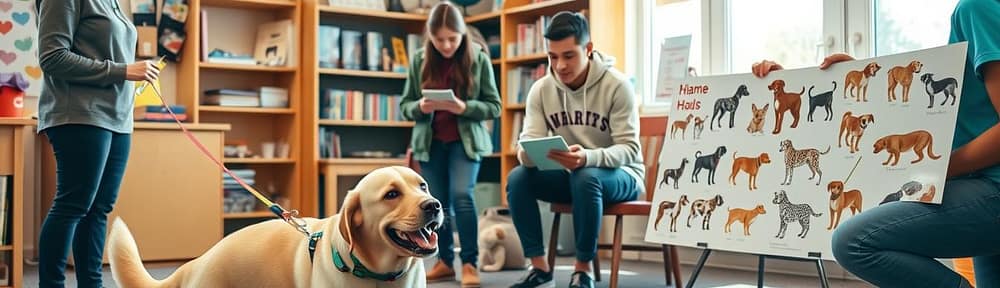
Forget the heartwarming social media clips. The real story of working with shelter dogs is a lesson in applied zoology. It’s about turning casual dog lovers into informed advocates.
Organizations like Paws That Serve believe “every dog and every person matters.” They are “generous with our knowledge.” It’s not just about giving time. It’s about learning more.
This is where animal volunteer education gets real. It goes beyond basic chores. You learn about the genetic and behavioral traits of dogs. It’s like a graduate seminar with dogs as textbooks.
Groups like Paws & Think aim to “improve lives through the human-dog connection.” You learn why a Border Collie herds and why a Greyhound loves the couch. This hands-on learning gives you practical knowledge you can’t find in books.
For a deeper experience, check out veterinary volunteer programs. It’s enlightenment, one paw at a time.
Shelter Volunteer Breed Training: Weekly Education Sessions and Hands-On Learning
Animal shelters have changed a lot. They’re now places where you can learn a lot about dogs and cats. Gone are the days of just a quick safety talk. Now, it’s a series of lessons that teach you a lot.
These weekly sessions help break down myths about different dog breeds. You learn that Border Collies are not just smart, but have a special stare. You also learn that a Chihuahua’s shake might not be fear, but excitement.
Learning in these sessions is very hands-on. You practice reading a dog’s body language. You learn to tell if a dog is happy or stressed. It’s all about understanding the dog’s whole story.
This training changes how you see dogs. Instead of just seeing a hyper Labrador, you see a smart, active dog that needs something to do. This helps you help dogs find the right homes.
Volunteers play a big role in shelters. They bring skills and knowledge that help shelters do more. Your training lets you help match dogs with the right people.
This knowledge helps shelters do more than just keep dogs safe. It helps them find solutions for dogs’ problems. This is key to helping animals in shelters.
So, you don’t just clean kennels. You learn a lot about dogs and cats. Shelters become places where you can learn a lot and help animals find homes.
Community Outreach Through Breed Knowledge: School Presentations and Public Education
Forget press releases; the most effective public relations campaign for animal welfare might just involve a patient Golden Retriever and a classroom full of curious kids. This is where your shelter-honed expertise goes on tour, trading concrete floors for auditoriums and hospital corridors. Community outreach isn’t about handing out flyers. It’s strategic canine diplomacy.
You become a storyteller, with breed traits as your narrative hooks. Imagine explaining to second-graders why a Labrador Retriever is a born reading buddy—patient, soft-mouthed, and addicted to praise—while a terrier might critique the pacing. These structured breed learning programs deploy four-legged ambassadors to shatter stereotypes and build empathy from the ground up.
The data proves the point. Programs like the national R.E.A.D.® (Reading Education Assistance Dogs) initiative serve youth who are academically or behaviorally challenged, as well as children and adults with disabilities. The dog isn’t just a cute listener; its predictable, calm breed-specific temperament creates a safe, non-judgmental space for learning. This is public service announcement meets live science demo.
Then there’s the hospital wing. Take the “Paws for Purpose” program at Oklahoma Children’s Hospital. Here, a Golden Retriever named Prince isn’t merely a visitor; he’s a biofeedback mechanism on four legs. For a patient relearning to walk, Prince’s steady, encouraging presence provides a motivational goal that physical therapy equipment alone cannot. You’re not just walking a dog; you’re demonstrating applied animal behavior science in its most potent form.
These outreach formats vary wildly in audience and execution. The table below breaks down how breed learning programs adapt to different missions:
| Program Type | Primary Audience | Breed Knowledge Focus |
|---|---|---|
| School Classroom Visit | K-12 Students | Historical roles (herding, retrieving), temperament suitability for families, basic care needs. |
| Hospital Therapy Visit | Patients & Clinical Staff | Innate calmness, tolerance for medical equipment, intuitive response to human emotion. |
| Library R.E.A.D. Session | Reluctant Readers & Children with Disabilities | Predictable, non-reactive temperament, ability to remain for long periods, gentle demeanor. |
The magic is in the translation. You learn to frame a Border Collie’s “eye” as focused intensity, not neurosis. You explain a Greyhound’s sleep schedule as energy conservation, not laziness. This reframing is powerful. It turns a child’s fear of large dogs into curiosity about guardian breeds. It transforms a senior citizen’s isolation into a reason to engage with a gentle visiting Cavalier King Charles Spaniel.
Ultimately, these breed learning programs do more than educate the public about animals. They use animal intelligence to teach human concepts: responsibility, biology, patience, and unconditional positive regard. You’re not just a volunteer with a dog. You’re part of a mobile educational unit, proving that the best lessons often come with a wagging tail.
Volunteer-Led Breed Research: Contributing to Rescue Organization Breed Databases
Imagine your volunteer work helping not just one dog but thousands. Welcome to the world of citizen-scientists in animal rescue. Here, animal advocacy training turns from opinion to data-driven action.
You’re not just learning here. You’re creating knowledge. Think of it as building a rescue Wikipedia, where every note is a valuable piece of information.
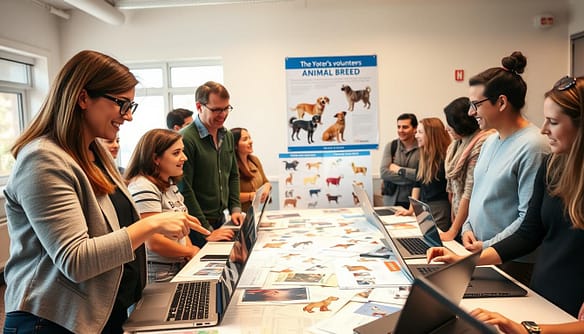
We bring a lot of experience to this work. But the real strength comes from working together. By sharing our knowledge, we make rescues smarter. This is good stewardship in action. We look for the best ways to help, and often, the best ideas come from you.
So, what does this research look like in action? It’s about finding out which breeds do well in small homes. It’s about noting common health issues in purebreds. This information goes straight into our databases.
The move from stories to data is huge. It turns advocacy into real, scholarly work. This is the top animal advocacy training.
| Research Focus | Data Collected | How It Informs Rescue Strategy |
|---|---|---|
| Foster Home Success Metrics | Breed, age, home environment (kids, other pets), length of stay, adoption speed. | Creates evidence-based matching algorithms. Helps recruit fosters for specific breed types. |
| Intake Health & Behavioral Trends | Common ailments per breed (e.g., skin conditions in Bulldogs), surrender reasons, initial temperament scores. | Allocates veterinary resources proactively. Shapes pre-adoption training programs for at-risk breeds. |
| Breed-Specific Public Perception | Adoption inquiry rates, length of time featured online, public questions asked during meet-and-greets. | Guides marketing and education efforts. Helps combat breed stigma with local, real data. |
| Long-Term Adoption Outcomes | Follow-up surveys on health, behavior, and owner satisfaction 6 months/1 year post-adoption. | Validates the rescue’s matching process. Provides powerful success stories for fundraising and outreach. |
This work needs a lot of sharing of knowledge. We work with other groups, comparing data to find big patterns. A health trend in one place might warn us about another.
Your notes on a shy Shepherd mix could help a national profile. That’s how local care turns into big insights.
Doing this volunteer-led research is a powerful way to learn animal advocacy training. It gives you more than just passion. It gives you evidence to back up your beliefs. You go from guessing about a breed to really understanding it.
The outcome? Smarter rescues, healthier animals, and more successful adoptions. Your notes and sharp eye are just as important as a leash and treats.
Foster Home Recruitment: Using Breed Knowledge to Match Volunteers with Animals
Finding the right foster home isn’t about the size of the yard. It’s about matching a dog’s needs with a foster parent’s lifestyle. This is more than just providing a place to stay. It’s about creating a temporary home where both the dog and the foster parent can thrive.
It’s like using predictive analytics to ensure happiness. Knowing a Border Collie needs activity and a Bulldog loves to relax helps avoid “foster fails.” It’s not just about providing a home. It’s about creating an environment where a dog’s natural behavior is supported.
At the heart of any rescue education programs is this philosophy. Success comes from training that highlights each dog’s strengths. It’s about respecting and encouraging their unique talents.
Volunteers learn to understand a dog’s background and needs. They look at traits like energy, drive, and social skills. The goal is to find the perfect match, not just a temporary home.
This approach turns foster homes into tailored internships. Dogs can be themselves, reducing stress and behavioral problems. Foster volunteers gain confidence, knowing they’re ready for their dog’s needs.
This knowledge-based matching is the ultimate act of kindness. It listens to a dog’s genetic signals and finds a human who can respond. This is how you create a temporary home for long-term success.
Veterinary Volunteer Programs: Learning Breed-Specific Health Issues Through Service
Forget textbooks; the most visceral lessons in breed-specific health are learned with your sleeves rolled up in a veterinary volunteer program. This is the emergency room of animal volunteer education, a place where theory meets the cold steel of a surgical table and the warm, anxious breath of a patient.
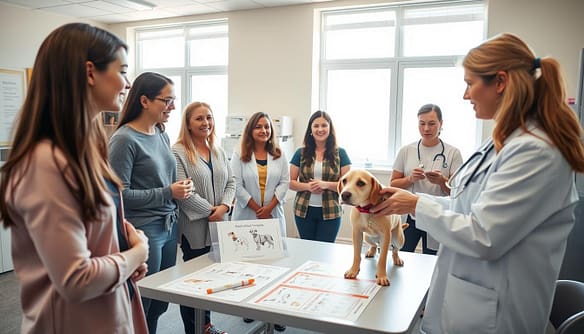
You quickly learn that a Great Dane isn’t just a large dog; it’s a walking cardiology case, predisposed to dilated cardiomyopathy. That Dachshund comes with a factory-installed spinal health warning label. This isn’t casual knowledge—it’s critical intelligence. Volunteering here transforms you from a helper who holds a paw into a sentinel who understands why that paw needs holding.
Take volunteers like Debbie and Melissa. With backgrounds in nursing, they don’t just see symptoms; they connect them to a breed’s genetic blueprint. Melissa, a retired nurse, might note a Cavalier King Charles Spaniel’s subtle cough, linking it instantly to the breed’s notorious mitral valve disease. This fusion of human healthcare rigor and canine expertise is the secret sauce of advanced animal volunteer education.
The perspective shift is profound. You start viewing every animal as a collection of systems, each influenced by its ancestry. A Bulldog’s labored breathing during a routine check-up is no longer just noise; it’s a data point on brachycephalic syndrome. This knowledge is pure power—the power to advocate for targeted preventative care and spot red flags long before they become emergencies.
| Breed | Signature Health Risk | Clinical Insight Gained | Volunteer’s Role in Prevention |
|---|---|---|---|
| Great Dane | Dilated Cardiomyopathy (DCM) | Learning to recognize early signs like lethargy or coughing, often missed as mere “slowness” in a giant breed. | Advocating for regular cardiac screenings and monitoring exercise intensity. |
| Dachshund | Intervertebral Disc Disease (IVDD) | Understanding the mechanics of their long spine and why jumping off furniture is a high-risk activity. | Educating owners on using ramps and maintaining a healthy weight to reduce spinal stress. |
| Bulldog | Brachycephalic Obstructive Airway Syndrome (BOAS) | Seeing how shortened airways cause respiratory distress, specially in heat or during excitement. | Monitoring for overheating and promoting calm, cool environments during clinic visits or recovery. |
| Cavalier King Charles Spaniel | Mitral Valve Disease | Identifying the soft heart murmur that is almost a breed hallmark, requiring vigilant auditory screening. | Supporting early diagnostic efforts like echocardiograms and stress-free handling during exams. |
This table isn’t just academic; it’s the curriculum of the clinic. Each entry represents a real patient, a real conversation, and a real chance for a volunteer to make a difference. The learning is hands-on, immediate, and unforgettable.
Ultimately, this form of service does more than fill a shift schedule. It forges more informed guardians. The volunteer who leaves the clinic carries that breed-specific insight home, to the dog park, and into every future interaction with animals. They become ambassadors for proactive health, making the entire community safer, one informed observation at a time. That’s the lasting value of deep, clinically-informed animal volunteer education.
Dog Show and Cat Show Volunteer Opportunities: Learning from Breed Experts
Volunteering at a conformation show is like getting a live lesson on breed history. Experts share their knowledge, making it interactive. You dive into the world of breed learning programs where everything is taught through DNA, gait, and coat texture.
Experts like Lisa Arner teach you more than just judging. They show you the true value of a breed. As a volunteer, you learn to see the details of a breed’s structure. It’s a chance to improve your observation skills.
Learning about breeds goes beyond looks. You discover why a Border Collie has a certain shoulder angle. It’s for better endurance and agility. A Persian’s flat face is interesting, but also a topic of debate.
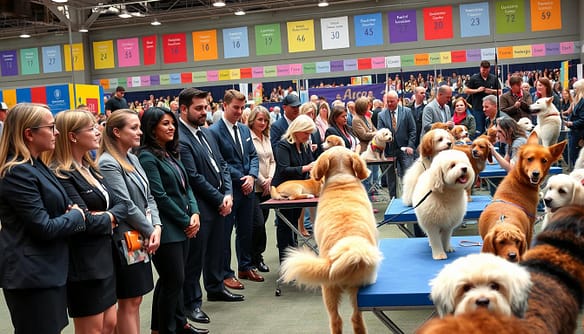
Being part of it all is immersive. You see genetics in action. You feel the right coat texture and watch breeds move effortlessly. It’s a lesson in detail that most miss.
To get this education, volunteer. You’ll get close to the experts and their animals. Roles like ring stewarding and grooming help you learn.
| Volunteer Role | Primary Learning Focus (Dog Shows) | Primary Learning Focus (Cat Shows) | Key Skill Developed |
|---|---|---|---|
| Ring Steward / Clerk | Observing gait patterns & breed-specific movement in the ring. | Assessing posture, balance, and temperament in a quieter setting. | Visual assessment of breed-standard adherence. |
| Grooming Assistant | Hands-on understanding of coat types, textures, and proper presentation. | Learning delicate handling and the specific grooming needs of long-haired vs. short-haired breeds. | Tactile knowledge of breed physiology. |
| Breed Education Ambassador | Explaining breed history and purpose to the public using AKC materials. | Discussing feline breed personalities and care requirements. | Articulating complex breed traits simply. |
| Logistics & Animal Handler | Managing breed-specific energy levels and stress in a busy environment. | Understanding the more subtle stress signals in cats and ensuring calm transitions. | Practical animal behavior and husbandry. |
This table is more than a job list. It’s a detailed curriculum. Each role offers a unique perspective on breeds. You gain a deep understanding of a breed’s purpose. For those seeking top-notch breed learning programs, the show ring is your classroom.
Therapy Animal Program Breed Training: Understanding Temperament for Service Work
Imagine a dog so calm it could teach yoga instructors a thing or two. That’s what a therapy animal needs to be. This is where shelter volunteer training goes from basic care to advanced behavioral psychology. Not every friendly dog is right for this job.
Take Prince, the famous therapy dog at Oklahoma Children’s Hospital. His story is not just about a cute dog getting a vest. It’s about finding a temperamental rock star. Programs like Oklahoma Children’s Paws for Purpose look for calm Labradors, empathetic Goldens, or calm mutts.
So, what does this shelter volunteer training include? It’s more than just “sit” and “stay.” Volunteers learn to check if a dog is patient, sensitive, and can handle stress. It’s not just walking dogs; it’s finding the right emotional tech support.
The “Animal-Assisted Interventions (“Pet Therapy”) Programs” guidelines are your textbooks. A good therapy dog is not just friendly. It must be calm and read human emotions well. The training helps dogs stay calm in any situation.
Handler wellness is also key. “Handler Health & Wellness Standards” make sure the human can handle the emotional demands. This shelter volunteer training teaches you to support your animal partner.
The goal is to match the right dog with the right place. A playful dog might be great in a children’s ward but not in a quiet hospice. This matching is the top of breed knowledge.
This advanced volunteer path changes how you see dogs. You learn that a dog’s most valuable skill is its calm presence. It’s shelter volunteer training with a deep purpose: bringing comfort on four legs.
Wildlife Rehabilitation Breed Knowledge: Native Species Education Through Volunteering
Imagine trying to tell a Red-Tailed Hawk from a Cooper’s Hawk in a wildlife center. Your dog breed flashcards won’t help. Here, rescue education programs expand to include learning about species. You learn about local ecology through volunteering.
This work challenges your thinking as an animal advocate. It’s about helping every creature, not just dogs and people. The value of Caring & Compassion knows no species limits. Volunteering here means learning about a rabbit’s digestive system and a songbird’s feathers.
You’re no longer just a dog or cat person. You’re learning to be a naturalist. You learn about what a young raptor eats and how to tell a squirrel’s nest type. This detailed knowledge is key in rescue education programs.
This education gives you a big-picture view of nature. You see how all creatures are connected. You understand how outdoor cats affect birds and how snakes impact rodents. You also learn about the role of native predators in ecosystems.
By volunteering, you become a well-rounded naturalist. Your skills in observing animals grow. You learn to respect the hunting abilities of felines and the caution of fox kits. This view enriches your life, making every walk in the park a lesson in nature.
Assessment and Certification Programs: Validating Volunteer Breed Expertise
So, you’ve spent hours learning about dogs. You can spot a Siberian Husky’s escape tricks from far away. Now, it’s time for the final test.
Programs like the AKC Therapy Dog Program or Paws & Think offer formal certifications. It’s like getting a stamp of approval from the dog world. It’s not just for showing up. It’s a deep check of your skills, needing a two-year cycle and a promise to care for dogs well.
This paper turns your stories into real skills. It shows you’re more than just a dog fan—you really get dogs. This badge makes your voice stronger and opens new doors. It’s the top of your training, making you a pro volunteer.