
Pit bull-type dogs face a big challenge today. Stereotypes, often from the media and BSL myths, make it hard for them to be accepted.
This analysis uses facts to challenge common myths. It looks at the breed’s history, temperament, and risk level. The aim is to show what’s real versus what’s not.
These false stories have real effects. Dogs labeled as pit bulls stay in shelters longer. This is because of how people see them, not because of their true nature.
Next, we’ll talk about how to change these negative views. The pit bull adoption stories we share are powerful examples. They show how stories can change how we see things, helping to fight unfair biases.
5 Heartening Stories: Family Life, Sports, and Therapy Work
Five stories show how adopted pit bulls thrive in families, sports, and therapy. These tales prove the breed’s worth, countering old myths. They show how well these dogs fit into different roles.
Shelters often keep pit bulls longer because of bad stereotypes. This collection of success stories aims to change that with real, positive examples.
The first two stories are about pit bulls joining families. One dog, adopted from a shelter, quickly got along with kids. Its calm and predictable nature brought stability to the home.
Another story is about a family pit bulls adoption. The dog became very protective of a teenager. This shows the breed’s loyalty and ability to adapt to family life.
Discipline and Performance in Canine Sports
Canine sports test a dog’s trainability and partnership. The third story is about a pit bull winning in weight pulling. This sport needs discipline, focus, and control from both dog and handler.
The fourth story is about a pit bull’s success in agility trials. It shows the dog’s speed, problem-solving, and obedience. These sports show the breed’s intelligence and ability to handle complex tasks.
- Weight Pull: Shows power, control, and trust between dog and handler.
- Agility: Highlights speed, precision, and thinking skills.
- Unified Goal: Both sports improve the bond between dog and handler.
Therapeutic Service and Emotional Intelligence
The last story is about a pit bull as a therapy dog. It needs empathy, stability, and calmness. The dog’s work in hospitals and schools proves its service heart.
Therapy work tests a dog’s gentleness and predictability. Success in this field proves they are not aggressive. Instead, they offer comfort and support to those in need.
These five stories make a strong case for pit bulls. They move from stereotypes to real success stories. They show the breed’s ability to thrive in many settings.
Adoption outcomes for family pit bulls and working dogs show a pattern. When given the right guidance, they excel. Their stories are not just one-offs but examples of success.
Training Frameworks: management, enrichment, leash skills, muzzle fun
Going from just knowing about dogs to being an expert takes a big step. This step is shown by people like Mason, who studies pit bulls to change how people see them. For dog owners, it’s key to move from just loving your dog to using a training and management plan.
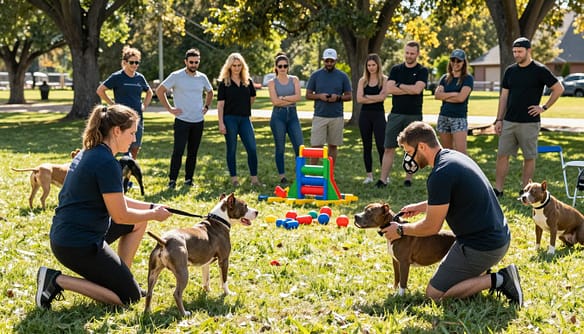
This plan has four main parts: managing your dog, giving them fun activities, teaching them to walk on a leash, and getting them used to wearing a muzzle. Each part shows off a dog’s skills and personality.
| Pillar | Core Principle | Key Tools & Techniques | Primary Outcome |
|---|---|---|---|
| Management | Prevent rehearsal of unwanted behaviors by controlling the environment. | Baby gates, crates, structured routines, controlled introductions. | Creates a predictable, low-stress setting for learning. |
| Enrichment | Fulfill mental and physical needs to prevent boredom and frustration. | Food puzzles, scent work, chew toys, agility exercises. | A balanced, content dog less prone to destructive behaviors. |
| Leash Skills | Maintain calm, controlled public interaction as a non-negotiable standard. | Loose-leash walking drills, focus commands, structured greetings. | Builds public confidence and ensures safety for all. |
| Muzzle Fun | Condition a muzzle as a positive safety tool, not a punishment. | High-value treat association, gradual desensitization, short, fun sessions. | Provides a stress-free safety net for vet visits or unpredictable situations. |
Proactive Management: Setting Up for Success
Good training and management starts before problems happen. It means setting up your dog’s world to avoid mistakes. Using baby gates or crates helps keep them safe and happy. This way, you reward good behavior and avoid stress.
Cognitive and Physical Enrichment Protocols
A happy dog is a well-behaved dog. Enrichment is key to a good management plan. It’s not just about exercise; it’s also about mental challenges. Puzzles, scent games, and new tricks keep their minds busy. This stops boredom-related problems.
Mastery of Leash Skills
How you handle your dog on a leash is what people notice most. It’s important to master this. Teaching your dog to walk nicely and respond to commands shows control and responsibility. It proves you’re a dedicated owner.
Positive Muzzle Conditioning
Changing how people see a muzzle is a big step. The “muzzle fun” method makes wearing a muzzle a positive thing. A dog that wears a muzzle is ready for anything, from crowded places to vet visits. This shows you’re a responsible owner, following initiatives for safe pet care.
This four-part plan takes time and effort. But the end result is a dog you can trust and manage. This approach shows how to care for your dog in a professional way, changing how people see the breed.
Housing and Insurance: navigating restrictions and advocacy tips
People with ‘bully breeds’ face two big challenges: tough housing rules and unfair insurance. To tackle these, you need a smart plan based on bully breed advocacy. It’s all about knowing the laws and corporate world.
Breed-Specific Legislation (BSL) can stop you from owning a dog. Landlords often have rules against certain breeds too. These rules are based on fear, not the dog’s behavior.
To get around this, you need a good plan. Start by making a canine resume. It should have vet records, training certificates, and good references.
Talking to landlords is key. Show them your dog is well-behaved. You can offer to pay more for a pet deposit or get pet insurance. For more tips, check out how to fight unfair housing rules.
Insurance is another big problem. Many companies won’t cover certain breeds. This includes American Staffordshire Terriers and Staffordshire Bull Terriers.
Insurers use past claims to decide who to cover. But, some companies now look at each dog individually. They check the dog’s history and behavior.
Finding these companies is important for bully breed advocacy. Do your research and ask about their criteria. Look for companies that judge dogs on their own merits.
| Aspect | Housing Challenge | Insurance Challenge | Strategic Response |
|---|---|---|---|
| Primary Barrier | Lease breed restrictions & BSL | Provider breed restriction lists | Documentation & proactive search |
| Key Documentation | Canine resume, training certificates, references | Behavioral assessment, CGC title, vet records | Creates proof of responsible ownership |
| Negotiation Focus | Landlord acceptance & lease addendums | Underwriter review & policy exceptions | Highlighting individual dog’s temperament |
| Long-Term Goal | Secure, stable housing | Adequate, affordable coverage | Policy change through demonstrated success |
Working together can make a big difference. Share your success stories with local animal control and insurance regulators. This helps change unfair rules.
Support groups that fight for fair laws are also key. Together, we can change laws and insurance rules. This is the goal of bully breed advocacy.
It takes time and effort to overcome these obstacles. But every success story helps. It fights against old stereotypes and makes things fairer for dog owners.
Community Action: breed‑neutral laws, positive media, photo days
A shift towards breed-neutral sheltering is a big change in how we handle animals and safety. This new way focuses on proactive steps, not just reacting to problems.
To make a real change, we need to work together on three main areas: pushing for new laws, using the media, and talking directly to the public.
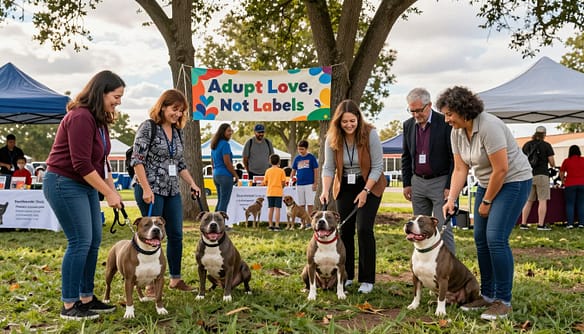
Changing laws is key. We want to replace old laws that target certain breeds with breed-neutral laws. These new laws look at each dog’s behavior, not its breed. Studies show this is a fairer and more effective way to keep everyone safe.
Working with the media is also important. We aim to share stories that show the positive side of dogs and their owners. By using facts and experts, we can change how people see dogs.
Events like “photo days” are great for showing dogs in a good light. They let people meet friendly dogs in a safe way. This helps break down negative ideas about certain breeds.
Rocky Kanaka, a TV star and animal lover, says it’s all about changing how people think. Community efforts make this happen. They turn good intentions into real actions that change how we treat animals.
Starting breed-neutral sheltering is a big job. It needs ongoing education, building alliances, and checking results. Success isn’t just about new laws. It’s also about changing how people feel and think about animals.
Where to Meet Great Bullies: rescue spotlights, temp tests, foster intros
Many pit bull adoption stories start with a search for a good rescue. People look for dogs from places that care about their welfare. This careful choice helps create a strong bond between dog and owner.
Finding a trustworthy rescue is the first step. Good rescues don’t focus on breed and do thorough checks. They show they care by:
- Testing each dog’s personality.
- Ensuring they are healthy, including spaying and vaccinations.
- Letting dogs live with foster families before adoption.
- Being open about a dog’s past and personality.
Groups like Best Friends Animal Society and local rescues follow these rules. They aim to find the right home for each dog, not just any home.
Temperament tests give a quick look at a dog’s behavior. Tests like SAFER or “Meet Your Match” check how dogs react to people and things. These tests are just the beginning of understanding a dog’s needs.
A dog might be great as an only pet, or need lots of activity. Talking to a rescue counselor helps figure out if a dog fits your lifestyle.
The best way to see if a dog fits is in a home setting. A foster-based introduction is a trial run. It lets the dog relax and show its true self in a family setting.
This trial period checks if the dog fits into your life. It looks at things like how the dog gets along with cats and how it handles being left alone. It’s a chance to see if you’re a good match without a big commitment. Many people find their perfect pet through this process, turning a foster home into a forever home.
Adopting a pit bull needs a careful plan. By choosing a good rescue, understanding the dog’s personality, and using foster trials, you make a smart choice. This approach helps dogs find loving homes, proving that pit bull adoption stories can be truly rewarding.
Conclusion: Judge the Deed, Love the Dog
Many successful adoptions show us a key lesson. A dog’s behavior comes from its past, its owner’s care, and how it’s managed. This means we can’t judge a dog by its breed alone.
Studies from places like the American Veterinary Medical Association tell us the same thing. They show that certain behaviors are linked to specific situations, not just the dog’s breed. Pit bulls, for example, are great in agility, therapy, and as family pets. It’s their actions, not their breed, that show their true worth.
To change how people see dogs, we need to follow this advice. We should support laws that don’t focus on breed, talk positively about dogs in the media, and choose pets based on their personality. Doing these things helps us make better choices and treat dogs with more kindness.
It’s clear what we need to do. We should focus on what a dog does, not what it looks like. This way, we can make our communities safer and give more dogs a loving home. By doing this, we can change the story of dogs for the better.