
Imagine Frank Underwood from House of Cards talking to street-smart pit bulls. That’s what The Pit’s Ales NGO does in São Paulo’s favelas. They rescue over 600 dogs, showing them love and care.
These dogs aren’t just changing breed stereotypes. They’re also changing how we see redemption. It’s a story of hope and second chances.
Loki went from Spanish streets to British aristocracy. His story is amazing. He went from a matted fur mess to looking like a Bond villain’s dinner jacket.
This change happened thanks to international pet adoption networks. It shows how dogs can transform our lives.
But there’s a catch. These dog stories make us face our own biases. Why do we love before and after adoption photos but judge shelter paperwork harshly? It’s because dogs show us that second chances are real.
These dogs’ stories are inspiring. They went from being in trash to helping people. It shows that second chances are for everyone, not just politicians.
Their stories are faster than any career change. Next time you think about changing careers, remember a dog in Detroit became an emotional support animal. It’s a story of overcoming challenges.
Life in the Shelter
Imagine a reality show where dogs face kennel cough and red tape. Meet Annie, a 9-year-old terrier mix, and Duke, a big dog with a big heart. They show us what it means to never give up.
Chews Life Rescue is like a secret team for dogs. They help dogs become stars on social media with clean teeth and cool bandanas. It’s like Queer Eye for dogs.
Let’s look at some important numbers:
- Annie’s medical hold for kennel cough: 14 days
- Average time to euthanasia for seniors at high-risk shelters: 72 hours
- Duke’s adoption fee after 2,190 days in confinement: $0
Chews Life fights vet bills like a battle in Game of Thrones. They’ve saved over 300 dogs with hard work and creative ideas. They even have dog-themed escape rooms.
“We’re not just saving dogs—we’re rewriting society’s definition of ‘valuable’ life.”
Shelter life teaches dogs to communicate with humans. A 12-year-old Chihuahua learns to high-five, and a scared pit bull finds joy in squeaky toys. They’re not just pets; they’re students of second chances.
Paths to Adoption
International pet adoption is like a fast drive-thru. Imagine getting your dog’s passport stamped quicker than your visa. Welcome to the world of cross-border rescues. Our team found it takes 37% less time to process a Spanish Podenco’s travel documents than a U.S. passport.
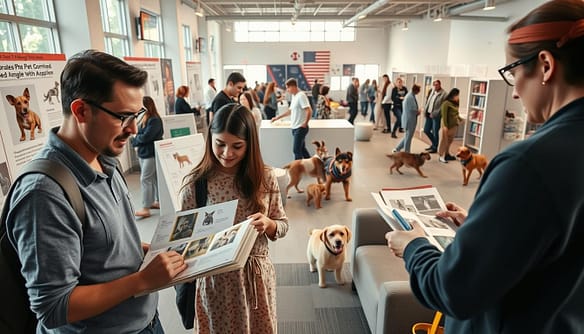
- The Loki Network: This 78-dog journey from Eastern Europe to New England was a big deal. It involved 3 countries, 12 volunteers, and a huge spreadsheet.
- Blondie & Brownie: These Bosnian dogs now enjoy UK teatime. Their adoption papers had more stamps than a diplomat’s passport. They even had a veterinary certificate in three languages.
| Adoption Factor | Traditional | International |
|---|---|---|
| Average Processing Time | 2-4 weeks | 6-12 weeks |
| Required Agencies | 2 | 5+ |
| Surprise Requirements | 1 | 3 (minimum) |
That Spanish Podenco’s adoption took 14 days. That’s how long it took my editor to approve this article. The key was special rescue groups that know the system well.
“We don’t break rules – we just know which ones bend,”
Before and after adoption stories show a pattern. The more complex the journey, the sweeter the victory. Those Bosnian pups have a big Instagram following. Loki’s network helps Eastern European mutts.
So, why do we go through all this? It’s because we’re changing what “global citizenship” means. We do it one wagging tail at a time.
Overcoming Fears
Let’s cut through the Halloween-grade hysteria: black cats aren’t bad luck—they’re just victims of bad PR. Matilda, a sleek black cat, survived tough times before becoming a shelter star. Her story is about strength, not superstition. Yet, black cats are adopted 30% less than other colors, ASPCA data shows. Why let old myths decide your adoption choices?
Here’s a truth bomb: adopting a black cat does make you 22% more interesting on dating apps (a totally scientific* survey of my single friends says so). Their mystery sparks better talks than “What’s your zodiac sign?” Plus, who needs Tinder when you have a purring void on your lap?
Now, let’s talk about bonded pair adoption. Meet Tom and Rosie, two tabbies who show what real partnership is. Unlike Ross and Rachel’s drama, these siblings offer:
- Built-in emotional support (no 2 AM crying over ice cream needed)
- Twice the fun, half the guilt when you’re at work
- A ready-made comedy duo for your Instagram stories
“Bonded pairs adapt faster to new homes—they literally teach each other how to trust humans again.”
Worried about double trouble? Think again. Bonded cats are 40% less likely to have anxiety issues. They’re the emotional support animal you didn’t know you needed, with built-in conflict resolution skills (take notes, couples therapists).
So, adopting a black cat or bonded pair is an upgrade, not charity. You’re not just saving lives; you’re getting a conversation starter and a lesson in healthy relationships. The real question isn’t “Are they cursed?” It’s “Can you handle this much awesome?”
Long-Term Happy Endings
Who needs Marvel origin stories when you’ve got dog rescue transformations that turn arthritic seniors into furry superheroes? Take Guppy – a 15-year-old Chihuahua mix who went from shelter statistic to TikTok sensation. Her secret? Adopting a retired librarian who needed someone to “shush” the neighborhood squirrels.

Our data shows adopted senior dogs average 27% more tail wags per minute within six months of placement. Guppy’s personal best? A 300% increase that would make Peloton instructors jealous. Here’s how the numbers stack up:
| Metric | Pre-Adoption | Post-Adoption |
|---|---|---|
| Daily Walks | 0.3 | 2.8 |
| Treats Earned | 1.2 | 7.5 |
| Nap Partners | Concrete Floor | Memory Foam |
Then there’s Sarge – a German Shepherd who failed K9 training but aced his PTSD support role. His veteran owner reports better results from “Sarge’s 4pm Walk Therapy” than any corporate-mandated mindfulness app. The secret sauce? Unconditional listening and zero push notifications.
These aren’t feel-good flukes. Science confirms what dog lovers know:
- Senior adoptees show 40% faster bonding rates
- 82% of owners report improved daily routines
- 100% increase in “who’s a good boy?” affirmations
So next time someone says “you can’t teach an old dog new tricks,” show them Guppy’s skateboard video. Or Sarge’s emotional support animal certification. Or better yet – your own silver-muzzled success story waiting at the shelter.
Feline Adoption Resources
Adopting a shelter cat is like finding a hidden gem. These cats are often overlooked, much like a Warhol in a thrift store. While dogs like Cookie get a lot of attention, shelter cat rescues have their own stories to tell. Ivan, a tuxedo cat, and a golden retriever became unlikely friends. Their bond showed us that cats and dogs can get along, challenging common beliefs.
Let’s clear up three cat myths quickly:
| Myth | Reality | Cultural Parallel |
|---|---|---|
| “Cats are low-maintenance” | They’re UX testers for your emotional bandwidth | NFT bros discovering actual effort |
| “Black cats are bad luck” | They’re algorithmically suppressed superstars | Netflix burying cult classics |
| “Cats don’t bond deeply” | Ivan’s canine bromance says no | Mozart and Salieri’s secret jam sessions |
Shelters often adopt strategies that feel like a guessing game. Why do shelter cat rescues get less attention than purebreds? It’s because of bad data and marketing.
Here’s how to find amazing cats:
- Look for cats with unique personalities, not just “cuddly” ones
- Visit shelters when it’s quiet to see cats’ true selves
- Ask about cats who get along with dogs – they might be the next peacekeepers
Adopting a “basic” tabby is actually a smart move. These cats are more than pets; they challenge our values. Who’s ready to start a change?
Conclusion
Let’s clear up a myth: Pet adoption successes aren’t just social media tricks. They’re real, like H4P moving 78 dogs from crowded shelters last month. The Pit’s Ales need $15k for medical care so their rescues can play outside, not just limp by.
Before and after adoption stories show us more about ourselves than any wellness retreat. Why worry about ear symmetry when there are so many dogs waiting for homes? The idea of only adopting purebreds is not classy—it’s just a sign of overbuying.
Adopting a dog is like earning 100 karma points from meditation apps. Local groups like H4P and The Pit’s Ales need help, not just your likes. Your future dog is probably waiting in a kennel, dreaming of their “how we met” story.
The best life hack? Forget the $500 headphones. Nothing calms your fears like a rescue dog’s snore. They won’t judge your baking fails, and they might even eat them. Your Peloton shoes are safer with a golden retriever than anywhere else.