
Getting a pet can be very rewarding, even in a busy city. But, it’s important to understand the legal and financial sides of pet ownership. You must read your lease carefully. It has rules about pet policies, like which breeds are allowed and weight limits.
It’s also key to know the difference between pet deposits and pet rent. This guide will teach you how to negotiate to keep your deposit safe. You’ll also learn what documents you need, like vaccination records and pet insurance.
We want to help you get your lease approved smoothly. This will make living with your pet easy and enjoyable. For more tips on picking the right breed for apartment living, see our article on the best dog breeds for apartment.
Species and breed picks quiet companions exercise hacks brachy cautions stairs and elevators
Choosing the right pet for apartment living is important. You need to think about the animal’s traits and your lifestyle. The goal is to find apartment-friendly breeds that are quiet and don’t disturb others.
Here are some ideal low bark dogs that make excellent companions:
- Basenji: Known as the “barkless dog,” this breed is perfect for quiet environments.
- Cavalier King Charles Spaniel: Affectionate and gentle, they have a soft demeanor.
- French Bulldog: Playful yet calm, they are well-suited for indoor living.
For cat lovers, consider these indoor cats that are known for their serene temperaments:
- British Shorthair: Independent and low-energy, they enjoy lounging.
- Ragdoll: Gentle and lap-loving, they thrive on companionship.
- Russian Blue: Quiet but playful, they adapt well to indoor life.
- Scottish Fold: Cuddly and calm, they make great apartment pets.
- Persian: Low-energy and affectionate, they enjoy a relaxed lifestyle.
To keep your pets active in compact spaces, consider these exercise hacks:
- Use a hallway for fetch games.
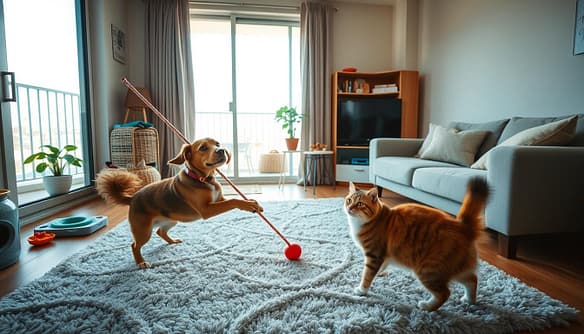
- Incorporate a flirt pole for interactive play.
- Invest in a sturdy cat tree for climbing and scratching.
It’s important to be aware of brachycephalic cautions when considering flat-faced breeds like French Bulldogs and Persians. These breeds may struggle with stairs and heat, so managing their activity is key. When using stairs or elevators, ensure they do not overexert themselves to avoid breathing difficulties.
By carefully selecting the right breed and implementing engaging activities, you can create a fulfilling environment for both you and your pet in your apartment.
Crate and potty plan balcony safety litter box placement ventilation
Creating a crate and potty plan is key for a peaceful home with pets. A good routine meets your pet’s needs and keeps your home clean. Here’s how to set up a successful plan for dogs and indoor cats.
Crate Training for Dogs
Crate training helps manage your dog’s potty habits. Start by making the crate a safe space. Follow these steps:
- Choose a crate that’s big enough for your dog to stand, turn, and lie down.
- Introduce the crate slowly, using treats and praise to make it positive.
- Stick to a regular schedule for potty breaks, after meals and naps.
Litter Box Setup for Indoor Cats
For indoor cats, the right litter box placement is key. Follow these guidelines:
- Put the litter box in a quiet, low-traffic area for your cat’s safety.
- Make sure there’s good air flow to cut down on smells; an air purifier helps.
- Keep the box away from food and water to encourage regular use.
Balcony Safety
If you have a balcony, safety is a top priority. Use cat-proof netting or enclosures to stop falls. For dogs, make a safe potty area to prevent accidents.
Ventilation Strategies
Keeping your apartment smelling fresh is important. Here are some ways to do it:
- Use air purifiers to cut down on pet smells.
- Change the litter box often and get rid of waste quickly.
- Open windows when it’s nice outside to let in fresh air.
| Strategy | Benefits | Considerations |
|---|---|---|
| Crate Training | Helps manage potty habits | Requires consistency and patience |
| Litter Box Placement | Encourages regular use | Needs to be cleaned frequently |
| Balcony Safety | Prevents accidents | May require additional investment in safety measures |

Sound management mats white noise quiet hours enrichment during work calls
Managing sound in your apartment is key for a peaceful home. If you have low bark dogs, it’s important to keep noise down. This section will show you how to make your home quieter, so you and your pet can live happily together.
Using sound-absorbing mats in your pet’s play area is a smart move. These mats help reduce noise and make a softer surface for play. Place them where your pet likes to hang out, like near their bed or play area.
A white noise machine is another great tool. It can block out loud noises that might scare your pet, making your home calmer. It’s perfect for work calls, helping you stay focused.
Setting quiet hours is also a good idea. Teaching your pet to be quiet at certain times can really help. Remember, being consistent and using positive rewards is important.
When you’re on work calls, it’s important to keep your pet busy. Enrichment activities like puzzle feeders and interactive toys are great. They keep your pet happy and quiet, making your work time better.
If you have low bark dogs, there are special training tips for them. Teaching them to be quiet during calls will make your space more peaceful for both of you.
In short, using sound management in your apartment can make it a quieter, more peaceful place. With mats, white noise machines, and fun activities, you and your pet can enjoy a calm home together.
Daily schedule micro walks nose work hallway fetch flirt pole parks and catios
Creating a daily routine is key for your pet’s happiness and health. A good schedule fits into a busy life and keeps your pet active and smart. Here’s how to make a daily plan that works:
- Micro Walks: Short leash training sessions are great for busy days. They teach good behavior and burn energy quickly.
- Nose Work: Nose work games challenge your pet’s mind. Hide treats for them to find, making it fun and mentally stimulating.
- Hallway Fetch: If you have space, play fetch in a hallway. It’s a fun way to keep your dog active without needing a big area.
- Flirt Pole: For cats, a flirt pole is exciting. It mimics prey, making your cat jump and chase.
- Parks: Taking your dog to parks is vital. They offer space for running and socializing with other dogs.
- Catios: A catio is a safe outdoor spot for cats. It lets them enjoy fresh air and watch the world without risks.
Adding these activities to your daily routine helps prevent boredom and keeps your pet calm and well-adjusted. Remember, consistent leash training is important. It makes your dog a polite walking companion in cities.
Socialization elevators scooters strollers skateboards delivery people
Living in the city can be tough for pets, making socialization a big challenge. Apartment-friendly breeds need to learn to handle different situations. It’s important to teach them to stay calm and confident.
Here are some tips to help your pet adjust:
- Elevators: Begin by letting your pet get used to the elevator when it’s not moving. Then, let it move while rewarding it for staying calm.
- Scooters and Skateboards: Start by letting your pet see these objects from far away. Slowly get closer while rewarding them for staying calm.
- Strollers: Let your pet sniff and explore a stationary stroller first. Then, move to a rolling one. Always use positive reinforcement.
- Delivery People: Teach your pet to greet visitors with treats and praise. This helps them associate new people with good things.
Creating a desensitization plan can be very helpful. Start with small, controlled exposures and gradually increase them. This keeps your pet calm and not anxious.
For pets that are easily scared, there are special tips to help them feel more secure. Here are some effective methods:
| Technique | Description | Benefits |
|---|---|---|
| Controlled Exposure | Gradually introduce your pet to new stimuli. | Builds confidence and reduces fear. |
| Positive Reinforcement | Reward calm behavior with treats and praise. | Encourages desired behavior in future encounters. |
| Desensitization | Slowly increase the intensity of exposure. | Helps pets adapt to urban stimuli. |
The goal is to raise a well-behaved pet that can go with you everywhere. This makes living in an apartment enjoyable for everyone.
Travel to green space car share bike baskets transit carriers
Traveling with pets in the city can be tough, but it opens up green spaces. Knowing how to travel safely with your pets is key. This guide will help you enjoy your outings more.
Car Share Services
Car share services make getting to parks easy. Make sure your pet is safe with a harness or carrier. Always check the pet policy of the service first, as some might not allow pets.
Bike Baskets
Cycling is great, but you need a strong bike basket. Make sure your dog is comfy and safe. Leash training helps keep them calm and focused.
Public transport needs a carrier that fits size rules. Get your cat used to the carrier early. This makes travel less stressful for both of you.
| Transport Mode | Required Restraints | Cleanup Supplies | Etiquette Tips |
|---|---|---|---|
| Car Share | Harness or carrier | Waste bags | Keep pets calm and quiet |
| Bike | Secure basket | Water bottle | Signal turns and stops |
| Transit | Approved carrier | Waste bags | Keep pets on your lap or in carrier |
Learning these travel tips lets you explore more with your pet. It makes their life better and creates special memories for you both.
Neighbor relations stair etiquette cleanup and smell control
Keeping good relations with your neighbors is key for pet owners in apartments. A friendly relationship with those around you makes living better. Simple rules can help keep your pets from causing trouble.
Stair Etiquette is very important in apartments. Use a padded stair tread to reduce noise when walking big dogs. Carry small dogs to avoid disturbing others. Always think about your neighbors, mainly during quiet times.
Cleaning up after your pet is not just nice; it’s necessary. Accidents do happen, and enzymatic cleaners can get rid of smells. This shows you care about your neighbors and follow pet rules.
Keeping your place smelling good is also important. Clean regularly and let in fresh air to avoid bad smells. If smells linger, fix them right away to avoid complaints. A clean home shows you’re a good pet owner.
Talking things out is important. If problems come up, talk to your neighbors nicely. Open talks can turn bad situations into chances to help each other. By doing this, you’ll be seen as a good tenant, keeping your home and pet happy.
Building a support team walkers sitters vets trainers close by
In bustling city life, having a reliable support team for your pet is key. Managing a busy schedule is tough, and no one can handle pet care alone. This section will help you build a trustworthy network of pet care professionals in your neighborhood.
First, think about hiring dog walkers and pet sitters. Look for people with strong references and experience with small breeds. It’s important to check their credentials. Ask about their training and experience with different breeds, if your pet has special needs.
Next, finding a vet who knows about apartment pets is vital. A vet familiar with small breeds can give better care. Choose a vet close by for quick access in emergencies.
Also, getting a certified trainer can help with behavior issues. Trainers can offer insights on managing your pet’s behavior in an apartment. Look for trainers who specialize in urban pet care and have good reviews.
To improve your support network, map out local services. This includes dog parks, pet-friendly cafes, and emergency vet clinics. Having a list of nearby resources can save time and stress when unexpected situations happen.
Building a reciprocal network with other pet owners in your building is also beneficial. By setting up a mutual pet-sitting arrangement, you can help each other during busy times. This creates a sense of community and ensures your pet gets care when you’re not there.
With a strong support system, you can focus on your career without worrying about your pet. This balance between work and personal life is key for a happy life.
| Support Team Member | Key Qualities | Why They Matter |
|---|---|---|
| Dog Walker | References, Experience | Ensures reliable care and exercise |
| Pet Sitter | Trustworthiness, Availability | Provides peace of mind during absences |
| Veterinarian | Experience with Breeds, Proximity | Essential for health and emergencies |
| Trainer | Certification, Positive Reviews | Helps with behavioral issues |
Starter kit for micro living
Creating a cozy home for your new pet is key for a happy apartment life. Start with space-saving gear that meets your pet’s needs. Think about collapsible crates that can be tucked away when not needed. Wall-mounted feeding stations also save space and keep meals in one spot.
For breeds that do well in apartments, special items can make a big difference. A low-entry litter box is great for senior cats, making it easy for them to get in. Small dogs love a no-pull harness for safe walks. Interactive toys are essential to keep pets happy in small spaces.
Remember to get cleaning supplies and products to control odors. A good vacuum and pet-safe cleaners make cleaning easier. Safety items like cable protectors and balcony guards are also important to keep your pet safe. With the right tools, you can make a space that’s good for your pet’s health and happiness.
For more tips on adopting pets with special needs, check out this guide. With careful planning and the right gear, your apartment can be a great place for you and your pet.