
Think about the American racehorse. It’s a symbol of intense drama. Bred for a short, shining moment, its life is a gamble made by others.
What happens after the race? For thousands, the next chapter isn’t fame. It’s a tough transition from a fast-paced world. Maria faces this reality with sharp insight, not just feelings.
The irony is clear. We create a 1,200-pound athlete with a powerful heart, then throw it away when it’s no longer needed. A top thoroughbred’s career is often as short as a famous song’s tour.
Maria works in this aftermath. She’s a strategic leader for these retired champions. Her latest achievement wasn’t just a milestone. It was a goal: 300 horses. That’s not just a number. It’s a huge achievement.
This is where the real story starts. It’s a mix of courage, determination, and hard truths. The stories that follow aren’t just happy endings. They’re about the strength of people who help horses, some of the most dedicated horse rescue volunteers you’ll ever hear about.
The Midnight Rescue Call That Changed Everything
The phone doesn’t ring at 2 AM with good news, unless you’re saving lives from racing retirement programs. This hour is for emergencies and bad decisions. It’s when bureaucracy fails, leaving living creatures as liabilities.
My screen lit up with an unknown number. It wasn’t a relative. It was a tracker from a “kill pen” auction. His voice was a mix of exhaustion and urgency, typical of the shadow economy where athletes become commodities.
“Thoroughbred mare. Papers in order. Two hours from now she’s meat.” This sentence was a harsh economics lesson. How does an animal with documented lineage and training become a $200 problem? The answer lies in the gap between theory and practice in equine welfare.
The system had failed. First, her racing career ended without a plan. Then, racing retirement programs failed to provide safety. Now, she’s in a pen where she’s not worth the cost of feeding.
I was already pulling on boots. The analytical part of my brain noted the irony. We have industries built around animal welfare, yet this system leaks. The coffee tasted like moral outrage.
Dawn becomes your enemy in these situations. The clock isn’t just ticking; it’s screaming. Every minute spent navigating backroads is a minute closer to that auction hammer falling. You drive fueled by caffeine and the realization that this shouldn’t be happening.
This is the start of many volunteer journeys. It’s when abstract concepts like “animal welfare” and “retirement planning” become real. There’s no training for the feeling of racing against sunrise to stop a tragedy.
The economics are fascinating. A Thoroughbred with papers is worth thousands in breeding value. Yet, in the wrong pipeline, that value disappears. She becomes a liability. The shadow market for these animals operates on different math.
That midnight call changes you. It changes how you see systems. It turns statistics into breathing creatures needing help. Most importantly, it turns observers into participants in the urgent business of rescue.
We talk about racing retirement programs as concepts. But the 2 AM call shows they’re about individual lives. Sometimes, all that stands between disaster and safety is one sleep-deprived person with a truck and enough stubbornness to challenge the dawn.
Building Trust with Traumatized Ex-Racehorses
Working with traumatized OTTBs is not just about patience. It’s like forensic psychology with hooves. These animals were once elite athletes, but their worldviews were shattered. Imagine a Formula One driver trying to navigate a kindergarten playground.
Their minds work like a sports car after a crash. They were built for speed and quick responses. Now, they need to learn new ways to exist. Volunteers must understand their trauma and help them adjust.
Pharaoh, a bay gelding, arrived scared of his own shadow. His eyes showed the trauma of a soldier, not an athlete. Our first task was to understand his language of trauma.
A head-toss wasn’t disobedience; it was a memory of starting gate chaos. A flinch at a raised hand wasn’t defiance; it was fear of the crop.
We became translators of silence. The real breakthroughs in OTTB rehabilitation happen in quiet moments. A deep sigh when you enter the stall is like lowering a shield. The first time he follows you without a lead rope is a big step.
Rewiring their minds requires rejecting old horse-taming myths. There’s no single magical moment that fixes everything. It’s about making small adjustments, like standing at an angle or breathing in sync.
The progress chart for an ex-racehorse is not a steady line. It’s like a seismograph during an earthquake, with wild spikes and small improvements. One day Pharaoh would take an apple gently; the next, he’d spook at a plastic bag.
Success is in small, subtle shifts. The day he nudged my pocket for contact. The first time he stood calmly while I worked on a gate latch. These moments are the quiet victories that matter most.
This work is like non-verbal couples therapy. You build a relationship based on body language and energy. The Thoroughbred learns to read your intentions in your posture; you learn to read his history in his eyes.
We’re teaching these athletes how to be civilians. They know how to run and compete, but now they need to learn to stand and accept affection. It’s like career counseling for 1,200-pound clients.
The most compelling OTTB success stories are not about winning races. They’re about a creature who once saw humans as pilots or predators learning to see us as partners. Pharaoh today greets you with soft eyes instead of panic.
This transformation requires the volunteer to be a detective, therapist, and mirror. You must reflect calmness until the horse believes it’s his own. The breakthrough is when he offers something you didn’t ask for.
Building trust with ex-racehorses is alchemy. You’re not fixing broken animals. You’re helping brilliant, sensitive beings rewrite their own manuals. The result is a former professional who’s learned to be happily retired.
Volunteer Burnout and Recovery Strategies
Rescue work is like an endless math problem. It’s a mix of need and resources, with emotional exhaustion left over. We start with kindness, but soon find out that feeling for others wears off.
This isn’t just feeling tired. It’s a special kind of tiredness that people who help others often feel. It’s like being tired from caring too much, mixed with the dust of hard work. No matter how many animals you save, there are always more in need.

To solve this problem, we need a new approach. We focus on being sustainable, not just a hero. The first step is to learn when to say “no.” This might seem harsh, but it’s necessary to care for others properly.
Setting boundaries is another key strategy. Take a day without your phone. The world will keep spinning without you for a little while. This isn’t about leaving others behind. It’s about taking care of yourself.
Lastly, celebrate small victories. Find happiness in the animals you help, not in the ones you can’t. Their small moments of peace are what truly matter. Getting overwhelmed by the big picture doesn’t help anyone.
| Burnout Symptom | Emotional Cost | Recovery Tactic |
|---|---|---|
| The Savior Complex | Guilt, shame, perpetual inadequacy | Embrace “strategic neglect” & define your capacity |
| 24/7 Availability | Anxiety, loss of personal identity | Institute mandatory “no phone” periods |
| Comparison Despair | Hopelessness, diminished impact | Focus on individual animal progress metrics |
| Emotional Numbness | Detachment, loss of joy in work | Schedule deliberate moments of connection |
| Physical Exhaustion | Weakened immunity, chronic stress | Treat rest as a non-negotiable duty |
These strategies come from experience, not a manual. They’re lessons learned from hard times. The most experienced volunteers know that facing the darkness is the first step to finding the light.
Your volunteer experiences will have ups and downs. The goal isn’t to avoid the downs. It’s to prepare better for them. Remember why you started and find a way to keep going.
Burnout tells you that you’re not doing enough. But showing up regularly, even with limits, is more powerful than any single heroic act. Sustainable kindness leads to real change. That’s the true math of rescue.
The Day We Saved 20 Horses from Auction
The auction yard at dawn is a hard place. It’s where lives are judged by their weight.
Our mission started with a frantic text. It spread quickly among horse rescue volunteers. A kill buyer was at a sale, with over seventy horses in danger.
We acted fast, using personal credit cards and SUVs as command centers. It was like planning a secret mission.
Our team was driven by desperation. We weren’t rich, but we were determined. We used our own money to help.
At the auction, the air was thick with dust and despair. The noise was overwhelming. It was a place where animals were treated like nothing.
Animals were shown off, and their fate decided quickly. If the price was too high, we couldn’t save them. If it was too low, the kill buyer would win.
We worked fast, trying to save the most vulnerable horses. Our team of horse rescue volunteers bid quickly, trying to save as many as we could.
Every time we won, we felt a rush of adrenaline. But then, we felt guilty. We knew we couldn’t save everyone.
In the end, we saved twenty horses. We took them to foster farms, feeling both joy and sadness. We had twenty reasons to celebrate, but fifty reasons to mourn.
This work is complex. Horse rescue volunteers know it’s not just about saving horses. It’s about fixing a broken system.
It makes you wonder if you made the right choices. What happened to the horses you couldn’t save? This work is hard, but it’s worth it.
Stories like Cindy’s rescue journey are important. They show the love and care that comes after the chaos.
Rescue is not always easy. It’s often a hard fight. But we keep going, because for those twenty, everything changed.
This is what drives our community of horse rescue volunteers. It’s not just hope. It’s determination to make a difference, one rescue at a time.
Creating Lasting Bonds with Foster Families
Fostering is like the long-term care unit of racing retirement programs. It’s where real change happens, not in flashy moments but in everyday care. The foster network is the backbone that makes these programs succeed.
Meet Margaret and Robert, retired accountants who wanted a quiet pony to watch from their patio. They couldn’t understand why we matched them with Thunder, a big Thoroughbred with trust issues. This is where the magic of matching starts.
Teaching people who think like accountants to understand horses is our job. We start with “Equine Economics 101,” teaching them about flight zones and body language. It’s both funny and deep.
Robert asked, “Why won’t he come when I call him?” I explained that to a racehorse, humans often mean work and sometimes pain. We’re teaching them that humans can also mean love and care.
The bond formed is not just between humans and horses. It’s also between the rescue and the foster family. We’re always there for them, day and night. Whether it’s a midnight text or a call about a fence, we’re here to help.
This is where racing retirement programs show their true depth. The foster home is a place for healing. Margaret learned to read Thunder’s ear positions like a pro. Robert found peace in walking a nervous horse.
Then, the “foster fail” happens when a family adopts their foster horse. Some see it as a loss, but we celebrate it as a win. You’ve not only saved a horse but also gained a lifelong friend.
Margaret and Robert’s journey was a perfect example. Their idea of a quiet pony changed by month three. They built a shelter and took classes. When Thunder nuzzled Robert’s pocket without fear, it was a moment of understanding.
The success of racing retirement programs relies on these foster families. They become a network of advocates. They recommend friends and volunteer, spreading the word about the program.
We’re building a bridge between two worlds. The fast-paced world of racing and the calm world of home life. Foster families are the ones building this bridge. They don’t just provide a home; they help horses find their true purpose.
The analytical minds of foster families are a big asset. They track progress and notice small changes. Their data helps us improve our program.
Supporting racing retirement programs does more than just cover expenses. It supports the matchmaking process. It turns people into advocates for horses. It builds a network that changes lives.
The real victory is not at the track or the rescue gate. It’s in suburban backyards where horses learn to be themselves again. And people see the world in a new light.
Success Stories: OTTBs Thriving in New Careers
Many OTTBs have found new careers and thrived in them. These success stories highlight the versatility and talent of these horses. From eventing to show jumping, OTTBs have excelled in various disciplines.
One notable example is a former racehorse named Thunder, who transitioned to eventing and became a champion. Thunder’s athleticism and determination made him a standout competitor in the equestrian world.
Another success story is Starlight, a former racehorse who found a new passion in show jumping. With the guidance of a dedicated trainer, Starlight excelled in the show ring, impressing judges and spectators alike.
These success stories not only showcase the talent and versatility of OTTBs but also highlight the dedication and hard work of their owners and trainers. By providing these horses with a new purpose and a supportive environment, they can thrive in their new careers.
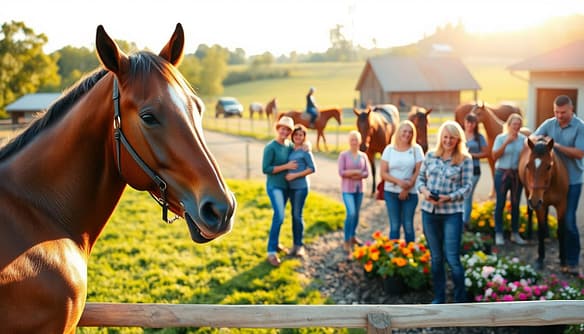
Testimonials from OTTB Owners
“Transitioning my OTTB, Thunder, to eventing was the best decision I ever made. He has exceeded all my expectations and has become a true champion. I couldn’t be prouder of him!” – Sarah Johnson, OTTB owner
“Starlight, my former racehorse, has found a new passion in show jumping. With the help of a dedicated trainer, he has blossomed into a talented competitor. I’m so grateful to have him in my life.” – Emily Thompson, OTTB owner
These testimonials from OTTB owners demonstrate the joy and fulfillment that comes from giving these horses a second chance. By providing them with a new purpose and a supportive environment, they can thrive in their new careers and bring happiness to their owners.
The Emotional Rewards of Rescue Work
The emotional payoff in horse rescue isn’t about applause or paychecks. It’s about the quiet moments that change how you see connection. It’s not feeling good in the usual way. It’s feeling meaning deeply, like a warm hug.
Imagine fixing up a classic car versus buying a new one. Anyone can love a shiny new car. But fixing up a classic car? That’s a different story. You know every detail, every repair, every story in the scratches. Your reward is in knowing you transformed it.
My most meaningful volunteer moments were about learning a new language. It’s about understanding without words. A horse that was once shut down starts to notice you. Weeks later, it greets you at the gate. This silent communication is almost spiritual.
It’s not just about cleaning stalls or feeding horses. You’re part of a story of redemption. You’re a key chapter in a creature’s journey from fear to safety. The reward is in knowing you helped change their story.
This work shows the value of emotional labor. People often see “feel-good” volunteering as sentimental. But what happens in the paddock is complex. It’s about building trust, understanding trauma, and practicing patience.
Cultivating a garden is a good analogy. You don’t get tomatoes overnight. You prepare the soil, water it, pull weeds, and wait. The real joy is in the process, not just the end result.
The heart of these volunteer experiences is non-transactional. No one pays you for the moment a scared horse trusts you. The reward is internal. It reshapes your soul.
Burnout is a problem, but rescue work is the solution. It’s not about external validation. It’s about recognizing progress in small ways. You see it in a horse’s relaxed stance or peaceful chewing.
These experiences stay with people for years. They offer a deep sense of purpose. In a world focused on metrics, rescue work values presence over productivity. The reward is knowing you made a difference in someone’s life.
Why Volunteers Stay for Decades
Why do people give up weekends, retirement, and sometimes their sanity for equine rescue? It’s not just about loving animals. It’s a mix of psychology, community, and purpose that keeps them coming back for years.
Meet the convert. They often come from jobs where they felt unfulfilled. Rescue work offers a clear moral compass. It’s a simple, yet powerful, choice.
Then there’s the lifer. They know horses like the back of their hand. They can tell you all about a new horse’s history and needs. Their deep knowledge is a result of countless hours spent helping horses.
The community here is special. It’s formed in the midst of chaos—like midnight trailer arrivals and emergency vet calls. These shared experiences create strong bonds. You learn about people’s strengths and weaknesses in real-time.
Rescue work offers a sense of real impact. You see a horse’s body fill out and learn to trust humans. For volunteers, success is tangible and rewarding.
The work itself is complex and engaging. It requires knowledge of animal behavior, nursing, and problem-solving. No two days are the same. This keeps the mind active and challenged.
So, why do they stay? They stay because their work makes a real difference. They’ve found a family in the mud. The dedication of horse rescue volunteers is what keeps the mission going. It’s not just a hobby; it’s a calling.
How to Join Our Volunteer Team
So you’ve read these stories. You’ve felt that tug. Now what? Let’s figure out if you’re a good fit. Are you great at organizing, like a military commander? Or can you wait for hours for a horse to move?
Our joining process is easy. You don’t need to be a horse expert. We focus on getting you into our team. You’ll start with simple tasks like cleaning stalls and filling water buckets.
These tasks are your first steps. They’re the hard work behind every rescue story. As you do these tasks, you’ll find what you’re good at and what makes you happy. We’ve seen lawyers become great groomers and artists become adoption coordinators.
This is a chance to do meaningful work. It’s a trade of your doubts for our messy hope. Your experiences will help tell the next big story. Are you ready to get your hands dirty?